
Why Choosing the Right Bed Matters for UAE Homes
Selecting the perfect bed for your UAE bedroom represents one of the most significant furniture decisions you’ll make for your home, directly impacting your sleep quality, bedroom aesthetics, daily comfort, and long-term satisfaction. In the United Arab Emirates, where residents spend considerable time in climate-controlled indoor environments and where bedrooms serve as personal sanctuaries from the bustling energy of cities like Dubai, Abu Dhabi, and Sharjah, the importance of choosing the right bed cannot be overstated. This comprehensive guide walks you through every consideration necessary to make informed decisions that deliver years of comfortable, restful sleep in beautifully designed bedroom spaces.
The UAE’s unique environmental conditions, architectural styles, lifestyle patterns, and cultural values create specific contexts that influence bed selection differently than in other global markets. The persistent heat and humidity in coastal cities, the fine desert dust that infiltrates even well-sealed buildings, the varied bedroom dimensions found across UAE apartment complexes and villa developments, and the multicultural population bringing diverse design preferences all factor into determining which beds work best in your specific situation. Understanding these local considerations ensures your bed choice succeeds not just aesthetically but functionally throughout years of UAE living.
The bed you select becomes the centerpiece around which your entire bedroom design organizes—the largest, most visually prominent furniture piece that establishes the room’s style direction, influences color schemes, affects spatial flow, and sets expectations for comfort and quality. Beyond its obvious sleeping function, your bed contributes to bedroom activities including reading, relaxing, working on devices, and simply unwinding after demanding days. A bed that excels across all these dimensions—comfortable for sleep, supportive for sitting, beautiful to behold, appropriately sized for your space, and constructed to last—delivers exceptional value that justifies thoughtful selection rather than impulsive purchasing.
Investment perspective matters when choosing beds, as quality pieces represent significant expenditures—typically AED 2,000-15,000 for most UAE households, with luxury options extending considerably higher. This substantial investment demands careful evaluation to ensure you acquire furniture that serves you excellently throughout its expected 10-20 year lifespan. The daily cost calculation illustrates value clearly: a AED 6,000 bed used for 15 years costs just AED 1.10 per day—remarkably modest for furniture you interact with every single day and that directly affects your health, energy, and wellbeing through quality sleep.
At Rukn Al Wadi Furniture, we recognize that choosing the perfect bed involves balancing multiple factors—size requirements, material preferences, style aesthetics, budget constraints, and practical considerations unique to your living situation. This guide provides the comprehensive knowledge you need to navigate these decisions confidently, ensuring you select beds that exceed expectations and transform your bedroom into the restful, beautiful sanctuary you deserve.
The Foundation of Quality Sleep and Bedroom Design
Quality sleep represents one of life’s fundamental requirements for physical health, mental clarity, emotional stability, and overall wellbeing—yet many people underestimate how profoundly their bed choice impacts sleep quality. The bed provides the physical foundation supporting your mattress, and inadequate support compromises even premium mattresses’ performance. A bed that sags, squeaks, shifts, or provides insufficient mattress support undermines sleep quality night after night, creating cumulative deficits that affect daytime functioning, health, and quality of life. Conversely, properly constructed beds that support mattresses correctly, remain stable and silent during movement, and maintain structural integrity for years create optimal conditions for restorative sleep.
The psychological dimension of bed selection also influences sleep quality in ways that extend beyond pure physical comfort. Humans respond to their environments emotionally and psychologically—a bedroom featuring a beautiful, substantial, well-made bed feels more restful and promotes relaxation more effectively than spaces with cheap, flimsy, or unattractive furniture. The visual satisfaction of owning genuinely nice furniture, the pride in having invested in quality, and the daily reinforcement that you’ve created a special personal space all contribute to bedroom environments that genuinely support rest and restoration rather than merely providing functional sleeping locations.
Beyond sleep, your bed establishes your bedroom’s entire design foundation and visual hierarchy. Interior designers consistently emphasize that bedrooms should be designed “from the bed outward”—first selecting the bed, then choosing complementary furniture, and finally adding accessories and finishing touches. This approach ensures cohesive design where every element relates harmoniously rather than random assemblages of unrelated pieces. The bed’s size, style, material, color, and height all inform subsequent design decisions about nightstands, dressers, lighting, window treatments, bedding, and accessories. Getting the bed selection right makes all subsequent decisions easier and increases the likelihood of creating bedrooms you genuinely love.
Key factors that make bed selection critical:
- Sleep quality foundation: Proper support prevents mattress sagging and premature deterioration
- Structural stability: Quality construction eliminates squeaking and shifting that disrupts sleep
- Bedroom design anchor: Largest furniture piece establishes entire room’s aesthetic direction
- Daily interaction: You see and use your bed every single day for years
- Investment value: Significant cost requires careful decision-making for long-term satisfaction
- Space utilization: Bed size and style affect room functionality and traffic flow
- Resale consideration: Quality beds maintain value if relocating or selling furniture
- Health implications: Poor bed support contributes to back pain and sleep problems
UAE-Specific Considerations for Bed Selection
The United Arab Emirates presents unique environmental, architectural, and lifestyle considerations that significantly influence which beds perform best and deliver optimal satisfaction. Understanding these UAE-specific factors ensures your bed choice accounts for local realities rather than relying on generic guidance developed for different climates and living patterns. The combination of intense heat, coastal humidity, persistent dust, specific building characteristics, and cultural lifestyle preferences creates decision-making contexts that deserve specialized attention.
Climate challenges represent perhaps the most significant UAE-specific consideration affecting bed selection. The extreme heat—regularly exceeding 40°C during summer months—combined with high humidity in coastal cities like Dubai and Abu Dhabi creates conditions that impact different bed materials differently. Wood expands and contracts with humidity and temperature fluctuations, potentially causing joints to loosen or wood to warp if not properly kiln-dried and constructed. Metal frames may feel uncomfortably warm to touch in inadequately air-conditioned rooms or conversely cold in heavily cooled spaces. Upholstered beds require fabrics that resist moisture absorption, mold growth, and dust accumulation. Understanding how your chosen bed material responds to UAE climate ensures longevity and continued performance.
The persistent fine desert dust that characterizes UAE environments—infiltrating even well-sealed modern buildings—particularly affects bed maintenance requirements and material selections. Beds with complex ornamentation, deep crevices, or difficult-to-clean surfaces accumulate dust that proves challenging to remove, creating ongoing maintenance burdens. Conversely, beds with smooth surfaces, minimal ornamentation, and easy-to-clean finishes simplify the regular dusting and cleaning necessary to maintain appearance and hygiene in UAE homes. This consideration particularly matters for individuals with dust allergies or respiratory sensitivities, as dust accumulation directly impacts health and comfort.
Architectural characteristics of UAE buildings—from compact Dubai apartment bedrooms measuring 3m x 3.5m to expansive villa master suites exceeding 6m x 6m—create enormous variation in appropriate bed sizes and styles. The elevator dimensions, stairway widths, and doorway measurements common in UAE construction may constrain which beds can physically reach your bedroom, sometimes eliminating options that would otherwise suit perfectly. Understanding your building’s access limitations before shopping prevents disappointment from discovering your ideal bed cannot navigate to your bedroom. Additionally, many UAE residents relocate periodically—whether between emirates or internationally—making bed disassembly capability and moving logistics relevant considerations.
Cultural lifestyle patterns influence bed selection in ways unique to UAE’s diverse population. Emirati families often maintain traditional hospitality values requiring guest accommodation, suggesting needs for quality guest bedroom beds beyond just master suite furnishing. The indoor-focused lifestyle necessitated by climate means bedrooms serve more functions than in temperate climates where outdoor living provides alternative spaces—UAE bedrooms often accommodate reading, device use, and relaxation activities requiring comfortable bed designs supporting upright sitting. The multicultural population brings diverse aesthetic preferences spanning traditional Arabic design, European luxury, Asian minimalism, and global contemporary styles, all of which UAE furniture retailers accommodate through extensive selection.
Investment Value: Beds You’ll Love for Years
Approaching bed selection from investment perspective rather than mere expense mindset transforms decision-making processes and typically results in choices delivering superior long-term satisfaction and value. While quality beds cost more initially than budget alternatives, the combination of extended lifespan, superior daily performance, maintained appearance, and cumulative satisfaction over years of use creates compelling value propositions that justify premium investments. Understanding how to evaluate true bed value—considering not just purchase price but total cost of ownership across expected lifespan—empowers smarter spending that maximizes return on investment.
The longevity difference between quality and budget beds proves dramatic and directly impacts total ownership costs. Budget beds constructed from particleboard or low-grade materials, assembled with simple screws and staples, may cost AED 1,500-2,500 but typically require replacement after 5-7 years as joints loosen, materials deteriorate, and appearance degrades. Quality beds featuring solid wood or premium engineered materials, traditional joinery, and superior finishes cost AED 5,000-12,000 but routinely last 15-20 years with proper care. The math favors quality: a AED 8,000 bed lasting 18 years costs AED 444 annually, while a AED 2,000 bed replaced every 6 years costs AED 333 annually—seemingly similar annual costs but the quality bed delivers vastly superior daily experience throughout its significantly longer life.
The daily experience quality delivered by superior beds compounds across thousands of nights and mornings, creating cumulative satisfaction value difficult to quantify but genuinely significant to quality of life. Waking comfortably after restful sleep on properly supported mattresses, never experiencing squeaking or shifting that disrupts sleep or romance, maintaining beautiful appearance that makes you proud of your bedroom, and feeling confident your furniture reflects quality and good taste—these daily experiences accumulate into profound life satisfaction that cheap beds cannot deliver. The psychological benefit of owning furniture you genuinely love rather than merely tolerate adds real value to the quality bed investment.
Resale value and flexibility represent additional investment considerations particularly relevant in UAE’s mobile population where many residents eventually relocate. Quality beds maintain significant resale value—perhaps 30-50% of original cost after 5-10 years—while budget beds become essentially worthless once used. If international relocation makes taking furniture impractical, quality beds can be sold to recover meaningful portions of original investment. Additionally, quality beds typically disassemble more effectively for moving, increasing likelihood you can take them to new residences rather than disposing of perfectly functional furniture simply because it won’t fit through new building access.
The furniture at Rukn Al Wadi Furniture represents genuine investment-grade quality designed to deliver exceptional performance throughout extended lifespans. Our commitment to stocking only quality-constructed beds from reputable manufacturers ensures customers receive true value—furniture that justifies its cost through superior materials, expert construction, beautiful design, and the long-term satisfaction that defines successful furniture investment.
Understanding Bed Anatomy: Components and Construction
Navigating bed selection successfully requires understanding fundamental bed construction—the components that comprise complete beds, how these elements work together, and what distinguishes quality construction from inferior alternatives. Many furniture shoppers focus exclusively on aesthetic appearance while overlooking the structural and functional elements that determine long-term performance, durability, and value. This section demystifies bed anatomy, explaining what’s actually included when you purchase a bed, how different construction approaches affect functionality, and what technical specifications genuinely matter versus marketing language that sounds impressive but lacks substance.
The terminology surrounding beds can confuse consumers, as retailers and manufacturers sometimes use terms inconsistently or assume knowledge customers don’t possess. “Bed frame,” “bed base,” “foundation,” “platform bed,” “complete bed system”—these terms describe different components or configurations, and misunderstanding them can lead to purchasing beds that don’t meet expectations or require additional components you didn’t anticipate needing. Clarifying this vocabulary ensures you know exactly what you’re buying and whether additional purchases like foundations or box springs become necessary to complete your sleeping system.
Construction quality varies enormously across price points and manufacturers, with differences that aren’t immediately visible in showrooms where even inferior beds may look acceptable under flattering lighting and careful presentation. The joinery methods connecting frame components, the wood quality and thickness in structural members, the finish application protecting surfaces, the hardware quality securing everything together—these hidden elements determine whether beds remain stable, silent, and attractive for decades or deteriorate into squeaking, loosening disappointments within years. Learning to evaluate construction quality protects your investment and ensures satisfaction.
Understanding bed anatomy also helps you communicate effectively with furniture retailers, ask informed questions that reveal product quality, and compare offerings meaningfully across different stores and brands. When you understand that solid wood frames outlast particleboard, that mortise-and-tenon joinery exceeds simple screws, and that slat spacing affects mattress support, you can evaluate beds critically rather than accepting sales claims at face value. This knowledge transforms you from passive consumer into informed buyer capable of recognizing genuine quality and fair value.
The investment in time learning bed construction fundamentals pays immediate dividends during shopping and long-term benefits throughout ownership. You’ll make confident purchase decisions, avoid buyer’s remorse from discovering quality shortcomings after delivery, and ultimately own beds that perform excellently across all dimensions that matter—appearance, durability, functionality, and value retention over years of daily use.
Bed Frame vs Bed Base vs Complete Bed System
The distinction between bed frames, bed bases, and complete bed systems represents one of the most fundamental concepts in bed shopping, yet confusion about these terms leads to frequent misunderstandings and purchasing mistakes. Understanding exactly what each term describes and what’s included in your purchase prevents discovering after delivery that you’ve acquired only partial components requiring additional purchases to create functional sleeping arrangements. These terms aren’t interchangeable—they describe distinct elements or combinations that serve different roles in complete bed systems.
A bed frame refers specifically to the structural perimeter surrounding the mattress—the headboard, footboard (if present), and side rails connecting them. The bed frame provides the bed’s essential structure, establishes its aesthetic appearance through headboard design and material choices, and determines the overall dimensions within which your mattress fits. However, bed frames alone don’t provide mattress support—they’re the outer structure that holds the support system, not the support system itself. When purchasing only a bed frame, you’ll need additional components providing actual mattress support, either integrated support slats, a separate bed base, or traditional box springs depending on the frame design.
A bed base or foundation describes the support system upon which your mattress rests—the platform, slats, or springs actually bearing mattress weight and providing necessary support preventing sagging. Bed bases come in several forms: platform bases with solid surfaces spanning the entire mattress footprint; slatted bases featuring spaced wooden or metal slats running perpendicular to the bed’s length; and box spring foundations with spring systems providing flexible support. Some bed frames include integrated bases as unified constructions, while others require separately purchased bases positioned within the frame structure.
A complete bed system or bed set includes everything necessary for functional sleeping arrangements except the mattress itself—the frame providing structure and aesthetics, the base or foundation providing mattress support, and all hardware and connectors securing components together. When retailers advertise “complete beds” or “bed sets,” this typically means you’ll receive ready-to-use furniture requiring only mattress addition to create functional sleeping surfaces. However, always verify exactly what’s included, as terminology usage varies across retailers and manufacturers, and assumptions lead to disappointment.
Key distinctions to understand:
- Frame only: Provides structure and appearance but requires separate base/foundation for mattress support
- Base only: Provides mattress support but lacks decorative headboard/footboard frame elements
- Complete bed: Includes both frame and integrated support system—everything except mattress
- Bed + mattress package: Some retailers offer complete systems including mattresses at package pricing
- Hardware inclusion: Complete beds include all bolts, brackets, and components; partial purchases may not
Headboards, Footboards, and Side Rails Explained
Understanding the individual components comprising bed frames helps you evaluate construction quality, appreciate design elements, and communicate preferences clearly when shopping. Each component serves specific structural and aesthetic functions, and quality levels vary considerably across these elements even within single bed models. Knowing what to examine and which quality indicators matter most ensures you can assess beds thoroughly rather than making decisions based solely on initial visual impressions.
Headboards serve as beds’ primary visual focal points and design statements—the vertical elements positioned at beds’ head ends that anchor bedroom aesthetics and provide backing for pillows and upright sitting. Headboards vary enormously in height (from low 80cm profiles to dramatic 180cm statements), width (matching mattress width or extending beyond for visual impact), materials (wood, metal, upholstered, or combinations), and decorative treatments (carving, tufting, paneling, or minimal simplicity). Beyond aesthetics, headboards provide practical functions including protecting walls from mattress and pillow contact, providing comfortable surfaces for leaning during reading or device use, and contributing to sense of enclosure and protection that many find psychologically comforting for sleep.
Quality headboard construction involves solid attachment methods securing headboards firmly to bed frames without wobbling or gradual loosening over time. Examine connection points carefully—quality beds use substantial bolts with integrated washers, thick metal brackets, or traditional joinery methods creating rock-solid connections. Inferior beds may use simple screws alone that loosen with normal bed movement, or flimsy brackets that bend or break. The headboard itself should feel substantial rather than hollow and flimsy, with no visible flex when you push against it firmly. For upholstered headboards, examine upholstery work quality including fabric tension, seam straightness, and padding thickness.
Footboards appear on some traditional and contemporary bed styles, providing visual balance and structural completion by mirroring headboard designs at beds’ foot ends. Footboards enhance beds’ furniture presence and create defined sleeping spaces, though they’re less common in contemporary designs favoring cleaner, more minimal aesthetics. The decision between beds with or without footboards involves personal preference balanced against practical considerations—footboards prevent bedding from sliding off beds’ feet but can feel confining for taller sleepers whose feet approach or contact footboards. Quality footboard construction mirrors headboard standards, with solid connections to side rails and substantial materials matching overall bed construction quality.
Side rails connect headboards to footboards (or span beds’ full lengths on footboard-less designs), forming the structural framework supporting mattress foundations. Side rails bear significant weight and stress, making their construction quality absolutely critical to bed longevity and performance. Quality side rails use solid wood or thick metal (minimum 4cm x 6cm dimensions for wood) rather than thin materials that may bend or break. The connection points where side rails attach to headboards and footboards particularly deserve examination—look for substantial bolts with multiple attachment points rather than single screws that concentrate stress. Some quality beds include center support beams running lengthwise down beds’ centers, preventing sagging and providing additional stability.
Platform Beds vs Box Spring Foundations
The choice between platform bed construction and traditional box spring foundations represents one of the most significant structural decisions in bed selection, affecting everything from overall bed height to mattress compatibility to long-term maintenance requirements. Understanding the fundamental differences between these approaches, their respective advantages and limitations, and which mattress types work best with each helps you select beds optimally suited to your specific preferences and sleeping system requirements.
Platform beds feature integrated support surfaces—either solid platforms or closely-spaced slats—built directly into bed frames, eliminating box spring requirements and creating self-contained sleeping systems. Platform construction has become increasingly popular in contemporary furniture design, reflecting aesthetic preferences for lower-profile beds, practical advantages of eliminating separate foundation purchases, and compatibility with modern mattress types including memory foam and latex that shouldn’t be used with box springs. Platform beds typically position sleeping surfaces 40-55cm above floors—lower than traditional bed heights—creating contemporary appearances while sometimes offering under-bed storage access.
The structural approaches in platform beds vary considerably, with significant implications for mattress support quality and longevity. Solid platform designs feature continuous surfaces (plywood, MDF, or solid wood panels) spanning entire mattress footprints, providing maximum support and preventing any possibility of sagging. However, solid platforms prevent airflow beneath mattresses, potentially trapping moisture and encouraging mold in humid climates—a particular concern in UAE’s coastal cities. Slatted platform beds use wooden or metal slats spaced at intervals across bed widths, providing excellent support while allowing air circulation. Optimal slat spacing measures 7-8cm maximum between slats—wider spacing may allow mattress sagging between gaps while closer spacing provides more uniform support approaching solid platforms.
Traditional box spring foundation systems separate beds’ structural frames from mattress support functions, using specialized foundations positioned within or on bed frames to bear mattress weight. Box springs contain internal spring systems (though many modern “box springs” actually use rigid supports rather than springs despite the name) covered with fabric, creating flexible foundations that work specifically with innerspring mattresses. Box spring systems create higher overall bed heights—typically 60-75cm floor to mattress top—producing traditional bedroom aesthetics and facilitating easier bed entry/exit for elderly individuals or those with mobility limitations.
| Feature | Platform Beds | Box Spring Foundation Beds |
|---|---|---|
| Support Method | Integrated slats or solid platform | Separate foundation unit with springs/rigid support |
| Overall Height | Lower profile (40-55cm to mattress top) | Traditional height (60-75cm to mattress top) |
| Mattress Compatibility | All types including memory foam and latex | Best with innerspring; foam mattresses don’t need springs |
| Additional Purchase | None required—complete system | Box spring foundation required (AED 800-2,000 additional) |
| Under-Bed Storage | Often accessible with adequate clearance | Limited access due to foundation occupying space |
| Assembly Complexity | Generally simpler—fewer components | More complex with frame + foundation setup |
| Aesthetic Style | Contemporary, modern, minimalist | Traditional, classic, formal |
| Air Circulation | Excellent with slatted designs | Limited—foundation blocks airflow |
| Lifespan | Slats may need replacement every 8-10 years | Box springs last 8-10 years with quality innersprings |
| Price Range (UAE) | AED 1,200-10,000 (complete bed) | AED 1,000-8,000 (frame) + AED 800-2,000 (foundation) |
What’s Included When You Buy a Bed
Understanding exactly what’s included in bed purchases prevents disappointment from discovering after delivery that you’ve acquired incomplete systems requiring additional purchases or that promised components don’t materialize. Retailers’ “complete bed” claims sometimes mean different things, and clarifying inclusions before purchasing protects against assumptions that prove costly. Asking specific questions about components, hardware, assembly services, and delivery scope ensures your expectations align with reality.
Typical inclusions in complete bed purchases:
- Bed frame: Headboard, footboard (if applicable), and side rails forming the structural unit
- Support system: Platform slats, solid platform, or frame designed to accommodate box springs
- Hardware kit: All bolts, screws, brackets, and connectors necessary for assembly
- Assembly instructions: Printed or digital guides for setup (quality varies considerably)
- Warranty documentation: Coverage details for frame and components
Common exclusions requiring separate purchases:
- Mattress: Almost never included with bed frames—purchased separately and often from different retailers
- Box springs/foundations: Required for some traditional beds but excluded from most purchases
- Bedding: Sheets, pillows, comforters, decorative pillows always purchased separately
- Mattress protectors: Recommended accessories protecting mattress investments
- Under-bed storage solutions: Bins, boxes, or organizers if using under-bed space
Delivery and assembly service variations: Some UAE furniture retailers including Rukn Al Wadi Furniture offer professional delivery and assembly services—bringing beds to your bedroom, assembling all components, positioning furniture properly, and removing packaging materials. Others provide delivery to building lobbies or ground floors only, leaving assembly to customers. These service differences significantly impact total ownership experience and should be clarified before purchase. Professional assembly ensures correct setup preventing future problems, saves your time and potential frustration, and guarantees beds get positioned safely without damage to furniture or walls during installation.
Bed Size Guide: Finding Your Perfect Dimensions
Selecting the appropriate bed size represents perhaps the single most critical decision in bed shopping, fundamentally affecting sleep comfort, bedroom functionality, spatial aesthetics, and long-term satisfaction. The bed size you choose must accommodate your body dimensions and sleeping preferences, fit proportionally within your bedroom’s available space, allow adequate circulation around the bed, coordinate with your mattress selection, and potentially serve your needs for years as life circumstances evolve. Understanding standard bed sizes available in UAE markets, the room dimensions each size requires, and how to evaluate which size suits your specific situation empowers confident decisions that deliver optimal results.
UAE furniture markets primarily follow metric sizing standards, though international retailers operating in the Emirates sometimes offer imperial-sized beds as well, creating potential confusion when comparing options across different stores. Additionally, mattress sizing sometimes varies slightly between manufacturers, making it essential to verify actual dimensions rather than assuming all “queen” or “king” beds measure identically. This section provides comprehensive guidance on standard UAE bed sizes, appropriate room dimensions for each, and the practical considerations that should guide your size selection.
The relationship between bed size and bedroom dimensions involves more than simply ensuring the bed physically fits—it encompasses maintaining adequate clearance for comfortable movement, accommodating additional bedroom furniture, preserving visual balance where beds don’t overwhelm spaces, and creating the functional layouts that bedrooms require. Interior designers typically recommend maintaining 60-75cm clearance on sides where you access beds regularly, and minimum 90cm clearances at bed feet allowing comfortable walking. These guidelines ensure bedrooms remain pleasant, functional spaces rather than cramped furniture storage rooms.
Your household composition, sleeping preferences, future plans, and lifestyle all influence ideal bed size selection. Singles might debate between full beds offering more personal space versus twins or singles maximizing room space for other functions. Couples must balance desires for sleeping space minimizing disturbance when partners move versus bedroom space for dressers, seating, or simply more open feelings. Families furnishing children’s rooms consider how long beds will serve before kids outgrow them. Guest room beds balance accommodating visitors comfortably with maintaining rooms’ functionality when not hosting guests. All these factors deserve thoughtful consideration rather than defaulting to “biggest bed that fits” approaches that may not actually optimize your satisfaction.
Testing bed sizes in person provides invaluable perspective that specifications alone cannot deliver. Visit furniture showrooms like Rukn Al Wadi Furniture to actually lie on different sizes, experiencing how each feels and how much space they provide. Bring your partner if you’ll share the bed—sleep together on showroom beds to assess whether dimensions accommodate both of you comfortably. These physical experiences reveal whether theoretical sizes translate to practical comfort in ways that measurements cannot predict.
Single/Twin Beds (90cm x 190cm): Kids and Guest Rooms
Single beds, also called twin beds in international markets, measure 90cm wide by 190cm long—dimensions providing adequate sleeping space for one person while consuming minimal floor area. These compact beds serve UAE homes primarily in children’s bedrooms, guest accommodations, and occasionally in small studio apartments where space efficiency takes priority over sleeping luxury. The narrow width makes singles unsuitable for most adults as primary beds (unless space constraints leave no alternative), but their efficiency makes them ideal for specific applications where their limitations matter less than their advantages.
Children’s bedrooms represent the most common single bed application in UAE homes, as these dimensions accommodate kids from toddlerhood through teenage years without overwhelming typically modest secondary bedroom dimensions. A single bed in a 2.5m x 3m bedroom leaves adequate space for desks, toy storage, play areas, and comfortable movement—creating functional children’s spaces rather than cramped sleeping rooms. The compact size also facilitates households with multiple children sharing bedrooms, allowing two singles to fit where a larger bed might not, giving each child their own sleeping space and reducing nighttime conflicts.
For UAE families, the cultural emphasis on hospitality makes guest bedroom furnishing important, and single beds offer practical guest accommodation solutions. Two single beds in a guest room provide flexibility—they accommodate couples who prefer separate beds, pairs of visiting friends or family members, or single guests while maintaining the option to push beds together if a couple specifically requests. This flexibility proves more versatile than queen or double beds that assume all guests want to share sleeping surfaces. Additionally, single beds’ lower cost allows quality mattress and bedding investment across multiple guest beds without excessive total expenditure.
The 190cm length in standard single beds accommodates most individuals adequately, though particularly tall people—perhaps 185cm or taller—may find their feet approaching or hanging off bed ends uncomfortably. Some furniture retailers offer extended-length singles measuring 200cm long, providing better fit for tall children or guests. However, these non-standard sizes may complicate finding bedding and mattresses, as most retailers stock sheets and mattresses for standard 190cm singles ubiquitously while extended sizes require special ordering.
Single bed specifications and suitability:
- Mattress dimensions: 90cm x 190cm (approximately 36″ x 75″)
- Minimum room size: 2.5m x 3m for single bed with basic furniture
- Comfortable room size: 3m x 3.5m allowing adequate additional furniture and circulation
- Sleeper capacity: One person comfortably (children through adults of average build)
- Best applications: Children’s bedrooms, guest rooms, studio apartments, multi-bed guest rooms
- Typical price range UAE: AED 800-4,000 depending on materials and construction quality
- Mattress availability: Excellent—single mattresses widely available in all types and price points
- Bedding availability: Extensive—single sheets, duvets, and bedding very common
Full/Double Beds (120cm x 190cm): Compact Solutions
Full beds, sometimes called double beds, measure 120cm wide by 190cm long—providing 30cm additional width beyond singles while maintaining the same 190cm length. This intermediate size occupies a somewhat awkward position in contemporary bed markets, as it’s noticeably more spacious than singles but significantly more cramped than queens, creating a size that works well for specific situations but doesn’t represent the ideal choice for most UAE households. Understanding where full beds excel versus where they disappoint helps you determine whether this size suits your particular needs or whether you should consider alternatives.
The primary applications for full beds in UAE homes involve teenage bedrooms where singles feel too juvenile and confining but where room dimensions or budget constraints make queens impractical. A full bed provides teenagers adequate sleeping space, accommodates comfortable reading and relaxing positions, and feels more grown-up while still fitting in the 3m x 3.5m bedrooms common in UAE apartments and villas. The extra 30cm width over singles makes meaningful difference in comfort for growing teens who increasingly approach or reach adult body sizes.
Full beds also serve single adults in compact apartment bedrooms—perhaps Dubai Marina or Downtown studios and one-bedroom units where master bedrooms measure just 3m x 3.5m or marginally larger. In these space-constrained situations, full beds provide more personal sleeping space than singles without the room-dominating presence of queens that might leave insufficient space for adequate additional furniture. However, this represents compromise sizing—most single adults would prefer queen dimensions if space permits, making fulls acceptable solutions to challenging spatial constraints rather than genuinely optimal choices.
For couples, full beds generally provide insufficient space for comfortable long-term sleeping arrangements. At 120cm wide, each person gets just 60cm of personal width—narrower than single beds’ 90cm. While couples can physically fit in full beds (hotels sometimes provide them), the cramped quarters encourage disturbance when partners move during sleep and leave no room for comfortable sleeping positions that don’t involve constant contact. Young couples or those on extremely tight budgets sometimes start with full beds temporarily, but most upgrade to queens or kings relatively quickly as space and budget allow, making fulls questionable investments for shared sleeping applications.
Full/double bed specifications and suitability:
- Mattress dimensions: 120cm x 190cm (approximately 48″ x 75″)
- Minimum room size: 3m x 3.5m with minimal additional furniture
- Comfortable room size: 3.5m x 4m allowing adequate furniture and circulation
- Sleeper capacity: One adult comfortably; two adults possible but cramped
- Best applications: Teenage bedrooms, small master bedrooms for singles, budget guest rooms
- Typical price range UAE: AED 1,200-5,500 depending on materials and construction
- Limitations: Too small for couples long-term; doesn’t represent optimal size for most situations
- Mattress/bedding availability: Good but less extensive than singles, queens, or kings
Queen Size Beds (150cm x 200cm): The Popular Choice
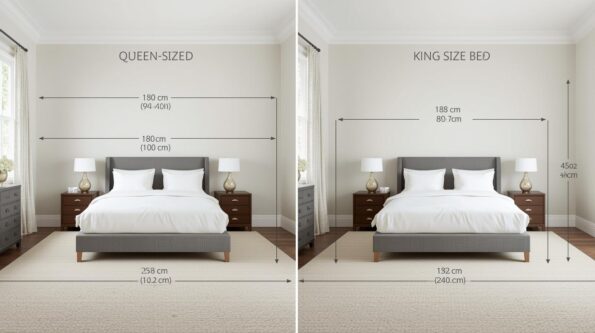
Queen size beds measuring 150cm wide by 200cm long represent the most popular bed size across UAE markets, offering excellent balance between sleeping comfort and space efficiency that suits diverse applications from master bedrooms to guest accommodations. The 150cm width provides couples with 75cm personal space each—adequate room for comfortable sleeping without constant contact while remaining close enough for intimacy and connection. The 200cm length accommodates individuals up to approximately 190cm tall comfortably, covering the vast majority of the population. This practical combination of comfort, versatility, and reasonable spatial footprint explains queens’ dominant position in UAE furniture sales.
Master bedrooms in UAE apartments and townhouses typically measure 3.5m x 4m to 4m x 4.5m—dimensions where queen beds fit proportionally well, leaving adequate clearance for movement, nightstand placement, and potentially dressers or seating without overcrowding spaces. The bed occupies the room appropriately as the central focal point without overwhelming all available space, maintaining the balanced proportions that characterize well-designed bedrooms. This proportional appropriateness makes queens particularly suitable for the moderate-sized master bedrooms found throughout UAE residential developments.
For couples, queen beds provide generally satisfactory sleeping space that accommodates most people’s preferences and sleeping styles adequately. While not as spacious as king beds that offer luxury personal space, queens deliver sufficient width that couples don’t feel cramped, can sleep comfortably in preferred positions (side, back, stomach), and don’t constantly disturb each other with normal nighttime movements. The 10cm additional length compared to full and single beds (200cm vs 190cm) better accommodates taller individuals, reducing the likelihood of feet hanging off bed ends uncomfortably.
Single adults who want generous personal sleeping space often choose queen beds as their preferred size, as the 150cm width provides ample room for sprawling, changing positions frequently, or simply enjoying the luxury of abundant space. The investment in queen over full sizes proves modest—typically just AED 500-1,000 additional for equivalent quality—making the comfort upgrade easily justified for those whose room dimensions accommodate queens comfortably. Guest rooms furnished with queen beds provide comfortable accommodations for couples or generous space for single visitors, making guests feel properly hosted and valued.
Queen bed specifications and suitability:
- Mattress dimensions: 150cm x 200cm (approximately 60″ x 79″)
- Minimum room size: 3.5m x 3.5m with minimal additional furniture
- Comfortable room size: 4m x 4m allowing full bedroom furnishing
- Ideal room size: 4m x 4.5m providing generous space and layout flexibility
- Sleeper capacity: Two adults comfortably; one adult luxuriously
- Best applications: Master bedrooms (couples or singles), quality guest rooms, moderate bedroom sizes
- Typical price range UAE: AED 2,000-10,000 depending on materials, style, and construction quality
- Clearance needed: 60-75cm on access sides and foot for comfortable movement
- Mattress/bedding availability: Excellent—most extensive selection across all types and price points
King Size Beds (180cm x 200cm): Ultimate Luxury
King size beds measuring 180cm wide by 200cm long represent the luxury standard for UAE master bedrooms, providing the spacious sleeping surfaces, impressive visual presence, and generous comfort that characterize premium bedroom furnishing. The 180cm width gives couples 90cm of personal space each—identical to single bed widths—allowing completely independent sleeping positions, minimal disturbance from partner movements, and the luxurious space that elevates sleeping from mere function to genuine pleasure. King beds make unambiguous statements about prioritizing comfort, quality, and the bedroom as sanctuary deserving significant investment.
The impressive dimensions of king beds require adequately sized bedrooms to avoid overwhelming spaces and maintain functional layouts. Master bedrooms measuring minimum 4m x 4m can accommodate king beds, though the fit may feel somewhat tight with limited space for additional furniture. More comfortable accommodation occurs in 4.5m x 4.5m rooms, while rooms measuring 5m x 5m or larger provide genuinely spacious settings where king beds fill space appropriately without dominating. UAE villa master suites and luxury apartment developments frequently offer these generous dimensions specifically because developers recognize target buyers expect king bed accommodation.
For couples who value sleep quality, minimize nighttime disturbance from partner movements, or simply appreciate abundant space, king beds represent optimal investments despite their premium costs and substantial spatial footprints. The independent sleeping zones that 90cm personal widths create mean partners’ different sleeping schedules, movements during sleep, or preferences for sleeping positions don’t compromise each other’s rest. This sleep quality improvement genuinely impacts daily life quality through better rest, making the investment in king beds worthwhile for households where bedroom space permits and budget accommodates.
Single adults choosing king beds prioritize absolute sleeping luxury and have both adequate bedroom space and budget flexibility. The 180cm width allows complete freedom in sleeping positions, accommodates pet co-sleeping without compromise, and provides the abundant space that some individuals simply prefer for comfort and psychological satisfaction. While perhaps excessive for one person’s physical needs, the psychological benefit of owning luxurious furniture and sleeping in expansive comfort shouldn’t be dismissed—if space and budget permit, king beds deliver genuine satisfaction that justifies their costs for those who value bedroom luxury.
King bed specifications and suitability:
- Mattress dimensions: 180cm x 200cm (approximately 72″ x 79″)
- Minimum room size: 4m x 4m with very minimal additional furniture
- Comfortable room size: 4.5m x 4.5m allowing adequate furniture and good clearances
- Ideal room size: 5m x 5m or larger for generous, luxury master suite feel
- Sleeper capacity: Two adults spaciously; one adult in ultimate luxury
- Best applications: Luxury master bedrooms, spacious villa suites, prioritizing sleep quality
- Typical price range UAE: AED 3,500-15,000+ depending on materials, style, and construction quality
- Clearance needed: 60-75cm on access sides and foot minimum; more generous clearances preferable
- Visual impact: Substantial presence requires adequate room size to avoid overwhelming spaces
Super King and California King: Extra-Large Options
Beyond standard king beds, super king and California king sizes provide even more expansive sleeping surfaces for UAE homeowners with exceptionally spacious bedrooms, very tall household members, or simply uncompromising luxury priorities. These oversized options remain less common than standard kings due to their substantial spatial requirements, premium costs, and more limited availability of mattresses and bedding in these specialty sizes. However, for appropriate situations, these extra-large beds deliver unmatched sleeping luxury and make stunning centerpieces in grand master suites.
Super king beds measure 200cm x 200cm—20cm wider than standard kings while maintaining the same 200cm length. This additional width increases each sleeper’s personal space to 100cm—genuinely luxurious dimensions allowing complete sleeping independence. Super kings suit couples who particularly value space, perhaps including those who co-sleep with children or pets and need accommodation beyond standard king dimensions. The square proportions (200cm x 200cm) create substantial visual presence, making super kings particularly appropriate for large master suites with square or nearly square floor plans where the bed’s proportions complement room geometry.
California king beds, originating from American markets but increasingly available through international retailers in UAE, measure 180cm x 210cm—maintaining standard king widths while extending length by 10cm. This configuration specifically accommodates very tall individuals (perhaps 195cm or taller) who find even 200cm beds cramped for comfort. The narrower width compared to super kings (180cm vs 200cm) makes California kings slightly easier to accommodate in rectangular bedrooms where width may be more constrained than length. However, the non-standard dimensions mean mattress and bedding selection proves more limited and potentially requires special ordering.
Super king and California king considerations:
- Super king: 200cm x 200cm (approximately 79″ x 79″)
- California king: 180cm x 210cm (approximately 72″ x 83″)
- Minimum room size: 4.5m x 4.5m minimum; 5m x 5m more comfortable
- Ideal room size: 5.5m x 5.5m or larger for proper proportional accommodation
- Mattress availability: Limited—special order often required, restricting choices
- Bedding availability: Restricted—fewer options and potentially higher costs
- Typical price range UAE: AED 5,000-20,000+ depending on construction and materials
Custom Sizes for Unique UAE Villa Bedrooms
Luxury UAE villas frequently feature master suites with unique architectural characteristics—perhaps exceptionally large dimensions, unusual room shapes, alcoves, or other distinctive features that standard bed sizes don’t optimally accommodate. For these special situations, custom-sized beds designed specifically for your space provide tailored solutions ensuring perfect fit, optimal proportions, and complete satisfaction. While custom beds require longer lead times and carry price premiums, the results deliver precisely what your unique space requires rather than forcing compromises with standard dimensions.
| Bed Size | Dimensions (cm) | Room Size Minimum | Room Size Ideal | Sleeper Capacity | Best For | Price Range (AED) |
|---|---|---|---|---|---|---|
| Single/Twin | 90 x 190 | 2.5m x 3m | 3m x 3.5m | 1 person | Kids, guests, studios | 800-4,000 |
| Full/Double | 120 x 190 | 3m x 3.5m | 3.5m x 4m | 1-2 people (tight) | Teens, small master | 1,200-5,500 |
| Queen | 150 x 200 | 3.5m x 3.5m | 4m x 4m | 2 people comfortably | Most master bedrooms | 2,000-10,000 |
| King | 180 x 200 | 4m x 4m | 4.5m x 4.5m | 2 people spaciously | Luxury master suites | 3,500-15,000+ |
| Super King | 200 x 200 | 4.5m x 4.5m | 5m x 5m | 2 people luxuriously | Extra-large suites | 5,000-20,000+ |
| California King | 180 x 210 | 4m x 4.5m | 4.5m x 5m | 2 tall people | Very tall sleepers | 5,000-18,000+ |
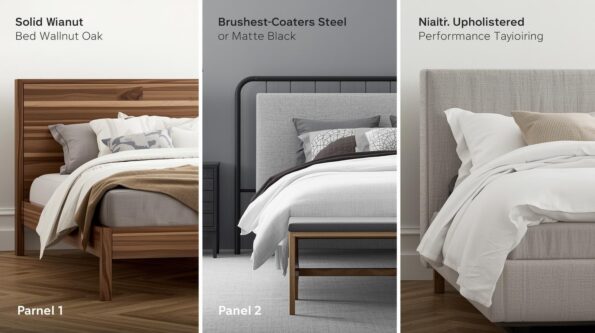
Bed Materials: Wood, Metal, Upholstered & Hybrid
The material you select for your bed frame fundamentally influences aesthetics, durability, maintenance requirements, climate performance, and overall value—making material choice one of the most consequential decisions in bed shopping. UAE’s unique environmental conditions, diverse design preferences, and varying budget priorities all factor into determining which bed materials serve specific households best. Understanding the characteristics, advantages, and limitations of primary bed materials—solid wood, engineered wood, metal, upholstered fabrics, and hybrid combinations—empowers informed selections that align with your priorities, lifestyle, and expectations for furniture performance.
Material choice extends beyond mere aesthetics or budget considerations to encompass practical realities that affect daily experience and long-term satisfaction. Different materials respond distinctly to UAE’s heat, humidity, and dust; require varying maintenance approaches; deliver different tactile and visual experiences; and present different longevity expectations. A material that looks beautiful in showrooms but requires intensive maintenance may frustrate busy households, while extremely durable materials that clash with your aesthetic preferences won’t satisfy even if they last forever. The goal involves identifying materials that balance all relevant factors appropriately for your specific situation.
The construction quality within each material category varies as dramatically as differences between materials themselves. Premium solid wood beds with expert joinery and finishing vastly exceed cheap wood beds using inferior lumber and shortcuts. Quality metal frames with substantial tubing and reinforced connections outperform flimsy metal that bends or breaks under normal use. Upholstered beds span from exquisite hand-tailored pieces to cheap staple-gun assembly. Understanding quality indicators within each material category helps you distinguish genuine value from false economy or overpriced mediocrity.
Cultural and personal aesthetics significantly influence material preferences, as different materials convey distinct design languages and emotional responses. Wood beds communicate natural warmth, traditional values, and timeless appeal. Metal frames suggest contemporary edge, industrial aesthetics, and modern sensibilities. Upholstered beds evoke luxury, comfort, and hotel-inspired sophistication. These aesthetic associations matter genuinely in creating bedrooms that feel right to you—spaces where material choices align with your personal style and values rather than working against them. The best material choice successfully balances practical performance with aesthetic satisfaction.
Investment perspective requires considering not just initial purchase costs but total ownership costs across expected lifespans. Premium materials commanding higher prices but lasting 20+ years deliver better lifetime value than cheap materials requiring replacement every 5-7 years. However, this calculation assumes you’ll actually keep furniture that long—households that relocate frequently, enjoy updating interiors regularly, or furnish temporary accommodations may rationally prioritize lower-cost materials despite shorter lifespans. Matching material quality to your actual usage patterns and longevity expectations optimizes value rather than automatically defaulting to highest quality.
Solid Wood Beds: Timeless Durability
Solid wood beds represent the traditional standard for quality furniture, offering unmatched durability, natural beauty, potential heirloom quality, and timeless aesthetics that transcend passing design trends. When properly constructed from quality kiln-dried hardwoods using traditional joinery techniques and finished with protective coatings, solid wood beds can literally last generations—becoming furniture passed to children and grandchildren rather than disposed of after a decade. This extraordinary longevity, combined with wood’s inherent warmth and character, explains why solid wood remains the premium material choice despite higher costs than alternatives.
The wood species used in bed construction dramatically affects performance, appearance, and price. Hardwoods including oak, maple, walnut, cherry, and mahogany offer superior strength, durability, and attractive grain patterns, commanding premium prices (typically AED 4,000-12,000+ for quality king beds) but delivering exceptional longevity and beauty. Softwoods like pine cost less (AED 2,000-5,000 for comparable beds) but dent and scratch more easily, making them less suitable for furniture receiving daily use. Exotic woods such as teak and rosewood provide distinctive appearances and natural oils resisting moisture, though environmental concerns about tropical hardwood harvesting warrant consideration.
The construction quality in solid wood beds deserves extremely close examination, as techniques vary from museum-quality craftsmanship to shortcuts producing furniture barely surviving warranty periods. Traditional joinery—mortise-and-tenon joints, dovetails, dowels, and corner blocks—creates connections stronger than the surrounding wood, ensuring beds remain rock-solid for decades. Modern fasteners—screws and brackets—can work adequately if executed well with reinforcement but may loosen over time, particularly in UAE’s temperature and humidity fluctuations. Quality beds combine approaches strategically, using traditional joinery for primary connections and quality hardware for components requiring periodic adjustment or disassembly.
The finish applied to wood beds protects against moisture, staining, scratching, and UV damage while enhancing natural beauty through color and sheen. Lacquer finishes provide hard, durable protection suitable for daily-use furniture, though they may show scratches if damaged. Oil finishes penetrate wood rather than sitting on surfaces, creating natural appearances and facilitating easy repair of minor damage but offering less protection against moisture—potentially problematic in humid UAE coastal areas. Stain + polyurethane combinations offer good protection with enhanced color control, though polyurethane can yellow over time with UV exposure.
Solid wood’s performance in UAE climate requires understanding wood’s natural behaviors. Wood expands and contracts with humidity changes—absorbing moisture and swelling in humid conditions, releasing moisture and contracting when dry. UAE’s air-conditioned indoor environments with relatively stable humidity minimize these movements compared to locations with dramatic seasonal humidity swings, but some expansion/contraction remains inevitable. Quality kiln-dried wood (dried to 6-8% moisture content) experiences minimal problematic movement, while poorly seasoned wood may develop cracks, warping, or loosening joints. This makes sourcing from reputable manufacturers and retailers like Rukn Al Wadi Furniture essential for ensuring wood properly prepared for UAE conditions.
Solid wood bed advantages:
- Exceptional durability: Quality hardwood beds last 20-40+ years, potentially becoming heirlooms
- Timeless aesthetics: Wood never goes out of style; complements all design approaches
- Natural beauty: Unique grain patterns create individual character impossible to replicate
- Repairability: Minor damage can be sanded and refinished; doesn’t require replacement
- Structural strength: Properly constructed wood beds provide maximum stability and support
- Value retention: Quality wood furniture maintains significant resale value
Solid wood bed considerations:
- Higher cost: Premium material and construction command significant investment
- Weight: Solid wood beds are heavy, complicating moving and rearranging
- Maintenance: Requires periodic cleaning; may need refinishing after years of use
- Climate sensitivity: Wood responds to humidity; requires proper seasoning and finishing
- Dust accumulation: Wood grain and carved details can trap dust requiring regular cleaning
Engineered Wood: Modern Affordability
Engineered wood products—including plywood, medium-density fiberboard (MDF), and particleboard—provide cost-effective bed construction materials that balance affordability with adequate performance for many applications. These manufactured materials, created by bonding wood fibers, particles, or veneers under heat and pressure, offer dimensional stability exceeding solid wood while costing significantly less. Understanding the different engineered wood types, their appropriate applications, and realistic performance expectations helps you determine when engineered wood beds represent smart value versus when solid wood investment proves worthwhile.
Plywood consists of thin wood veneer sheets laminated together with grain directions alternating 90 degrees between layers, creating strong, stable panels resisting warping and splitting far better than solid wood. Quality plywood (designated as cabinet-grade or furniture-grade) provides excellent structural performance suitable for bed construction, particularly when hardwood veneers finish visible surfaces, creating appearances indistinguishable from solid wood to casual observation. Premium beds sometimes use plywood strategically—solid wood for visible frame components and plywood for hidden structural elements—optimizing cost-performance balance.
Medium-density fiberboard (MDF) compresses fine wood fibers with resin binders into dense, smooth panels excelling for painted finishes since the uniform surface eliminates wood grain entirely. MDF costs considerably less than plywood while providing good stability and consistent quality. However, MDF’s density makes it very heavy, and the material proves more susceptible to moisture damage than plywood or solid wood—edges and corners can swell and deteriorate if exposed to significant moisture. For UAE’s humid coastal environments, MDF requires careful finishing with edge-sealing ensuring moisture cannot penetrate.
Particleboard uses wood chips and particles bonded with resins to create the most economical engineered wood product. Budget furniture frequently employs particleboard throughout construction, achieving low prices but sacrificing durability and longevity significantly. Particleboard’s coarse composition offers minimal structural strength, and material deteriorates relatively quickly—screws strip out easily, edges chip and crumble, and moisture causes catastrophic swelling and disintegration. Beds constructed primarily from particleboard should be considered temporary solutions lasting 5-7 years maximum rather than long-term investments.
The quality range within engineered wood beds spans from near-solid-wood performance to disposable furniture barely surviving basic use. Quality indicators include the engineered wood grade (furniture-grade plywood vastly exceeds construction-grade), thickness of panels (18mm minimum for structural components), edge banding or solid wood edging preventing moisture ingress and improving appearance, finishing quality protecting against environmental exposure, and whether solid wood reinforces stress points like corners and connection areas. Beds advertising “wood” without specifying solid wood almost certainly use engineered materials—request clarification before purchasing.
Engineered wood bed advantages:
- Affordability: Significantly lower cost than solid wood equivalent designs (40-60% less)
- Dimensional stability: Doesn’t expand/contract with humidity like solid wood
- Uniform consistency: No natural defects like knots or grain irregularities
- Smooth surfaces: MDF particularly excellent for painted finishes
- Environmental efficiency: Uses wood byproducts rather than virgin lumber
Engineered wood bed considerations:
- Limited lifespan: Expect 8-12 years maximum, less with low-grade materials
- Moisture vulnerability: MDF and particleboard especially susceptible to humidity damage
- Repair difficulties: Damage often irreparable unlike solid wood that can be refinished
- Weight: MDF very heavy despite not being solid wood
- Off-gassing concerns: Formaldehyde in adhesives may concern sensitive individuals
- Lower resale value: Engineered wood beds lose value quickly
Metal Bed Frames: Industrial Contemporary Style
Metal bed frames offer distinctive aesthetics ranging from vintage iron beds to sleek contemporary tubular designs, combined with practical advantages including exceptional durability, minimal maintenance, lighter weight than wood, and typically lower costs than premium wood or upholstered alternatives. The industrial and minimalist design trends prominent in contemporary UAE interiors have increased metal bed popularity, particularly among younger professionals and those drawn to modern, uncluttered aesthetics. Understanding metal bed construction variations, finish quality implications, and appropriate applications helps determine when metal beds represent optimal choices.
The metal types and construction methods used in bed frames significantly affect durability, weight, and price. Steel frames using substantial rectangular or round tubing (minimum 3cm x 3cm dimensions) provide excellent structural strength supporting heavy mattresses and users without flexing or bending. Iron beds, particularly traditional wrought iron or cast iron designs, offer nostalgic aesthetics and exceptional weight-bearing capacity but cost more due to material and fabrication expenses. Aluminum frames provide lightweight alternatives easier to move and reposition but require thicker dimensions to match steel strength. Budget metal beds may use hollow thin-wall tubing that flexes, bends, or even collapses under stress—quality metal beds feel substantial and solid.
Connection and joinery methods in metal beds deserve close inspection. Welded construction creates permanent, extremely strong connections ideal for one-piece headboards and fixed designs, though welding may limit disassembly for moving. Bolted connections using substantial fasteners allow disassembly and reassembly but must use thick metal at connection points preventing bending or stripping. Pin-and-bracket systems offer tool-free assembly convenience popular in budget furniture but may loosen over time, particularly in beds experiencing regular movement.
Finish quality dramatically affects metal beds’ appearance and longevity, especially in UAE’s humid coastal climate where untreated or poorly finished metal develops rust and corrosion. Powder-coating electrostatically applies dry powder that heat-fuses into smooth, durable finishes highly resistant to chipping, scratching, and corrosion—the preferred finish for quality metal furniture. Paint provides adequate protection if properly applied in multiple coats but may chip more easily than powder-coating. Plating (chrome, brass, nickel) creates distinctive metallic sheens and excellent corrosion resistance but costs substantially more than painted finishes. Raw/untreated metal deliberately left unfinished for industrial aesthetics requires indoor use in climate-controlled environments as UAE’s humidity accelerates corrosion.
Metal bed styling spans diverse aesthetics suitable for varied design preferences. Industrial contemporary designs using exposed steel tubing, riveted connections, and minimal ornamentation align with urban loft aesthetics and modern minimalism. Traditional iron beds featuring ornate scrollwork, decorative castings, and vintage-inspired details suit romantic or eclectic interiors. Minimalist tubular frames with clean geometric forms complement Scandinavian and Japanese-influenced design. Art deco metal beds incorporating geometric patterns, curves, and metallic finishes create sophisticated glamour. This stylistic versatility makes metal beds appropriate across diverse UAE bedroom aesthetics from ultra-modern apartments to industrial-chic lofts to romantic traditional spaces.
Metal bed frame advantages:
- Exceptional durability: Quality metal beds essentially never wear out structurally
- Minimal maintenance: No refinishing required; simple cleaning maintains appearance
- Lightweight: Easier to move and reposition than comparably sized wood beds
- Pest resistance: Metal doesn’t attract termites or other wood-damaging insects
- Affordability: Generally cost less than solid wood or upholstered equivalents
- Contemporary aesthetics: Perfect for modern, industrial, and minimalist interiors
- Longevity: Quality metal beds easily last 20-30+ years
Metal bed frame considerations:
- Cold surfaces: Metal feels cold to touch in air-conditioned UAE bedrooms
- Industrial appearance: May feel too hard-edged or masculine for some preferences
- Noise potential: Inferior construction may squeak; joints require periodic tightening
- Limited style range: Best suits contemporary/industrial aesthetics; not versatile across all styles
- Finish damage visibility: Scratches and chips in powder-coating expose metal beneath
- Assembly required: Most metal beds require moderate assembly unlike some one-piece wood designs
Upholstered Beds: Luxury Comfort
Upholstered beds featuring fabric-covered frames and padded headboards represent the fastest-growing segment in UAE furniture markets, offering the luxury hotel aesthetics, superior comfort, and sophisticated style that resonate with regional preferences for refined living environments. The soft, cushioned surfaces eliminate hard edges, provide comfortable backrest support for in-bed reading and relaxing, introduce textile richness and color variety impossible with wood or metal, and create the plush, inviting bedroom atmospheres that characterize contemporary luxury. Understanding upholstered bed construction, fabric options, and maintenance requirements helps determine when these elegant pieces suit your bedroom vision and lifestyle.
[Note: Since we already covered upholstered beds comprehensively in the previous blog, this section will provide overview and comparison context without excessive duplication]
Upholstered bed construction combines structural frames (typically wood or engineered wood) with foam padding and fabric upholstery covering all visible surfaces. Quality levels vary enormously based on frame construction, foam density, fabric grade, and upholstery craftsmanship. Premium upholstered beds from Rukn Al Wadi Furniture’s bedroom collection feature solid hardwood frames, high-density foam padding (45+ kg/m³), quality fabrics with stain protection, and expert tailoring creating smooth, wrinkle-free surfaces. Budget alternatives use particleboard frames, low-density foam, synthetic fabrics, and staple-gun assembly that may show imperfections and wear quickly.
Upholstered bed advantages:
- Superior comfort: Padded headboards provide ergonomic support for sitting upright
- Luxury aesthetics: Hotel-inspired sophistication and refined elegance
- Color/texture variety: Unlimited fabric options accommodate any design vision
- Acoustic benefits: Fabric surfaces absorb sound, creating quieter bedrooms
- Safety: Soft surfaces eliminate sharp edges, benefiting children and elderly
- Style versatility: Suits contemporary, traditional, glamorous, and eclectic interiors
Upholstered bed considerations:
- Higher maintenance: Fabric requires regular vacuuming, spot cleaning, protection treatments
- Cost: Quality upholstered beds typically cost more than equivalent wood or metal
- Dust attraction: Upholstery collects dust more than smooth wood or metal surfaces
- Staining risk: Spills can stain fabric permanently if not treated immediately
- Climate sensitivity: Humidity affects upholstery; requires fabric protection in UAE
- Limited repairability: Fabric damage may require professional reupholstering
Hybrid Designs: Best of Multiple Materials
Hybrid beds strategically combine multiple materials—perhaps wood frames with upholstered headboards, metal bases with wood accents, or leather-wrapped frames with metal feet—creating designs that capture advantages of different materials while mitigating individual limitations. These mixed-material approaches offer designers creative flexibility, allow cost optimization through strategic material placement, and enable styles impossible with single materials. Understanding effective hybrid combinations helps you identify beds successfully integrating materials versus awkward designs where materials clash rather than complement.
| Material | Durability (1-10) | Maintenance | UAE Climate Performance | Aesthetic Versatility | Price Range (King) | Best For |
|---|---|---|---|---|---|---|
| Solid Hardwood | 10 | Medium | Excellent with proper finishing | High – suits all styles | AED 4,000-15,000+ | Long-term investment, traditional to contemporary |
| Engineered Wood | 6-7 | Low | Good with moisture protection | Medium – best painted | AED 1,500-6,000 | Budget-conscious, temporary, painted finishes |
| Metal (Steel) | 9 | Very Low | Excellent with powder-coating | Medium – contemporary focus | AED 2,000-8,000 | Modern aesthetics, durability priorities, easy maintenance |
| Upholstered | 7-8 | Medium-High | Good with fabric protection | High – unlimited colors/textures | AED 3,500-15,000+ | Luxury comfort, hotel style, soft aesthetics |
| Hybrid Designs | 8-9 | Medium | Excellent – combines strengths | Very High – creative flexibility | AED 3,000-12,000 | Unique style, optimizing materials, creative design |
Bed Styles for Every UAE Aesthetic
The bed style you select establishes your bedroom’s fundamental design character and aesthetic direction, communicating personal taste, complementing architectural contexts, and creating visual impressions ranging from minimalist serenity to opulent luxury. UAE’s multicultural population and diverse design influences—from traditional Arabian heritage to European sophistication to contemporary international trends—create furniture markets offering extraordinary style variety accommodating virtually any aesthetic preference. Understanding the characteristics, origins, and appropriate applications of major bed styles empowers you to identify designs authentically expressing your personal vision while functioning well in your specific space.
Bed style encompasses more than superficial decoration—it involves fundamental design philosophy, proportional relationships, material applications, and the integration of form and function that distinguishes thoughtfully designed furniture from arbitrary assemblages of features. Platform beds exemplify minimalist modernism through clean lines and low profiles. Sleigh beds express classical elegance through curved forms and substantial presence. Four-poster beds create dramatic architectural statements. Each style carries design DNA that extends beyond individual beds to represent broader aesthetic movements and cultural values.
The relationship between bed style and overall bedroom design requires careful consideration to ensure cohesive environments where furniture complements rather than conflicts with architectural context, other furniture pieces, and intended atmosphere. Contemporary platform beds suit modern apartments with clean architectural lines but may feel jarring in traditional villa settings with ornate moldings and classical details. Conversely, elaborate sleigh beds harmonize with traditional interiors but appear out of place in minimalist contemporary spaces. Successful style selection involves understanding both what you love aesthetically and what actually works contextually in your specific bedroom environment.
UAE’s unique position as global crossroads creates interior design contexts blending traditional Middle Eastern aesthetics with international influences, requiring bed styles that either authentically represent specific traditions or successfully integrate diverse influences into cohesive contemporary fusion. This cultural hybridity means UAE bedrooms successfully accommodate both pure style expressions—perhaps strictly minimalist Scandinavian or rigorously traditional Arabic—and eclectic combinations thoughtfully mixing elements from multiple traditions. The key lies in intentionality: curated style mixing creates sophisticated fusion, while random assemblages of conflicting styles produce confusion.
Investment perspective on bed style involves recognizing that highly trendy designs may feel dated within 5-10 years, while more timeless styles remain appealing indefinitely. This doesn’t necessarily favor conservative choices—contemporary designs with clean, essential forms often prove more timeless than period styles with dated details. However, it suggests considering whether you love a bed purely because it’s current or because its fundamental design genuinely resonates regardless of trends. For furniture representing significant investments you’ll own 10-20 years, prioritizing enduring appeal over fleeting trendiness typically delivers greater long-term satisfaction.
Platform Beds: Modern Minimalist Design
Platform beds epitomize contemporary minimalist design philosophy through low-profile construction, clean geometric forms, absence of ornamental detail, and integrated mattress support eliminating box spring requirements. These sleek, unadorned designs originated in mid-20th century modernist furniture movements emphasizing function, honest materials, and rejection of unnecessary decoration—principles that resonate strongly in 21st century UAE urban living where space efficiency, visual simplicity, and contemporary aesthetics dominate design preferences among younger professionals and design-conscious residents.
The defining characteristic of platform beds involves structural bases—either solid platforms or closely-spaced slats—built directly into bed frames at heights typically ranging 30-45cm above floors. This low profile creates horizontal emphasis and visual groundedness that makes rooms feel more spacious by maximizing vertical volume above beds. The elimination of separate foundations both reduces overall bed height compared to traditional setups and simplifies bedroom aesthetics by removing the visual complexity of exposed box springs or visible foundations. The result: beds reading as single, unified objects rather than assemblages of multiple visible components.
Material choices in platform beds typically emphasize natural finishes and honest expression of materials. Wood platform beds often feature natural or lightly stained finishes showcasing grain patterns rather than heavy opaque finishes obscuring material character. Metal platform frames use powder-coated or brushed finishes allowing material nature to remain visible. Upholstered platform beds favor neutral tones and simple solid colors rather than busy patterns. This material honesty aligns with modernist principles valuing authenticity and straightforward material expression over surface decoration and material disguise.
The aesthetic versatility of platform beds—despite their modern origins—makes them remarkably appropriate across diverse contemporary interior styles. In pure minimalist spaces, platform beds with absolutely clean lines and no decorative elements whatsoever create serene, uncluttered focal points. In Scandinavian-influenced interiors, wood platform beds in light oak or ash provide the natural warmth and simple functionality characteristic of Nordic design. In industrial lofts, metal-framed platform beds complement exposed brick, concrete, and utilitarian aesthetics. Even in contemporary luxury settings, upholstered platform beds with channel tufting create sophisticated modern elegance.
Platform bed practicality extends beyond aesthetics to genuine functional advantages particularly relevant in UAE contexts. The integrated support systems eliminate box spring purchases, saving AED 800-2,000 while simplifying bed shopping. The low profiles suit rooms with lower ceilings common in some UAE apartment developments, where taller beds might feel oppressive. The under-bed clearance in many platform designs (typically 15-25cm) accommodates storage boxes or bins while maintaining the clean, low-slung appearance. For households embracing contemporary lifestyles and aesthetics, platform beds deliver form and function ideally aligned with modern living.
Platform bed characteristics:
- Height: Low profile, typically 30-45cm floor to mattress top
- Aesthetic: Clean, geometric, minimal ornamentation, horizontal emphasis
- Support system: Integrated platform or slats; no box spring required
- Material expression: Natural finishes showcasing material character
- Best for: Contemporary, minimalist, Scandinavian, industrial, modern luxury interiors
- Price range UAE: AED 1,500-10,000 depending on materials and construction quality
Sleigh Beds: Classic Elegance
Sleigh beds, characterized by distinctive curved or scrolled headboards and footboards resembling antique horse-drawn sleighs, represent classical furniture design expressing traditional elegance, substantial craftsmanship, and timeless sophistication. These beds originated in early 19th century French and American Empire styles, where the dramatic curves showcased fine woodworking skills while creating furniture with genuine architectural presence. Contemporary sleigh beds continue this tradition, offering UAE homeowners classic styling that communicates appreciation for traditional craftsmanship and design heritage.
The signature element of sleigh beds—the outward-scrolling curves on headboard and footboard tops—creates sculptural forms that catch light and create visual interest through three-dimensional shaping rather than applied decoration. Quality sleigh beds execute these curves through solid wood bent or carved to shape, demonstrating genuine woodworking skill. Budget alternatives may use composite materials shaped through molding, creating similar appearances but lacking the craftsmanship and material authenticity of solid wood construction. The curves typically terminate in scrolled or voluted ends, adding decorative flourishes that reference classical architectural elements.
Sleigh bed proportions emphasize substantial presence and visual weight appropriate for traditional interiors and formal bedroom settings. Headboards typically rise 110-140cm, creating significant vertical presence without the extreme heights of some contemporary upholstered designs. Footboards—essential elements in authentic sleigh bed designs—mirror headboard curves at reduced heights, creating visual bookends that define sleeping spaces completely. The substantial construction, prominent footboards, and overall enclosed feeling suit homeowners who prefer traditional bedroom aesthetics with clear spatial definition.
Material and finish choices significantly affect sleigh beds’ character and appropriateness for different settings. Traditional sleigh beds in rich wood tones—cherry, mahogany, walnut—with hand-rubbed finishes create formal elegance suited to traditional villa master bedrooms and classic interiors. Contemporary sleigh interpretations in lighter woods, painted finishes, or even upholstered variations adapt the distinctive silhouette to modern contexts, making the style accessible beyond purely traditional settings. Metal sleigh beds translate the curved forms into iron or steel, creating romantic or industrial variations depending on finish and detailing.
Sleigh beds work particularly well in UAE villa master suites with traditional architectural details—crown moldings, coffered ceilings, classical proportions—where the beds’ formal character harmonizes with surrounding architecture. However, the substantial footboards characteristic of sleigh designs may feel confining for taller individuals whose feet approach or contact footboards, and the enclosed feeling doesn’t appeal to everyone. Additionally, the traditional styling feels less appropriate in contemporary apartments with modern architectural context, though upholstered or metal interpretations can bridge this gap somewhat. For homeowners drawn to classical elegance and traditional craftsmanship, sleigh beds offer immediately recognizable style and enduring appeal.
Sleigh bed characteristics:
- Signature feature: Curved, scrolled headboard and footboard resembling sleigh runners
- Height: Traditional proportion, typically 110-140cm headboards
- Aesthetic: Classical elegance, substantial presence, formal character
- Materials: Traditionally solid wood; contemporary versions include metal and upholstered
- Best for: Traditional interiors, classic villa master suites, formal bedroom settings
- Price range UAE: AED 3,000-12,000 depending on materials and construction quality
Four-Poster Beds: Dramatic Luxury
Four-poster beds featuring tall vertical posts at each corner create dramatic architectural statements and luxurious focal points that transform bedrooms into grand, impressive spaces. These beds originated centuries ago when fabric canopies suspended from corner posts provided warmth and privacy in drafty castle chambers, but contemporary four-poster beds emphasize visual drama and luxury aesthetics rather than practical canopy function. For UAE homeowners with spacious villa master suites seeking furniture making bold statements, four-poster beds deliver unmatched presence and sophistication.
The defining elements—four substantial posts typically rising 180-220cm from floor level—create vertical architecture within bedrooms, drawing eyes upward and making rooms feel taller while establishing beds as undeniable focal points commanding immediate attention. Post designs range from simple, clean columns complementing contemporary aesthetics to ornately carved pillars expressing traditional craftsmanship. Some four-poster beds include horizontal rails connecting post tops, either structurally integrated or designed to support fabric canopies or drapery if desired. Others feature posts alone without connecting rails, creating lighter visual presence while maintaining vertical emphasis.
Material and styling in four-poster beds significantly affect their character and appropriate applications. Traditional wood four-poster beds with carved posts, rich finishes, and substantial construction suit classical interiors, colonial-inspired décor, and homeowners appreciating historical furniture styles. Contemporary four-poster interpretations using clean-lined posts, metal construction, or minimal ornamentation adapt the form to modern contexts, creating dramatic statements without traditional styling. Canopy four-poster beds designed specifically to support fabric draping create romantic, cocoon-like sleeping environments particularly popular in luxury villa master suites.
The dramatic presence of four-poster beds requires adequate room dimensions to avoid overwhelming spaces. Rooms measuring minimum 4.5m x 5m can accommodate four-poster beds adequately, though 5m x 5.5m or larger dimensions allow the beds to make statements without dominating completely. Ceiling heights also matter critically—rooms with 3m or higher ceilings provide adequate vertical space for tall posts without feeling cramped, while rooms with standard 2.7m ceilings may feel oppressed by posts approaching ceiling height. Additionally, four-poster beds’ substantial visual weight suits bedrooms with appropriately scaled other furniture—petite nightstands and dainty accessories appear overwhelmed beside dramatic four-poster beds requiring substantial complementary pieces.
Four-poster beds particularly suit luxury UAE villa master suites in developments like Arabian Ranches, Emirates Hills, or Palm Jumeirah where room dimensions support dramatic furniture and homeowners appreciate statement pieces conveying success and sophisticated taste. The beds’ inherent luxury and architectural presence align well with regional aesthetic preferences for impressive, high-quality furnishings. However, the traditional associations and substantial presence mean four-poster beds feel less appropriate in contemporary apartments or minimalist interiors where simpler bed styles better suit architectural contexts and design philosophies.
Four-poster bed characteristics:
- Signature feature: Four tall vertical posts at bed corners (typically 180-220cm)
- Visual impact: Maximum drama and architectural presence
- Room requirements: Minimum 4.5m x 5m; 3m+ ceiling height
- Aesthetic: Luxurious, traditional to contemporary depending on post design
- Best for: Spacious villa master suites, luxury bedrooms, statement-seeking homeowners
- Price range UAE: AED 5,000-20,000+ depending on materials, size, and craftsmanship
Panel Beds: Traditional Sophistication
Panel beds featuring flat or raised panels integrated into headboard and footboard designs represent traditional bed styling offering refined elegance without the dramatic flourishes of sleigh or four-poster beds. These understated classics suit homeowners appreciating traditional craftsmanship and quality wood furniture but preferring more restrained, less overtly ornamental designs. Panel bed versatility makes them appropriate across diverse traditional and transitional interiors, from formal master bedrooms to comfortable guest accommodations.
The characteristic panels—typically rectangular sections set within surrounding frames—showcase fine woodworking through precise joinery and proportional balance. Flat panel designs feature smooth surfaces within frames, creating clean traditional lines. Raised panel styles incorporate panels with beveled or curved edges projecting slightly from surrounding frames, adding dimensional interest and shadow lines that enhance visual richness. The paneling may appear in single large panels or multiple smaller panels arranged symmetrically, with configuration choices affecting overall visual character from simple to more elaborate.
Wood selection and finishing dramatically influence panel beds’ formality and appropriateness for different settings. Dark woods (mahogany, cherry, walnut) with rich stains create formal, traditional elegance suited to classic villa master bedrooms. Medium tones (oak, maple) offer warm traditional character with less imposing formality, working well in both master bedrooms and guest rooms. Light woods or painted finishes create casual traditional or cottage-style aesthetics less formal than dark wood counterparts. This finish flexibility allows panel beds to accommodate varied aesthetic preferences within traditional styling parameters.
Panel bed proportions typically emphasize balanced, comfortable scale rather than dramatic overstatement. Headboards usually rise 100-130cm—substantial enough to provide visual presence without overwhelming proportions. Footboards, when included, maintain modest heights creating defined sleeping spaces without excessive enclosure. This restrained scaling makes panel beds particularly appropriate for moderate-sized master bedrooms (3.5m x 4m to 4m x 4.5m) where more dramatic bed styles might overwhelm available space. The understated character also makes panel beds versatile across primary bedrooms, guest accommodations, and even upscale children’s rooms for teenagers.
Panel bed characteristics:
- Signature feature: Flat or raised panels in headboard/footboard frames
- Aesthetic: Traditional sophistication, refined without drama
- Scale: Balanced, comfortable proportions (100-130cm typical headboard height)
- Versatility: Suits master bedrooms, guest rooms, traditional to transitional interiors
- Best for: Traditional preferences without ornate styling, versatile guest rooms
- Price range UAE: AED 2,500-9,000 depending on wood quality and construction
Storage Beds: Function Meets Style
Storage beds integrating drawers, ottoman lifts, or other built-in storage solutions directly into bed structures address UAE’s practical space optimization needs while maintaining attractive aesthetics across diverse style approaches. These functional designs prove particularly valuable in Dubai and Abu Dhabi apartments where space efficiency matters, in guest rooms serving multiple functions, and for anyone appreciating furniture that works harder through dual purposes. Modern storage bed engineering creates seamless integration where storage functionality enhances rather than compromises design quality.
Contemporary storage bed designs successfully integrate storage across diverse aesthetic approaches, making functional storage available regardless of style preferences. Platform storage beds with drawer banks maintain clean modern lines. Traditional panel beds incorporate footboard drawers preserving classical aesthetics. Upholstered ottoman beds hide storage beneath lifting platforms while delivering luxury hotel styling. This style versatility means storage functionality need not dictate compromised aesthetics—well-designed storage beds deliver both practical benefits and style satisfaction simultaneously.
Storage bed characteristics:
- Signature feature: Integrated drawers, ottoman lifts, or under-bed storage access
- Functionality: Dual-purpose furniture maximizing space efficiency
- Style range: Available across contemporary, traditional, and upholstered designs
- Best for: Space-conscious apartments, guest rooms, organized households
- Price premium: Typically 20-30% above equivalent non-storage beds
- Price range UAE: AED 2,500-12,000 depending on size, storage type, and materials
Floating Beds: Contemporary Innovation
Floating beds featuring bases seemingly suspended above floors create striking contemporary statements through innovative engineering and dramatic visual effects. These cutting-edge designs appeal to UAE homeowners prioritizing the latest design trends, appreciating conversation-piece furniture, and embracing contemporary innovation in residential environments. The “floating” illusion results from recessed bases, cantilever construction, or LED lighting integrated beneath bed platforms, creating appearances of beds hovering mysteriously above floors.
Floating bed characteristics:
- Signature feature: Appears to float above floor through recessed base or cantilever construction
- Visual impact: Dramatic, conversation-generating statement pieces
- Aesthetic: Ultra-contemporary, innovative, design-forward
- Engineering: Requires robust hidden support and careful installation
- Best for: Contemporary design enthusiasts, modern apartments, design showcase bedrooms
- Price range UAE: AED 4,000-15,000+ depending on construction complexity and materials
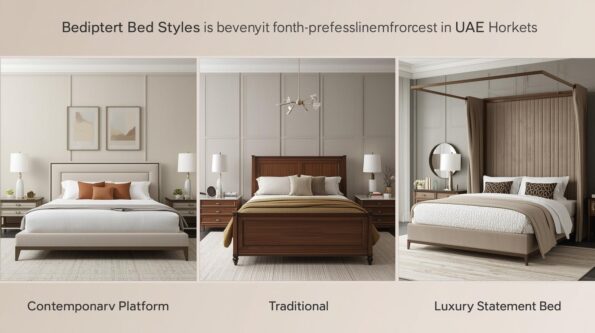
Storage Solutions: Maximizing Space in UAE Homes
Storage optimization represents one of the most pressing practical concerns for UAE homeowners, particularly those residing in Dubai and Abu Dhabi apartments where premium real estate prices create pressure to maximize every square meter’s functionality. Beds incorporating intelligent storage solutions address this challenge elegantly by utilizing the substantial under-bed footprint—space that often goes completely unused or accumulates clutter—for organized, accessible storage accommodating seasonal bedding, clothing, luggage, and countless other items requiring accommodation. Understanding the diverse storage bed types, their respective advantages, and appropriate applications helps you determine whether storage integration enhances your bed selection or represents unnecessary complexity.
The storage capacity concealed within bed structures can prove surprisingly substantial, often matching or exceeding multiple dressers’ capacity while occupying zero additional floor space. A king-size ottoman storage bed, for instance, provides access to approximately 1.2-1.5 cubic meters of storage—roughly equivalent to three standard dressers. This hidden capacity potentially eliminates the need for additional bedroom storage furniture, freeing floor space for other functions or simply creating the more spacious, uncluttered environments that characterize well-designed contemporary bedrooms. The value proposition extends beyond mere storage volume to encompass the organizational benefits of keeping items properly stored yet readily accessible.
UAE lifestyle patterns make bedroom storage particularly valuable across several dimensions. The region’s fashion-conscious culture often means extensive wardrobes requiring substantial accommodation. Seasonal clothing for international travel needs organized storage when not in use. Traditional cultural garments like thobes, abayas, and kanduras require proper keeping. Guest hospitality central to Emirati values necessitates extra bedding sets for visitor accommodation. Luggage from frequent business and leisure travel needs storage between trips. Storage beds elegantly address all these needs while maintaining the sophisticated bedroom aesthetics UAE residents expect.
The engineering quality of storage mechanisms dramatically affects long-term satisfaction and actual usage frequency. Premium systems operate smoothly and safely, featuring hydraulic lifts requiring minimal effort or robust drawer glides supporting heavy loads without jamming. Inferior mechanisms may demand excessive strength to operate, fail mechanically after limited use, or create safety hazards through sudden closures or structural failures. Testing storage operation personally during showroom visits provides invaluable information about quality that specifications alone cannot convey—if operating the storage feels difficult or unreliable in the showroom, it will only worsen with regular use at home.
The aesthetic integration of storage functionality separates exceptional designs from adequate compromises. The best storage beds maintain seamless appearances identical to non-storage equivalents, with no visible hinges, gaps, or mechanical components betraying hidden functionality. The upholstery, wood finishing, or metal work continues uninterrupted across all surfaces, and overall forms remain elegant and refined. This invisible integration ensures bedrooms maintain sophisticated aesthetics while secretly harboring significant practical storage capacity—delivering both style and substance without compromise.
Ottoman Storage Beds with Hydraulic Lift
Ottoman storage beds represent the most popular and practical storage integration approach, utilizing hydraulic gas springs that lift entire mattress platforms to reveal substantial storage compartments beneath spanning beds’ complete footprints. This ingenious design originated with Ottoman Empire furniture makers who pioneered lift-top storage chests, and modern implementations apply this centuries-old concept to contemporary beds through engineering refinements that make operation effortless and reliable. For UAE homeowners prioritizing maximum storage capacity combined with easy access, ottoman storage beds deliver optimal solutions.
The operational mechanism employs gas spring cylinders—similar to those supporting car trunk lids—mounted along bed sides that counterbalance mattress and platform weight. When you lift the platform from its foot end, the gas springs assist the lifting motion, requiring surprisingly minimal effort despite potentially lifting 50+ kilograms of mattress, bedding, and platform combined. The springs hold the platform securely in the raised position (typically 80-90 degrees vertical) while you access storage, then control descent when lowering to prevent sudden drops that could damage contents or cause finger injuries. Quality systems feature slow-descent mechanisms ensuring gentle, controlled closing.
The storage compartment itself typically spans the entire mattress footprint minus a few centimeters around perimeters for frame structure, creating one large undivided space measuring approximately 170cm x 190cm x 30-35cm deep for king-size beds—roughly 1.2-1.5 cubic meters total capacity. Some designs incorporate internal dividers creating separate sections, though most provide open space allowing flexible organization with boxes, bins, or organizers positioned as desired. The deep cavity accommodates bulky items like extra duvets, pillows, seasonal blankets, or even suitcases that won’t fit in standard drawer depths.
Access convenience represents ottoman storage’s primary advantage over drawer alternatives—lifting the platform provides immediate view of and reach to all stored contents simultaneously, unlike drawers requiring sequential opening to locate specific items. This complete visibility simplifies organization and retrieval, making ottoman storage ideal for items accessed periodically rather than daily—perhaps seasonal bedding rotated quarterly, extra pillows retrieved when hosting guests, or luggage stored between travel periods. The full-width access also accommodates irregularly shaped items that wouldn’t fit through drawer openings.
Material and construction quality critically affect ottoman storage bed longevity and satisfaction. The base structure supporting storage must be robust enough to bear considerable weight without sagging—quality designs use thick plywood or solid wood bases (minimum 15mm) with adequate support slats preventing deflection. The lift mechanism mounting points require reinforcement withstanding repeated lifting cycles over years of use. The gas spring quality determines operation smoothness and lifespan—premium German or Japanese manufactured springs last 15+ years with smooth, consistent operation, while cheap alternatives may fail within 2-3 years or operate roughly from initial installation.
Ottoman storage bed advantages:
- Maximum capacity: Entire bed footprint utilized (1.0-1.5 cubic meters typically)
- Full visibility: Lifting platform reveals all contents simultaneously
- Easy operation: Quality hydraulic systems require minimal effort
- Large item accommodation: Deep cavity fits bulky items, luggage, unusual shapes
- Dust protection: Enclosed storage protects contents from UAE’s pervasive dust
- Space efficiency: Eliminates need for additional storage furniture
Ottoman storage bed considerations:
- Access frequency: Better for periodic rather than daily access (lifting mechanism required)
- Mechanism maintenance: Gas springs eventually wear, requiring replacement
- Bedroom layout: Need adequate space at bed foot for platform lifting
- Initial cost: Typically 25-35% premium over equivalent non-storage beds
- Weight: Additional mechanisms and reinforced construction increases overall bed weight
Drawer Storage Beds: Easy Access Organization
Drawer storage beds incorporate built-in drawers—typically along bed sides or foot—providing convenient storage access without requiring mattress lifting, making them ideal for items you retrieve frequently rather than those stored long-term. The drawers function identically to standard furniture drawers, sliding out on tracks or glides to reveal compartments perfect for clothing, linens, accessories, or any regularly accessed belongings benefiting from organized, out-of-sight accommodation. For households prioritizing easy daily access over maximum storage volume, drawer storage beds deliver practical convenience.
Drawer configurations vary considerably across different bed designs, affecting storage capacity, accessibility, and aesthetic integration. Side drawer designs position drawers along one or both bed sides where they remain accessible without moving nightstands or other bedroom furniture. Two-drawer configurations place one large drawer on each side, while four-drawer designs split each side into two smaller drawers. End drawer designs locate drawers at bed feet, keeping sides clear for nightstand placement but requiring more floor clearance at the foot for drawer extension. Under-bed drawer units sit beneath platform beds on casters, pulling out completely for access—these technically aren’t integrated into bed frames but provide similar functionality.
Drawer operation quality varies dramatically based on glide mechanisms and construction precision. Ball-bearing glides provide smooth, quiet operation even when heavily loaded, supporting substantial weight without jamming or requiring excessive force—the preferred mechanism for quality furniture. Roller glides cost less but operate less smoothly and may struggle with heavy loads. Full-extension glides allow drawers to open completely, providing access to contents at the very back, while partial-extension mechanisms leave rear portions inaccessible—full extension proves worth the modest cost premium. Testing drawer operation extensively during showroom visits reveals quality differences that specifications may not fully communicate.
Storage capacity in drawer beds naturally proves less than ottoman alternatives since individual drawers occupy only portions of under-bed space, with structural components consuming the remainder. A typical four-drawer storage bed provides roughly 0.4-0.6 cubic meters total capacity—approximately one-third that of comparable ottoman beds but still substantial by standard furniture storage measures. The divided compartments facilitate organization by item type, potentially proving more practical than single large spaces requiring boxes or dividers for organizing. Drawers work particularly well for clothing storage, with many drawer beds essentially functioning as built-in dressers eliminating separate furniture needs.
Aesthetic integration proves easier with drawer storage than ottoman mechanisms since drawers can be designed as deliberate visible elements rather than hidden functionality requiring concealment. Drawer fronts may be upholstered matching headboards, finished wood coordinating with bed frames, or contemporary push-to-open designs minimizing visible hardware. Quality drawer integration ensures drawers align perfectly with frames, operate without rattling or binding, and match overall bed styling seamlessly. Inferior drawer beds show gaps, misalignments, or obviously tacked-on drawer units detracting from appearance.
Drawer storage bed advantages:
- Easy daily access: Simple pull-out operation requires no lifting
- Organized compartments: Multiple drawers facilitate categorization by item type
- Frequent-use storage: Perfect for clothing, linens accessed regularly
- Smooth operation: Quality glides enable effortless drawer operation
- Aesthetic versatility: Drawer fronts designed as integrated style elements
- Partial implementation: Option for drawers only one side if space limited
Drawer storage bed considerations:
- Reduced capacity: Typically 40-60% less storage than ottoman equivalents
- Floor clearance needed: Drawers require unobstructed side or foot space for opening
- Furniture arrangement: May limit nightstand placement if side drawers used
- Mechanism wear: Glides and tracks require occasional maintenance
- Depth limitations: Drawer heights less than ottoman cavity depth
- Cost premium: Usually 20-30% above non-storage equivalent beds
Under-Bed Clearance for Storage Bins
Traditional beds without integrated storage can still provide valuable under-bed storage capacity when designed with adequate clearance between floor and bed base, allowing storage bins, boxes, or specialized under-bed organizers to slide beneath beds utilizing otherwise wasted space. This approach offers storage flexibility without the cost premiums or mechanical complexity of built-in storage systems, making it attractive for budget-conscious households or those uncertain whether integrated storage justifies additional investment. Understanding optimal clearance dimensions and organizational strategies helps maximize traditional beds’ storage potential.
The clearance height between floor and bed base bottom determines what storage solutions fit beneath beds and how accessible they remain. Low-clearance beds (15-20cm) accommodate only very flat storage containers, perhaps suitable for off-season clothing in vacuum storage bags but too shallow for most standard bins or boxes. Moderate clearance (25-30cm) works with numerous low-profile storage containers available from retailers like IKEA, The Container Store equivalents, or local UAE home organization shops, providing reasonable capacity for folded clothing, linens, or seasonal items. High clearance (35cm+) accommodates even bulky items or tall storage boxes, though excessive height may look awkward or waste vertical space unnecessarily.
Platform beds with open bases—featuring legs or perimeter frames elevating mattress platforms without solid side panels—provide excellent under-bed storage access since you can slide containers from any direction rather than only from bed foot. Conversely, beds with solid side panels or upholstered bases wrapping to floors block side access, limiting storage retrieval to foot access only—potentially problematic if footboard exists or if bedroom layout places furniture at bed foot blocking access. When selecting traditional beds for under-bed storage use, confirming open access from at least one direction (preferably sides) ensures storage remains practically usable rather than trapped inaccessibly.
Organization systems for under-bed storage range from simple cardboard boxes to sophisticated rolling drawer units designed specifically for under-bed applications. Wheeled storage bins with casters facilitate easy rolling out and in, preventing the dragging that might damage flooring or scratch bin bottoms. Vacuum storage bags compress bulky bedding to fraction of normal volume, maximizing capacity in limited clearance. Labeled containers with clear sides or external labels prevent the “out of sight, out of mind” problem where stored items remain forgotten indefinitely. Seasonal rotation practices—storing winter items during summer and vice versa—keep under-bed storage relevant and accessible rather than becoming permanent archives.
Under-bed storage advantages:
- No cost premium: Uses standard beds without specialized mechanisms
- Maximum flexibility: Change storage approach anytime without furniture modification
- Simple operation: Slide containers in/out without mechanical assistance
- Visual access: Open bases allow seeing contents without moving everything
- DIY organization: Use any containers or systems matching your preferences
Under-bed storage considerations:
- Dust exposure: Open storage accumulates dust requiring periodic cleaning
- Clearance variability: Different beds offer vastly different usable clearance
- Visual appearance: Visible storage containers may detract from bedroom aesthetics
- Access limitations: Bed sides may block convenient storage access
- Organization required: Without built-in structure, organization requires discipline
Headboard Storage: Built-In Shelving and Compartments
Storage-integrated headboards incorporating shelves, cubbies, or hidden compartments provide supplementary storage directly at bed head where items remain within arm’s reach during sleep—perfect for books, glasses, phones, medications, or any items you want immediately accessible from bed. While headboard storage doesn’t offer the massive capacity of ottoman or drawer solutions, the convenience of having essential items literally inches from your head proves valuable for many households. Understanding headboard storage designs helps you assess whether this functionality enhances your bed selection.
Headboard storage configurations range from simple open shelving to elaborate compartmentalized systems. Open shelf headboards feature horizontal surfaces behind or above sleeping pillows where you can place books, decorative objects, or alarm clocks—essentially functioning as integrated nightstands eliminating separate table needs. Cubby designs divide headboard depth into individual compartments organizing items by category. Lift-top compartments conceal stored items behind panels, maintaining clean aesthetics while hiding clutter. Side cabinet headboards extend beyond mattress width with enclosed storage cabinets flanking the bed, creating storage without sacrificing floor space for nightstands.
The practicality of headboard storage depends significantly on depth, accessibility, and design execution. Shallow shelves (8-12cm deep) accommodate only slim items like paperbacks or phones, limiting functionality. Deeper storage (20cm+) fits larger books, tablets, water bottles, or multiple items but may require beds positioned farther from walls consuming bedroom floor space. Recessed lighting integrated into storage headboards adds valuable reading illumination while showcasing thoughtful design. USB charging ports built into modern storage headboards provide convenient device charging without visible cords or occupied electrical outlets.
Headboard storage advantages:
- Nightstand replacement: Can eliminate separate bedside table needs
- Immediate accessibility: Items remain within arm’s reach from sleeping position
- Space efficiency: Uses headboard volume without consuming floor space
- Organizational convenience: Dedicated spots for nightly essentials
- Design integration: Storage designed as intentional aesthetic feature
Headboard storage considerations:
- Limited capacity: Much less storage than base-integrated systems
- Dust accumulation: Open shelving collects dust requiring regular cleaning
- Wall clearance: Deep storage requires beds positioned away from walls
- Aesthetic impact: Storage elements must integrate well with overall design
- Weight considerations: Heavy items in overhead storage could fall if dislodged
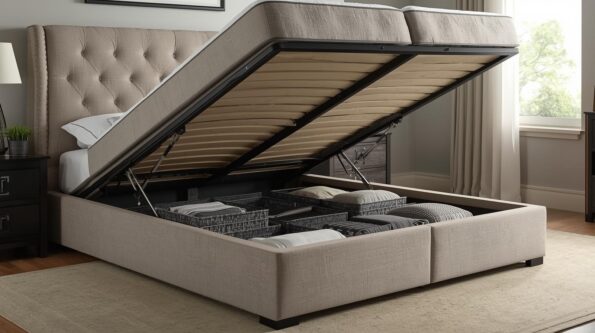
Bed Heights: Low Profile vs Standard vs Tall
Bed height significantly influences bedroom aesthetics, user accessibility, under-bed storage potential, and overall comfort—yet this critical dimension often receives insufficient consideration during bed shopping. The vertical distance from floor to mattress top varies considerably across bed designs, ranging from contemporary low-profile beds positioning sleeping surfaces just 35-40cm above floors to traditional tall beds exceeding 70cm in total height. Understanding how different height categories affect functionality, visual proportions, and daily use helps you select beds optimally suited to your physical needs, aesthetic preferences, and practical requirements.
The total bed height comprises multiple components—bed frame height, mattress thickness, and potentially foundation or box spring dimensions if used. A platform bed with integrated slats might measure 35cm to the platform top, plus 25cm mattress thickness, totaling 60cm floor-to-sleeping-surface height. A traditional bed frame accepting box springs might be 40cm tall, plus 20cm box spring, plus 25cm mattress, totaling 85cm—dramatically different heights from similar-sized beds due to construction approach differences. When evaluating bed heights, always consider complete sleeping surface height rather than frame height alone, as mattress selection dramatically affects final dimensions.
Cultural and generational preferences influence height expectations, with younger demographics and contemporary design enthusiasts typically preferring lower beds aligned with minimalist aesthetics, while older generations and traditional design appreciators often favor higher beds facilitating easier entry and exit. UAE’s multicultural population brings diverse height expectations, and furniture retailers accordingly stock beds spanning the full height spectrum. Your personal preferences, physical capabilities, and aesthetic vision should guide height selection rather than assumptions about what’s “normal” or “standard.”
Room proportions and ceiling heights interact with bed heights to affect spatial perception and visual balance. In rooms with standard 2.7m ceilings common in UAE apartments, lower beds maximize vertical space above sleeping areas, potentially making rooms feel more spacious. In grand villa master suites with 3.5m+ ceilings, taller beds with dramatic headboards fill vertical space appropriately without appearing diminutive. The relationship between bed height and other bedroom furniture also matters—tall beds pair naturally with substantial dressers and wardrobes, while low platform beds coordinate better with lower-profile accompanying furniture.
Physical accessibility deserves careful consideration, particularly for households with elderly family members, individuals with mobility limitations, or those recovering from injuries or surgeries. The ideal bed height allows sitting on the mattress edge with feet flat on floors and knees bent at approximately 90-degree angles—a position facilitating easy standing without requiring excessive push-off force or difficult rising from too-low positions. For most adults, this ideal translates to approximately 50-60cm sleeping surface heights, though taller or shorter individuals may prefer heights adjusted for their specific dimensions.
Low Profile Beds (30-40cm): Contemporary Aesthetics
Low-profile beds positioning sleeping surfaces 35-45cm above floors epitomize contemporary minimalist design while creating unique spatial qualities that appeal to design-conscious UAE residents embracing modern aesthetics. These ground-hugging designs originated in Japanese platform beds (futonsyle sleeping historically occurred directly on floors), evolved through mid-century modernist furniture, and dominate current contemporary furniture markets where horizontal emphasis and visual simplicity reign. Understanding low-profile beds’ distinctive characteristics helps determine whether this contemporary approach suits your preferences and lifestyle.
The dramatically low height creates immediate visual impact through horizontal emphasis that grounds rooms spatially and psychologically. Rather than beds appearing as substantial furniture masses occupying vertical space, low-profile designs hug floors, directing visual attention horizontally across mattress surfaces and allowing ceilings and walls to dominate vertical dimensions. This can make rooms feel more spacious by emphasizing horizontal dimensions, though paradoxically some people find very low beds make rooms feel more enclosed by bringing eye level closer to floors. The aesthetic proves highly subjective—what feels serenely grounding to some feels awkwardly low to others.
The physical experience of sleeping close to floors connects users more directly with fundamental horizontal orientation, creating sleeping experiences that feel somehow more primal or grounded than elevated sleeping. Proponents describe sensations of stability, security, and connection to fundamental horizontality. Critics note challenges getting in and out of very low beds, particularly for those with knee or back issues, and discomfort from floor-level drafts or dust in homes with inadequate climate control or cleaning. Your physical comfort with floor proximity should be tested personally—try sleeping on low mattresses or visiting friends with low-profile beds to experience the sensation before committing.
Under-bed storage becomes extremely limited or nonexistent with low-profile beds, as the 10-15cm clearance typical of these designs accommodates essentially nothing beyond very flat items in specialized low containers. If under-bed storage matters to your household, low-profile beds essentially eliminate this option, necessitating alternative storage solutions through additional furniture or closet organization. However, for minimalists or households with adequate built-in storage, the lack of under-bed access matters little and may even be preferable by eliminating temptation to allow clutter accumulation.
Cleaning underneath low-profile beds presents challenges due to restricted access—vacuum attachments and mops struggle reaching into narrow gaps, potentially allowing dust buildup. Some low-profile designs sit so close to floors that cleaning beneath becomes essentially impossible without moving beds entirely. For UAE’s dusty environment where regular cleaning proves essential, this maintenance difficulty deserves consideration. Platform beds with slightly higher profiles (20-25cm clearance) balance contemporary aesthetics with cleanability better than ultra-low designs.
Low-profile bed specifications:
- Total height: 35-45cm floor to mattress top typically
- Frame height: Usually 10-20cm, with 20-25cm mattress adding to total
- Aesthetic: Contemporary, minimalist, horizontal emphasis
- Getting in/out: Requires significant bending/rising; challenging for mobility issues
- Under-bed storage: Essentially none—very limited clearance
- Best for: Young adults, contemporary design enthusiasts, minimalists, flexible mobility
- Room types: Modern apartments, contemporary bedrooms, lower-ceiling spaces
Standard Height Beds (50-60cm): Classic Comfort
Standard-height beds positioning sleeping surfaces approximately 50-60cm above floors represent the most popular and universally comfortable height range, balancing aesthetic versatility with ergonomic accessibility across diverse ages and physical capabilities. This moderate height allows most adults to sit on mattress edges with feet flat on floors and knees at comfortable right angles—the ideal position for easy bed entry and exit without excessive effort. The broad appeal of standard heights explains why most furniture manufacturers default to dimensions within this range when designing beds for general consumer markets.
The ergonomic advantages of standard heights prove particularly valuable for households with diverse age ranges—from children to elderly grandparents—as the moderate height accommodates everyone reasonably well without optimizing for any single group at others’ expense. Young children can climb onto beds with modest assistance, adults of all sizes enter and exit comfortably, and elderly family members or those with mobility limitations find the height manageable without requiring excessive knee bending (as low beds demand) or difficult leg lifting (as tall beds necessitate). This universal accessibility makes standard-height beds practical choices for master bedrooms, guest accommodations, and any sleeping spaces serving diverse users.
The aesthetic neutrality of standard heights means they work equally well across contemporary, traditional, transitional, and eclectic interior styles without making strong stylistic statements through height alone. A 55cm-tall bed reads as appropriately proportioned in both modern apartments and traditional villas, neither appearing awkwardly low in contemporary contexts nor excessively tall in traditional settings. This versatility proves valuable for households whose design preferences may evolve over years of furniture ownership—standard-height beds adapt to changing décor more easily than heights making stronger contemporary or traditional style statements.
Under-bed storage becomes practical with standard-height beds, as 25-30cm clearances typical of these designs accommodate numerous storage solutions from low-profile bins to wheeled drawer units. This functional flexibility allows utilizing under-bed space for seasonal storage, extra linens, or any items benefiting from out-of-sight accommodation while remaining accessible. The clearance also facilitates regular cleaning underneath beds, allowing vacuum attachments and mops to reach dust and debris that would accumulate problematically in tighter spaces.
The construction variety within standard-height beds spans all material types and styles—wood, metal, upholstered, platform, traditional, contemporary—making this height category the most diverse in furniture markets. Whatever aesthetic preferences, material priorities, or functional requirements guide your bed search, you’ll find extensive options within standard-height ranges. This selection breadth contrasts with more limited options available in very low or very tall height categories that suit more specialized preferences.
Standard-height bed specifications:
- Total height: 50-60cm floor to mattress top typically
- Frame height: Varies by design—platform beds 30-35cm; traditional frames 40cm + foundations
- Aesthetic: Neutral versatility—works across all design styles
- Getting in/out: Comfortable for most adults—feet flat on floor when sitting
- Under-bed storage: Good clearance (25-30cm) for bins, boxes, cleaning
- Best for: Universal appeal, diverse households, ergonomic priority, aesthetic flexibility
- Room types: All bedroom types from master suites to guest rooms to children’s rooms
Tall Beds (65cm+): Traditional Elegance and Storage
Tall beds with sleeping surfaces 65cm or higher above floors express traditional elegance and formal bedroom aesthetics while providing generous under-bed clearance for substantial storage capacity or simply creating visually impressive furniture presence. These elevated designs reference historical periods when tall beds with multiple mattress layers conveyed luxury and status, and contemporary tall beds continue associations with traditional sophistication and substantial quality. Understanding tall beds’ distinctive characteristics helps determine whether this elevated approach suits your aesthetic preferences and functional priorities.
The impressive vertical presence of tall beds creates commanding focal points that dominate bedroom spaces, establishing clear hierarchies where beds unquestionably anchor all design and spatial arrangements. This substantial furniture character suits larger bedrooms—particularly spacious villa master suites—where proportional scale allows tall beds to make statements without overwhelming available space. In smaller bedrooms, however, tall beds may appear excessively bulky or consume vertical space disproportionately. The visual weight requires adequate room dimensions and ceiling heights to work successfully.
Traditional design associations make tall beds particularly appropriate for classical interiors, formal master bedrooms, and households preferring conventional luxury aesthetics over contemporary minimalism. Sleigh beds, poster beds, and upholstered beds with dramatically tall headboards all capitalize on elevation to enhance their inherent style statements. The height itself communicates traditional values about bedroom furniture as significant, substantial possessions worthy of prominent display—an attitude aligned with luxury villa furnishing but potentially feeling overwrought in contemporary urban apartments.
Accessibility considerations become increasingly relevant as bed heights exceed standard ranges. Getting onto tall beds requires higher leg lifts or small step stools for children, shorter adults, or elderly individuals with reduced flexibility. Similarly, getting out of tall beds involves larger drops that may stress knees or create fall risks. While these concerns don’t eliminate tall beds as options for all households, they suggest careful consideration of whether all regular users can access elevated sleeping surfaces comfortably and safely. Testing tall beds in showrooms by actually climbing on and off provides valuable personal experience informing decisions.
Under-bed storage reaches maximum potential with tall beds, as 35-40cm or greater clearances accommodate substantial storage containers, large rolling drawer units, or even under-bed furniture pieces like wheeled trunks or storage benches. This generous capacity can replace multiple dressers worth of storage, particularly valuable in bedrooms where floor space limitations restrict additional furniture placement. The high clearance also facilitates effortless cleaning underneath, ensuring dust and debris don’t accumulate problematically. For households prioritizing storage maximization, tall beds deliver optimal under-bed capacity.
Tall bed specifications:
- Total height: 65-80cm+ floor to mattress top
- Frame height: Traditional frames 45-50cm + box springs; extra-tall platforms 40-45cm + thick mattresses
- Aesthetic: Traditional elegance, formal sophistication, substantial presence
- Getting in/out: Requires higher leg lifts; may need step stool for shorter individuals
- Under-bed storage: Maximum clearance (35-40cm+) for substantial storage capacity
- Best for: Traditional interiors, spacious master bedrooms, storage priority, able-bodied users
- Room types: Villa master suites, formal bedrooms, traditional homes with adequate ceiling height
Accessibility Considerations for Elderly and Children
Bed height accessibility deserves particular attention for households including elderly family members, individuals with mobility limitations, or young children whose physical capabilities differ significantly from able-bodied adults. What works comfortably for typical adults may present genuine challenges—and even safety risks—for those with different physical needs. Understanding accessibility requirements and how bed height affects diverse users enables more inclusive furniture selection that serves entire households well rather than prioritizing some members over others.
Elderly individuals and those with arthritis, knee problems, or general mobility limitations typically find moderate-to-tall bed heights (55-65cm) easiest for comfortable entry and exit. This range allows sitting on mattress edges with minimal knee bending while keeping feet firmly planted on floors, then standing with moderate push-off force that doesn’t strain knees or back excessively. Very low beds requiring deep squatting to sit and significant rising force to stand become increasingly difficult with age, while extremely tall beds demanding high leg lifts to mount may also present challenges. The ergonomic “sweet spot” for elderly users typically falls around 60cm—moderately tall by contemporary standards but accommodating for older bodies.
Young children face opposite challenges, as their shorter stature makes tall beds difficult to climb onto unassisted. Beds with sleeping surfaces 55-60cm high may require step stools or adult assistance for children under approximately 120cm tall, while beds 65cm+ become essentially inaccessible without help. However, very low beds—while accessible—may feel confining or inappropriate as children grow and desire more “grown-up” furniture. Many families compromise with standard-height beds (50-55cm) that children can access with modest effort while remaining comfortable as they grow, potentially adding temporary step stools that remove once kids gain height.
| Bed Height | Total Height | Visual Character | Getting In/Out | Under-Bed Storage | Best User Types | Typical Price Range (King) |
|---|---|---|---|---|---|---|
| Low Profile | 35-45cm | Contemporary, minimal, horizontal | Requires bending; challenging for mobility issues | Minimal (10-15cm clearance) | Young adults, design enthusiasts | AED 2,000-10,000 |
| Standard | 50-60cm | Neutral, versatile, balanced | Comfortable for most—feet flat when sitting | Good (25-30cm clearance) | Universal—all ages and abilities | AED 1,800-12,000 |
| Moderately Tall | 60-65cm | Traditional-leaning, substantial | Slightly elevated; very comfortable for elderly | Very good (30-35cm) | Elderly-friendly, traditional preferences | AED 2,500-13,000 |
| Tall | 65-80cm+ | Traditional formal, commandig | Requires leg lift; may need assistance | Maximum (35-40cm+) | Traditional formal settings, storage priority | AED 3,000-15,000+ |
Room Size and Layout Planning
Understanding the relationship between your bedroom dimensions and appropriate bed sizing represents one of the most fundamental yet frequently overlooked aspects of successful bed selection. A bed that looks perfect in a furniture showroom’s generous display area may overwhelm your actual bedroom, while undersized beds in spacious master suites appear lost and fail to anchor spaces appropriately. Beyond mere physical fit, proper bed-to-room proportions affect traffic flow, furniture placement possibilities, visual balance, and the overall sense of comfort versus cramped confinement that determines whether bedrooms feel like pleasant retreats or uncomfortable furniture storage rooms.
UAE residential architecture presents diverse bedroom dimensions creating varied bed sizing challenges. Compact Dubai apartments in high-rise developments like Dubai Marina or JBR often feature master bedrooms measuring 3.5m x 4m—dimensions requiring careful bed selection balancing sleeping comfort with adequate circulation space. Mid-range townhouses and apartments offer moderate master bedrooms around 4m x 4.5m where most bed sizes work reasonably well with thoughtful layout planning. Luxury villa master suites in developments like Arabian Ranches or Emirates Hills may exceed 5m x 6m, providing generous dimensions where even king and super-king beds fill space appropriately without overwhelming.
The measurement and layout planning process deserves systematic attention rather than casual eyeballing that often produces disappointing results. Professional interior designers employ specific methods—measuring room dimensions precisely, marking bed footprints on floors using tape, creating scale drawings showing furniture arrangements—ensuring designs work before purchasing furniture. These same techniques prove accessible to homeowners willing to invest modest time in planning, preventing costly mistakes like beds that physically fit but functionally fail by leaving inadequate clearances or blocking essential access routes.
Cultural considerations influence room layout beyond pure dimensional calculations. Emirati hospitality values may make guest bedroom sizing and bed selection as important as master bedroom decisions. Families with multiple children sharing rooms need layout solutions accommodating multiple beds plus study areas and play space. The indoor-focused lifestyle necessitated by UAE climate means bedrooms often serve more functions than in temperate regions—perhaps accommodating home offices, dressing areas, exercise spaces, or relaxation zones—requiring layout plans accounting for multifunctional bedroom use rather than assuming bedrooms exist solely for sleeping.
The investment in careful room planning before bed shopping pays immediate dividends through confident furniture purchases and long-term benefits through bedrooms that function optimally throughout years of daily use. Furniture arranged with adequate clearances, proportional balance, and thoughtful traffic flow creates spaces you genuinely enjoy rather than merely tolerate—an outcome worth the planning effort required to achieve it.
Measuring Your UAE Bedroom Correctly
Accurate bedroom measurement forms the essential foundation for all subsequent bed selection and layout decisions, yet many furniture shoppers rely on approximate guesses or vague recollections producing unreliable data leading to poor choices. Professional-quality measurements require just 15-20 minutes and basic tools—a measuring tape, notepad, and perhaps a smartphone for reference photos—but deliver precise information enabling confident furniture shopping and layout planning. Understanding proper measurement techniques ensures the data guiding your decisions proves accurate and comprehensive.
Begin by measuring the room’s basic rectangular dimensions—length and width at floor level. Measure in multiple locations (both ends and middle) as rooms aren’t always perfectly rectangular due to construction variations or architectural features. Record the smallest dimensions as these represent constraints that furniture must accommodate. Convert all measurements to consistent units—centimeters prove most useful as they align with furniture specifications commonly used in UAE markets. For example, a bedroom might measure 395cm x 425cm—dimensions immediately comparable to bed specifications listing queen beds as 150cm x 200cm.
Beyond basic perimeter dimensions, identify and measure architectural features affecting furniture placement: door locations and swing directions (doors need clearance and shouldn’t hit furniture when opened), window positions and sill heights (affecting bed headboard placement), closet door locations (requiring unobstructed access), electrical outlet positions (determining lamp and device charging locations), and any permanent fixtures like built-in shelving or air conditioning units. These features create zones where furniture cannot go, effectively reducing available space below nominal room dimensions.
Ceiling height also deserves measurement, particularly for rooms where very tall beds or dramatic four-poster designs might be considered. UAE apartments typically feature 2.7-3.0m ceilings while villas may offer 3.0-4.0m heights—dimensions affecting what bed styles appear proportionally appropriate. Measure ceiling height accurately rather than estimating, as even 20-30cm differences significantly impact how tall furniture appears within spaces. Document any ceiling features like fans, exposed beams, or sloped ceilings that might constrain placement or visual impact.
Creating a simple floor plan—even a rough sketch with accurate measurements labeled—provides invaluable reference during furniture shopping. Draw the room perimeter to scale (perhaps 1cm = 50cm room size), mark door and window locations, indicate outlet positions, and note any immovable features. This visual reference helps you evaluate whether beds you’re considering will fit and where they might position optimally. Many furniture retailers’ sales consultants can review floor plans with you, suggesting arrangements and identifying potential issues before purchase rather than discovering problems after delivery.
Essential bedroom measurements checklist:
- Room length and width: Measure at multiple points, record smallest dimensions
- Door location: Measure door width, note swing direction, mark clearance needed
- Window position: Measure window wall location, window width, sill height
- Ceiling height: Measure floor to ceiling at multiple points
- Closet doors: Note locations requiring unobstructed access
- Electrical outlets: Mark positions determining lamp and device placement
- Permanent fixtures: Document AC vents, built-in furniture, radiators
- Traffic patterns: Identify primary paths through room requiring clearance
Minimum Clearance Requirements Around Beds
Interior designers and ergonomic specialists recommend specific clearance dimensions around beds ensuring comfortable movement, easy access, and functional bedroom use without constantly navigating tight squeezes or awkward furniture arrangements. These evidence-based guidelines reflect human body dimensions, typical movement patterns, and practical activities like making beds, accessing nightstands, and moving around rooms comfortably. Understanding and applying recommended clearances prevents cramped, frustrating bedroom layouts that compromise daily comfort despite technically fitting all desired furniture.
Primary access sides (where you regularly get in and out of bed) require minimum 60cm clearances allowing passage without sideways shuffling or carefully navigating narrow gaps. This dimension accommodates average adult shoulder width plus modest movement space. However, 70-75cm clearances feel noticeably more comfortable, allowing confident movement without always thinking about tight spaces. If your bedroom dimensions permit 75cm clearances, the improved daily comfort justifies using available space for circulation rather than additional furniture that might fit in tighter arrangements.
Bed foot clearances need minimum 90cm for comfortable movement past beds without feeling squeezed between bed and opposing walls or furniture. This dimension also facilitates making beds comfortably—reaching across mattress widths to tuck sheets requires leaning forward while standing at bed foot, and inadequate clearance forces awkward bending or prevents reaching mattress far edges. The 90cm minimum increases to 100-110cm if doors open toward bed feet, ensuring doors swing fully without contacting mattress edges and allowing passage even with doors open.
Secondary access sides (perhaps wall sides where nightstands sit but where you don’t regularly access the bed) can accept reduced clearances around 40-50cm—sufficient for dusting, changing sheets from that side occasionally, or emergency egress if needed. However, clearances below 30cm create essentially inaccessible gaps serving no useful function and simply trapping dust. If room dimensions force choosing between adequate primary clearances and maintaining wall-side clearances, prioritize comfortable primary access—it’s better to have one well-cleared access side than multiple inadequately cleared approaches.
Furniture approach clearances require additional consideration beyond bed clearances alone. Nightstand drawers need approximately 40cm pull-out space beyond table edges, meaning nightstands positioned 70cm from walls require 110cm total clearance (70cm access to bed plus 40cm drawer extension). Dresser drawers similarly need clearance for opening and standing while accessing drawer contents—plan 90-100cm clear space in front of dressers. These furniture clearances often constrain layout options more than bed clearances alone.
Walking paths through bedrooms—perhaps from door to bed, door to closet, or door to bathroom—should maintain 80-90cm widths for comfortable single-person passage or 120cm for two people passing simultaneously. These traffic corridors shouldn’t require navigating between tightly spaced furniture or forcing sideways orientation. Planning primary traffic patterns early in layout development prevents furniture arrangements that technically fit but force inconvenient daily navigation.
Recommended bedroom clearances:
- Primary bed access: 70-75cm for comfortable daily use (minimum 60cm)
- Bed foot: 90-100cm for movement and bed-making (minimum 90cm)
- Wall side: 40-50cm for occasional access (30cm absolute minimum)
- Nightstand approach: 70cm bed access + 40cm drawer extension = 110cm total
- Dresser front: 90-100cm for drawer opening and standing while accessing
- Traffic paths: 80-90cm single person; 120cm for passing
Furniture Placement for Optimal Flow
Strategic furniture arrangement transforms adequate bedroom dimensions into genuinely comfortable, functional spaces where everything feels logically positioned and movement flows naturally rather than requiring constant attention to navigating obstacles. The bed positioning establishes the foundation upon which all other furniture arrangement decisions build, making bed placement the critical first step in layout planning. Understanding furniture arrangement principles and common layout patterns helps you develop bedroom arrangements that balance aesthetics with functionality across all relevant dimensions.
Bed positioning traditionally centers on the longest wall, creating symmetrical arrangements that feel balanced and formal. This centering allows equal nightstand placement on both bed sides, maintains balanced clearances, and typically positions headboards prominently visible upon entering rooms—establishing beds as clear focal points. In rectangular bedrooms, the longer wall usually provides best bed accommodation, particularly for larger bed sizes. However, architectural features like windows, doors, or closets may make centered placement impossible or impractical, requiring alternative approaches.
Diagonal bed placement occasionally works in square or nearly square bedrooms, positioning beds at 45-degree angles to walls. This unconventional arrangement can make small square rooms feel more spacious by breaking up boxy geometry, create dramatic focal points, and potentially improve traffic flow. However, diagonal placement sacrifices substantial floor area to dead corners behind bed angles, reducing usable space significantly. This approach works better in larger rooms (4.5m x 4.5m or more) where wasted corner space doesn’t severely constrain other furniture placement.
Nightstand placement flanking beds symmetrically creates balanced, hotel-style aesthetics most people find visually pleasing and functionally satisfying. Matching nightstands positioned equidistant from bed edges establish clear zones for each sleeper while maintaining aesthetic balance. Asymmetrical nightstand placement—perhaps one side only if space constrains—works functionally but appears less finished. Nightstand heights should align roughly with mattress tops (within 5-10cm) for comfortable reaching from lying positions. Position nightstands close enough to beds for easy reaching (typically 5-10cm maximum gap) but not so close that bedding gets trapped between furniture pieces.
Dresser positioning depends on available wall space and bedroom shape. Placing dressers opposite bed feet creates balanced symmetry and allows viewing both bed and dresser from room entry. Positioning dressers perpendicular to beds along side walls works when foot walls lack adequate space or feature windows. Avoid placing dressers where they obstruct natural traffic patterns or block access to other essential areas. Ensure adequate clearance (90-100cm) in front of dressers for drawer opening and comfortable standing while accessing contents.
Visual balance across the entire room should inform all furniture placement decisions beyond functional clearances alone. Distribute visual weight relatively evenly rather than clustering all substantial furniture on one side while leaving the other side empty. Tall furniture pieces like wardrobes shouldn’t all group together creating overwhelming masses—spread vertical elements around perimeters maintaining balanced proportions. The goal involves rooms where furniture appears thoughtfully distributed rather than randomly placed or awkwardly clustered.
Small Bedroom Solutions for Dubai Apartments
Compact Dubai apartment bedrooms—often measuring just 3.5m x 4m or even smaller in studio configurations—present significant furniture placement challenges requiring strategic solutions maximizing functionality within severe space constraints. These modest dimensions characterize numerous Dubai developments where premium real estate prices incentivize efficient building designs trading generous room sizes for desirable locations in Marina, Downtown, or Business Bay. Understanding space maximization strategies helps create comfortable, functional small bedrooms rather than cramped, frustrating spaces where furniture dominates at circulation’s expense.
Queen beds typically represent optimal sizes for compact master bedrooms, providing adequate sleeping comfort for couples while consuming less space than king beds that might overwhelm available area. The 150cm x 200cm footprint leaves better clearances in 3.5m x 4m rooms than 180cm kings requiring 60cm minimum clearances on both sides and foot—clearances consuming total widths of 300cm (180cm bed + 60cm each side) and leaving just 50cm if room measures 350cm wide. Queens’ 270cm total width requirement (150cm + 60cm clearances both sides) leaves 80cm extra width—meaningful improvement allowing more comfortable movement or modest additional furniture.
Space-efficient furniture selections prioritize multi-functional pieces and compact designs maximizing utility within minimal footprints. Storage beds eliminate separate dresser needs, freeing floor space. Wall-mounted nightstand shelves or very narrow side tables (30-35cm depth vs. standard 45-50cm) reduce intrusion into circulation space. Mirrored wardrobe doors create visual spaciousness illusions while serving grooming functions without separate standing mirrors. Eliminating footboards prevents visual and physical blockage at bed feet where circulation often matters most. Every furniture piece should justify its space consumption through genuine utility—avoid decorative-only items consuming precious square meters.
Vertical space utilization through tall rather than wide furniture, wall-mounted storage, and overhead shelving extracts maximum functionality from limited floor areas. A tall, narrow chest of drawers provides similar storage capacity to wide dressers while consuming less floor footprint. Floating shelves above nightstands hold books, devices, and personal items without occupying floor space. Wall-mounted TVs eliminate media console furniture requirements. This vertical emphasis follows ancient space-constrained living principles—when floor area constrains, build upward maximizing three-dimensional space usage.
Light colors and reflective surfaces create visual spaciousness making small rooms feel less cramped than dark colors absorbing light and emphasizing confined dimensions. Light wood or white painted beds maintain airy aesthetics. Pale wall colors (whites, creams, soft grays) reflect light making rooms brighter and seemingly larger. Mirrors strategically positioned reflect available light and views, creating depth illusions. These visual tricks don’t actually enlarge rooms but significantly affect psychological perceptions of space—and in small bedrooms, perceived spaciousness matters as much as actual dimensions.
Large Master Suite Bed Selection
Spacious villa master suites measuring 5m x 6m or larger present opposite challenges from compact apartments—these generous dimensions require substantial furniture that fills space appropriately without beds appearing diminutive and lost within oversized rooms. Understanding scale relationships and furniture proportioning helps create bedrooms that feel luxuriously spacious rather than empty or under-furnished, making the most of valuable square meters rather than leaving them wastefully vacant.
King or super king beds become appropriate in large master suites, as their substantial footprints (180cm or 200cm widths) properly anchor spacious rooms without appearing undersized. A queen bed in a 5m x 6m room leaves so much surrounding empty space that the bedroom may feel incomplete or temporary—like furniture hasn’t arrived yet rather than deliberately sparse minimalism. The larger bed dimensions create visual weight appropriate to room scale, establishing clear focal points that command attention and organize surrounding space hierarchically.
Complete bedroom sets including all companion pieces—matching nightstands, dresser, chest, bench, and perhaps armoire—fill large master suites appropriately while maintaining coordinated aesthetics. Individual furniture pieces that might overwhelm smaller rooms find comfortable accommodation in spacious settings. A substantial dresser measuring 180cm wide, impressive wardrobe reaching 220cm height, upholstered bench at bed foot, and pair of sizeable nightstands all fit without crowding when room dimensions permit, creating fully furnished luxury environments rather than sparsely populated expanses.
| Bedroom Dimensions | Recommended Bed Size | Minimum Clearances | Furniture Capacity | Layout Considerations | Common UAE Applications |
|---|---|---|---|---|---|
| 3m x 3m | Twin/Single or Small Full | 50cm all sides | Bed + 1 nightstand or small desk | Very tight—prioritize essentials only | Children’s rooms, small studios |
| 3.5m x 3.5m | Full or Queen (tight fit) | 60cm primary sides; 50cm elsewhere | Bed + 2 nightstands (narrow) | Careful selection required—no extra furniture | Compact apartment masters |
| 3.5m x 4m | Queen (ideal) | 60-70cm primary; 50cm+ foot | Bed + 2 nightstands + small dresser | Standard Dubai apartment layout | Typical apartment masters |
| 4m x 4m | Queen or King (moderate) | 70cm sides; 90cm foot | Bed + nightstands + dresser + bench | Comfortable standard arrangement | Mid-range apartments, townhouses |
| 4m x 4.5m | Queen or King (comfortable) | 70-75cm sides; 100cm foot | Full bedroom set—5-6 pieces | Good space for additional furniture | Larger apartments, villa secondary rooms |
| 4.5m x 5m | King (ideal) | 75cm sides; 100cm+ foot | Complete set + seating area possible | Spacious, well-proportioned | Villa master suites, luxury apartments |
| 5m x 6m+ | King or Super King | 80cm+ sides; 110cm+ foot | Complete set + seating + potentially office area | Multi-functional luxury space | Large villa masters, luxury developments |
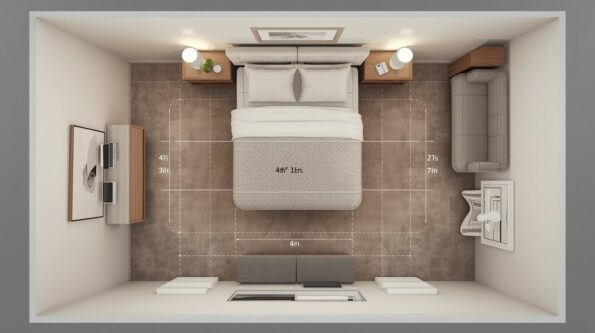
Material Performance in UAE Climate
The United Arab Emirates’ unique environmental conditions—characterized by extreme heat, high coastal humidity, persistent fine dust, and dramatic indoor-outdoor temperature differentials created by air conditioning—present specific challenges that significantly affect bed materials’ performance, longevity, and maintenance requirements. Understanding how different materials respond to UAE’s climate ensures you select beds that not only look beautiful initially but maintain their appearance and functionality throughout years of exposure to these demanding conditions. Climate-appropriate material selection proves particularly critical for furniture representing significant investments you’ll own for 10-20 years or more.
Many furniture shoppers focus primarily on aesthetics and price while overlooking climate performance—an understandable but ultimately costly oversight that may lead to furniture deteriorating prematurely, requiring intensive maintenance, or developing problems like warping, cracking, rust, or mold growth. Materials performing excellently in temperate European or North American climates where many furniture designs originate may prove problematic in UAE’s harsh conditions. Conversely, materials specifically selected or treated for hot, humid, dusty environments deliver reliable performance that justifies potential cost premiums through reduced maintenance and extended lifespans.
The relationship between indoor climate control and furniture performance also deserves attention. UAE homes maintain artificial climates through air conditioning, creating relatively stable temperature and humidity conditions compared to outdoor extremes. However, AC systems can’t completely eliminate environmental impacts—some humidity infiltrates even well-sealed buildings, dust penetrates through minute gaps and door openings, and temperature fluctuations occur during AC cycling or when systems shut off temporarily. Additionally, furniture sometimes experiences outdoor conditions during delivery and moving, exposing materials to full environmental extremes during these vulnerable periods.
Investment perspective on climate performance involves recognizing that furniture failing prematurely due to climate damage wastes your entire purchase cost, while climate-appropriate materials delivering extended service justify higher initial investments through superior total ownership value. A AED 5,000 bed lasting 15 years in UAE conditions delivers far better value than a AED 3,000 bed requiring replacement after 7 years due to climate-related deterioration. The calculation favors investing in climate-appropriate materials, construction, and finishes ensuring furniture survives and thrives despite environmental challenges.
The guidance in this section applies climate science and materials engineering principles to practical bed selection, helping you understand which materials excel in UAE conditions, which require special treatments or maintenance, and which should be avoided unless you’re willing to accept compromised longevity or intensive care requirements. This knowledge transforms climate from abstract concern into actionable selection criteria guiding smart furniture investments.
Heat and Humidity: How They Affect Bed Materials
Heat and humidity represent the two most significant environmental factors affecting furniture performance in UAE, particularly in coastal cities like Dubai and Abu Dhabi where summer humidity regularly exceeds 80-90% despite overall arid regional climate. Understanding how these conditions impact different materials helps you anticipate performance issues, select materials naturally resistant to climate challenges, and implement protective measures extending furniture lifespan.
Heat effects on furniture materials vary by material type and construction methods. Wood expands in heat, potentially causing joints to loosen if expansion wasn’t accommodated in design or if wood wasn’t properly seasoned before construction. Adhesives in engineered wood products may soften or degrade in sustained high temperatures, causing delamination or structural failures. Metal becomes uncomfortably hot to touch in direct sunlight or inadequately air-conditioned spaces—a consideration for metal bed frames in bedrooms where AC may cycle off during unoccupied daytime hours. Upholstery fabrics may fade from UV exposure if beds position near windows without protective window treatments, and some synthetic fabrics may off-gas unpleasant odors when heated.
Humidity impacts prove even more problematic than heat alone for many materials. Wood absorbs atmospheric moisture, swelling dimensionally—then releases moisture and contracts when air dries. This constant expansion-contraction cycling with humidity changes stresses joints, can cause cracking or warping, and may loosen mechanical fasteners over time. Engineered wood products, particularly MDF and particleboard, prove extremely vulnerable to moisture damage—water exposure causes catastrophic swelling and structural disintegration that’s essentially irreparable. Metal develops rust and corrosion in humid conditions unless protected by quality finishes. Upholstery fabrics may absorb humidity, feeling slightly damp in extreme conditions, and sustained moisture exposure can encourage mold or mildew growth in foam padding.
The combination of heat and humidity creates particularly challenging conditions, as warm air holds more moisture than cool air, meaning high temperature + high humidity delivers maximum moisture exposure to furniture materials. UAE’s coastal summer conditions—regularly 35-40°C with 80-90% humidity outdoors—create worst-case scenarios. While indoor air conditioning reduces these extremes dramatically, buildings aren’t hermetically sealed, and some infiltration occurs continuously. Additionally, humidity spikes during morning hours when AC might be set to lower overnight temperatures, potentially creating condensation on cold surfaces similar to morning dew on grass.
Climate-resistant construction features mitigate environmental impacts through careful material selection and protective treatments:
- Kiln-dried hardwoods processed to 6-8% moisture content experience minimal problematic movement
- Moisture-resistant finishes seal wood against humidity absorption and release
- Marine-grade plywood with waterproof adhesives resists delamination in humid conditions
- Powder-coated metal provides superior corrosion protection compared to paint alone
- Stain-resistant treated fabrics repel moisture and resist mold/mildew growth
- High-density foam (45+ kg/m³) less susceptible to moisture absorption than low-density alternatives
Wood Behavior in UAE Conditions
Wood’s natural hygroscopic properties—its tendency to absorb and release moisture in response to atmospheric humidity changes—create both challenges and opportunities in UAE furniture applications. Understanding wood’s moisture-related behaviors and how to select and maintain wood beds for local conditions ensures this classic furniture material delivers the exceptional longevity and beauty it’s capable of providing.
Properly seasoned solid hardwoods represent optimal wood choices for UAE furniture when appropriately finished and maintained. “Seasoning” or “kiln-drying” reduces wood’s moisture content from its natural state (40-60% moisture content when freshly cut) to furniture-appropriate levels around 6-8%. This careful drying process removes water from cell structures, stabilizing wood dimensionally so future moisture absorption/release causes minimal expansion/contraction. Quality furniture manufacturers specify kiln-dried wood in their construction, and this specification matters critically in humid environments like UAE coastal cities.
Wood species selection influences climate performance, as different species possess varying natural properties affecting durability and dimensional stability. Teak contains natural oils providing exceptional moisture resistance and making it virtually impervious to rot—characteristics explaining teak’s traditional use in boat building and outdoor furniture. However, teak’s scarcity and resulting high cost limit its furniture applications. Oak offers good dimensional stability and durability at more accessible pricing. Mahogany provides excellent stability and moisture resistance along with beautiful grain patterns, though environmental concerns about tropical hardwood harvesting warrant consideration. Pine and other softwoods, while affordable, prove less dimensionally stable and more susceptible to moisture damage than hardwood alternatives.
Finish quality and type dramatically affect wood’s moisture protection and thus its suitability for UAE conditions. Polyurethane finishes create tough, moisture-resistant surface barriers preventing humidity absorption while protecting against scratching and staining. Lacquer finishes provide good protection and beautiful appearances but may require periodic maintenance. Oil finishes penetrate wood rather than creating surface films, offering some moisture resistance while maintaining natural wood feel and appearance—though they provide less complete moisture protection than film-forming finishes. Unfinished or poorly finished wood remains vulnerable to moisture absorption causing swelling, warping, or cracking—avoid beds with inadequate finishing, particularly in hidden areas like frame undersides where shortcuts may lurk.
Maintenance practices extend wood furniture lifespan in UAE conditions. Regular dusting prevents abrasive particle accumulation that might scratch finishes during cleaning. Immediate spill cleanup prevents moisture penetration. Periodic furniture polish or wax application (following manufacturer recommendations) maintains finish integrity. Avoiding direct sun exposure prevents UV damage causing fading and finish degradation. Maintaining relatively stable indoor temperature and humidity through consistent AC operation minimizes expansion-contraction cycling that stresses wood and joints. These simple practices dramatically improve wood furniture longevity compared to neglectful ownership.
Metal Durability and Temperature Considerations
Metal bed frames offer inherent durability advantages in UAE climate when properly finished, as metal doesn’t absorb moisture like wood or engineered wood products, eliminating humidity-driven swelling, warping, or rot concerns. However, metal presents its own climate-related challenges requiring attention to finish quality, temperature characteristics, and corrosion prevention ensuring excellent long-term performance.
Corrosion prevention represents the primary climate concern for metal furniture in UAE’s humid coastal environment. Unprotected or poorly finished steel develops rust rapidly in high-humidity conditions—a process accelerating dramatically when salt-laden coastal air contacts exposed metal. Powder-coating provides optimal corrosion protection through electrostatically applied powder that fuses into continuous, non-porous surface films creating effective moisture barriers. Quality powder-coating dramatically outperforms paint in corrosion resistance, scratch resistance, and longevity—making powder-coated metal beds preferable to painted alternatives for UAE applications.
Stainless steel offers inherent corrosion resistance through chromium content creating protective oxide layers preventing rust. However, true marine-grade stainless (316 grade) proves expensive, and lower grades (304) still corrode in highly corrosive coastal environments, particularly if protective oxide layers get scratched exposing underlying metal. Aluminum naturally resists corrosion through oxide layer formation and proves lighter than steel, though it requires thicker dimensions to match steel’s strength. Galvanized steel with zinc coating provides good corrosion protection at moderate cost. Each metal and finish combination presents different cost-performance trade-offs requiring evaluation against your specific priorities and budget.
Temperature conductivity in metal furniture creates tactile considerations in UAE’s climate-controlled interiors. Metal feels cold to touch in heavily air-conditioned bedrooms—potentially unpleasant when making contact with metal frame components during bed entry/exit or when accidentally contacting metal elements during sleep. Conversely, metal in direct sunlight becomes uncomfortably hot—though this matters less for beds typically positioned away from windows. Upholstered metal beds or frames with wood accents at common touch points mitigate cold-touch concerns while maintaining metal’s structural advantages.
Maintenance simplicity represents metal’s major practical advantage—regular dusting and occasional damp-cloth wiping maintain appearance without specialized products or techniques. Powder-coated finishes resist scratching and wear excellently, maintaining attractive appearances for 15-20+ years with minimal care. If finish damage does occur—perhaps scratching from furniture contact during moving—touch-up powder coating proves challenging, though rust-inhibiting spray paints can provide temporary protection until professional refinishing. This minimal maintenance requirement makes metal beds excellent choices for practical-minded households prioritizing low-care furniture.
Upholstery Fabric Performance in Coastal Cities
Upholstered beds introduce fabric elements requiring careful consideration in UAE’s humid coastal climate, as textiles potentially absorb moisture, harbor mold or mildew, accumulate dust and allergens, and suffer UV fade damage more readily than hard-surface materials like wood or metal. However, modern upholstery fabrics engineered specifically for demanding environments combined with proper treatments and maintenance deliver excellent performance justifying upholstered beds’ aesthetic and comfort advantages.
Performance fabrics engineered for durability, stain resistance, and easy cleaning represent optimal choices for UAE upholstered beds, particularly in humid coastal locations. These high-tech textiles typically incorporate tightly woven synthetic fibers creating nearly impenetrable surfaces where liquids bead rather than absorbing, allowing quick cleanup before staining occurs. Many performance fabrics include antimicrobial treatments inhibiting bacteria and mold growth—particularly valuable in humid conditions where moisture presence creates environments conducive to microbial proliferation. Solution-dyed fibers with color integrated throughout fiber structure rather than applied to surfaces resist fading far better than conventionally dyed fabrics, maintaining original appearance despite sun exposure.
Natural fiber fabrics like linen and cotton offer breathability advantages in warm climates, as their open weave structures allow air circulation preventing moisture trapping that might occur with tightly woven synthetics. However, natural fibers typically require more careful maintenance and prove more susceptible to staining than performance alternatives unless treated with stain-resistant finishes. Linen’s natural antimicrobial properties and excellent moisture-wicking characteristics make it particularly suitable for humid environments despite being natural fiber. Cotton blends combining natural fibers with synthetic content balance breathability with enhanced durability and easier care.
Velvet upholstery deserves special consideration, as this luxurious fabric proves popular for UAE upholstered beds but requires attention to fiber content and maintenance. Synthetic velvet (polyester or polyester-blend) proves far more practical than pure silk velvet in humid conditions—synthetic versions resist moisture absorption better, clean more easily, and cost considerably less while delivering similar visual impact. The dense pile structure of velvet naturally resists dust accumulation compared to flat-weave fabrics, as particles struggle penetrating tightly packed fibers—a genuine advantage in UAE’s dusty environment despite velvet’s luxurious reputation suggesting high maintenance.
Fabric protection treatments applied professionally to upholstered furniture create invisible molecular barriers dramatically improving moisture and stain resistance while maintaining fabric appearance and feel. These treatments prove particularly valuable in UAE conditions, where humidity and potential spills threaten upholstery integrity. Reapplication every 12-18 months maintains optimal protection as treatments gradually diminish through use and cleaning. The modest cost (typically AED 300-600 for complete king bed treatment) delivers substantial protection value extending upholstery lifespan significantly.
Dust Protection and Maintenance Requirements
Dubai and UAE’s desert environment generates persistent fine dust infiltrating even well-sealed modern buildings, settling on all horizontal surfaces and gradually working into textured materials like upholstery fabrics, carved wood details, and metal ornamentation. Understanding dust behavior and implementing effective protection and maintenance strategies prevents accumulation that degrades appearance, complicates cleaning, and potentially impacts respiratory health for sensitive individuals.
Regular vacuuming represents the most effective dust control measure for all bed types. Weekly vacuuming using appropriate attachments prevents surface dust from embedding deeply into upholstery fibers, working into wood grain, or accumulating in crevices where removal becomes increasingly difficult. Upholstery attachments with soft fabric strips designed specifically for furniture clean effectively without damaging surfaces. Gentle suction settings prevent excessive force that might damage delicate fabrics or dislodge decorative elements. Systematic coverage ensuring all surfaces receive attention—including often-forgotten areas like headboard backs and bed undersides—prevents selective accumulation.
Fabric protection treatments providing stain resistance also offer dust-repellent benefits, as treated fibers resist particle adhesion allowing easier removal during routine cleaning. Dust particles sit loosely on protected surfaces rather than embedding in fiber structures, meaning vacuuming removes more dust more easily compared to untreated fabrics. This dual protection—against both staining and dust—makes fabric treatments valuable investments for UAE upholstered furniture.
Air quality management reduces dust generation at source, benefiting furniture alongside broader health advantages. High-quality HVAC filters (MERV 11-13 ratings) capture more airborne particles before circulating through homes. Regular filter replacement (every 1-2 months during high-dust seasons) maintains filtration efficiency. Standalone air purifiers in bedrooms provide additional particle capture specifically where you sleep. Entry mat systems reduce tracked-in dust from outdoors. These environmental controls decrease furniture dust exposure alongside the respiratory benefits of cleaner indoor air.
Cleaning schedules adapted to UAE conditions should be more frequent than recommendations developed for less dusty climates. While temperate-region guidance might suggest monthly furniture dusting, weekly attention proves more appropriate for UAE conditions. Professional upholstery cleaning every 12-18 months removes deep-embedded dust and refreshes fabric appearance—more frequently than the 18-24 months typical elsewhere but justified by environmental demands. Wood furniture benefits from monthly detailed dusting including carved details and hard-to-reach areas where dust accumulates invisibly.
| Material | Heat Resistance | Humidity Tolerance | Dust Management | Corrosion Risk | Maintenance Level | UAE Suitability Rating (1-10) |
|---|---|---|---|---|---|---|
| Kiln-Dried Hardwood (Finished) | Excellent | Very Good | Good – smooth surfaces | None | Medium | 9 – Excellent choice with proper finishing |
| Engineered Wood (Quality) | Good | Moderate | Good – smooth surfaces | None | Low | 7 – Adequate with moisture protection |
| Particleboard | Poor | Poor | Moderate | None | Low | 3 – Avoid for UAE; moisture vulnerable |
| Powder-Coated Steel | Excellent | Excellent | Excellent – wipes clean | Very Low | Very Low | 10 – Ideal for UAE climate |
| Painted Metal | Very Good | Good | Very Good | Moderate | Low | 7 – Adequate; monitor for rust |
| Performance Fabric Upholstery | Good | Very Good | Good – treated resists | None | Medium | 9 – Excellent with fabric protection |
| Natural Fiber (Linen) | Good | Good | Moderate | None | Medium-High | 7 – Works well; needs protection treatment |
| Synthetic Velvet | Good | Good | Very Good – dense pile | None | Medium | 8 – Performs well with regular vacuuming |
| Leather/Faux Leather | Excellent | Excellent | Excellent – wipes clean | None | Low | 10 – Ideal for humidity and dust |
Mattress Compatibility and Support Systems
The relationship between your bed frame and mattress represents one of the most critical yet frequently misunderstood aspects of creating optimal sleeping systems, as even premium mattresses perform poorly when placed on inadequate or incompatible support structures. Your bed frame provides the foundation upon which your mattress rests, and this foundation profoundly affects mattress performance, comfort, longevity, and your resulting sleep quality. Understanding mattress support requirements, compatibility issues with different bed types, and how to ensure proper integration between frame and mattress protects your mattress investment while maximizing sleep comfort.
Many furniture shoppers focus exclusively on mattress selection—researching firmness levels, comparing foam versus spring construction, testing comfort in showrooms—while giving minimal attention to the bed frame supporting that carefully selected mattress. This oversight proves costly, as mattresses costing AED 3,000-10,000 may deteriorate prematurely, develop uncomfortable sagging, or void warranties when used with inappropriate support systems. Conversely, proper support extends mattress lifespan, maintains manufacturer warranty coverage, and ensures the comfort characteristics you paid for actually deliver as intended throughout the mattress’s 8-12 year expected life.
The compatibility requirements vary significantly across different mattress types—memory foam, latex, innerspring, and hybrid constructions each present specific support needs that bed frames must accommodate. Additionally, bed frame designs themselves vary enormously, from platform beds with integrated slat systems to traditional frames requiring separate foundations, from adjustable bases allowing position customization to specialty designs accommodating specific mattress types. Navigating this complexity requires understanding fundamental support principles and specific compatibility requirements ensuring your complete sleeping system functions optimally.
UAE’s furniture and mattress markets include both regional and international brands offering diverse products with varying support specifications and compatibility requirements. Some manufacturers provide explicit guidance about compatible bed frames, while others offer minimal information forcing consumers to research independently or rely on retailer advice of variable quality. Proactive research before purchasing—verifying compatibility between your chosen bed frame and preferred mattress type—prevents discovering incompatibility after delivery when returning or exchanging furniture proves difficult and expensive.
Investment perspective on mattress-bed compatibility recognizes that improper support can void mattress warranties worth hundreds or thousands of dirhams, require premature mattress replacement despite the bed frame remaining structurally sound, or necessitate purchasing additional foundation components you didn’t budget for initially. These potential costs dramatically exceed the modest time investment required to verify compatibility before purchasing, making due diligence exceptionally worthwhile for protecting your furniture investment.
Platform Beds and Mattress Requirements
Platform beds featuring integrated support surfaces—either solid platforms or slatted bases—built directly into bed frames represent increasingly popular contemporary furniture designs particularly common in UAE’s modern apartment developments and luxury residential towers. These self-contained sleeping systems eliminate traditional box spring requirements, simplifying bed shopping while often reducing total sleeping system costs. However, platform bed compatibility with different mattress types varies, making it essential to understand which mattresses work excellently on platform beds versus which may perform suboptimally or even void manufacturer warranties.
Memory foam and latex mattresses perform excellently on platform beds, as these mattress types specifically require firm, non-flexing support preventing excessive sinking that might occur with spring foundations. Memory foam’s pressure-relieving properties and latex’s responsive support characteristics function optimally when mattresses rest on solid or closely-slatted platforms preventing localized sagging. In fact, most memory foam and latex mattress manufacturers explicitly recommend platform bed support or solid foundations rather than traditional box springs, making platform beds ideal pairings for these popular mattress types.
Innerspring mattresses work adequately on platform beds provided the platform offers appropriate support characteristics. Solid platform beds provide firm, uniform support that innerspring mattresses appreciate, though the lack of airflow beneath mattresses in solid platform designs may concern some users worried about moisture accumulation—particularly relevant in UAE’s humid coastal cities. Slatted platform beds with properly spaced slats (maximum 7-8cm gaps between slats) support innerspring mattresses excellently while allowing beneficial air circulation preventing moisture accumulation. However, excessive slat spacing (12cm+ gaps) may allow innerspring mattresses to sag between slats, creating uncomfortable lumpy surfaces and potentially voiding warranties.
Hybrid mattresses combining memory foam or latex comfort layers with innerspring support cores typically perform well on platform beds, as the spring systems provide internal structure preventing excessive compression while comfort layers deliver pressure relief. Verify specific manufacturer recommendations, as some hybrid designs perform better on solid platforms while others prefer slatted support allowing slight flex.
Mattress warranty compliance often explicitly requires specific support types, and using incompatible beds may void coverage even if mattresses develop clear manufacturing defects. Many mattress warranties specify maximum slat spacing (typically 7-8cm), require center support beams for beds accommodating queen or larger mattresses, or mandate specific foundation types. Review warranty documentation carefully before finalizing bed frame purchases, ensuring your selected platform bed meets all specifications preserving warranty protection. This due diligence protects mattress investments potentially worth AED 5,000-15,000+ from losing warranty coverage over support technicalities.
Platform bed advantages for mattress support:
- Firm, uniform support: Prevents sagging and maintains mattress shape
- Memory foam/latex ideal: Perfect pairing for these mattress types
- Cost savings: Eliminates box spring purchase (AED 800-2,000 savings)
- Height control: Lower total sleeping height compared to frame + box spring combinations
- Air circulation (slatted): Prevents moisture accumulation in mattresses
- Simplicity: Complete sleeping system without additional foundation components
Platform bed considerations:
- Slat spacing critical: Must not exceed 7-8cm for most mattresses
- Center support needed: Beds for queen+ mattresses require central support beams
- Warranty compliance: Verify platform meets mattress manufacturer specifications
- Solid vs slatted: Consider airflow needs, particularly in humid UAE climate
Slat Spacing for Proper Mattress Support
The spacing between slats in slatted platform beds, slatted foundations, or adjustable bases critically affects mattress support quality, comfort, and warranty coverage. Understanding optimal slat spacing requirements and why they matter helps you evaluate bed frames effectively and avoid support-related problems that might not manifest immediately but develop over months or years of use.
Maximum recommended slat spacing measures 7-8cm (approximately 3 inches) between slat centers for standard mattresses of all types. This dimension ensures adequate support point frequency preventing mattresses from sagging into gaps between slats—a problem creating uncomfortable uneven sleeping surfaces and causing premature mattress deterioration through localized stress on materials bridging unsupported spans. Memory foam and latex mattresses, while generally firmer than innersprings, still benefit from proper slat spacing preventing excessive local compression in gap areas.
Closer slat spacing (4-5cm gaps) provides even more uniform support approaching solid platform performance while maintaining excellent airflow. This tighter spacing works particularly well for lighter-weight mattresses or in humid environments where maximum airflow proves desirable. However, closer spacing increases bed frame manufacturing costs through additional material and labor, explaining why 7-8cm spacing remains the industry standard—it provides adequate support at reasonable production costs.
Excessive slat spacing (12cm+ gaps) creates multiple problems including mattress sagging into gaps causing uneven support and discomfort, accelerated mattress wear through stress concentration at support points, potential warranty voidance as most manufacturers specify maximum spacing requirements, and eventual damage to mattress internal structure through excessive localized flexing. Avoid beds with wide slat spacing regardless of how attractive other features may be—the support inadequacy fundamentally compromises mattress performance and longevity.
Slat thickness and strength matter alongside spacing, as thin or weak slats may bend or break under weight causing support failure and potentially mattress damage. Quality platform beds use solid wood slats minimum 12-15mm thick and 7-10cm wide providing robust support resistant to bending. Engineered wood slats (plywood or LVL – laminated veneer lumber) offer consistent strength and dimensional stability. Metal slats provide excellent durability though potential noise from metal-to-metal contact at attachment points may annoy light sleepers.
Center support beams running lengthwise down bed centers prove essential for beds accommodating queen, king, or larger mattresses, as the wide spans in these bed sizes create substantial loads on perimeter frames and slats. Center beams with legs extending to floors distribute weight properly, preventing frame sagging and reducing stress on slats. Most mattress warranties explicitly require center support for larger sizes—verify your bed includes this feature or purchase center support rails separately if needed.
Slat spacing recommendations by mattress type:
- Memory foam: Maximum 7cm spacing; closer preferred
- Latex: Maximum 7-8cm spacing; tolerates slightly wider than memory foam
- Innerspring: Maximum 8cm spacing; requires more support than foam types
- Hybrid: Maximum 7cm spacing; verify specific manufacturer requirements
- Lighter mattresses (<25kg): Can tolerate slightly wider spacing
- Heavier mattresses (30kg+): Benefit from closer spacing for better support distribution
Box Spring Compatibility
Traditional bed frames designed to accommodate box springs rather than providing integrated platform support remain common in furniture markets, particularly in classic and traditional bed styles. These frames feature perimeter structures supporting separate box spring foundations upon which mattresses rest. Understanding box spring compatibility, when box springs prove necessary or beneficial, and how to integrate them properly ensures optimal mattress support in traditional bed configurations.
Box springs consist of internal support structures—historically actual springs, though many contemporary “box springs” use rigid wood or metal grids—covered with fabric, creating foundations that distribute mattress weight across larger surface areas while providing slight flex. Traditional innerspring mattresses particularly benefit from box spring pairing, as the foundation’s slight give complements mattress spring systems, creating comfortable sleeping surfaces with proper support characteristics. The height that box springs add also appeals to those preferring traditional bed heights (60-70cm+ mattress top to floor).
Low-profile box springs measuring 12-15cm height rather than traditional 20-25cm dimensions provide foundation support while reducing total bed height for those desiring lower sleeping surfaces or accommodating rooms with lower ceilings. These slim foundations work identically to full-height versions functionally while offering height flexibility. However, availability may prove more limited than standard heights, and prices typically match or exceed traditional box springs despite less material, as lower production volumes increase per-unit costs.
Foundation alternatives called “bunkie boards” consist of thin (5-8cm) solid wood or metal structures providing firm mattress support in traditional bed frames without box spring heights. These work excellently for memory foam or latex mattresses requiring firm support but used in traditional frames not featuring integrated platforms. Bunkie boards cost significantly less than box springs (typically AED 200-600 vs AED 800-2,000 for box springs) while serving memory foam and latex needs perfectly.
Compatibility verification before purchasing traditional bed frames should confirm whether frames include any support system (slats or solid surface) or absolutely require separate foundations. Some “traditional” bed frames actually include hidden slat systems allowing platform bed functionality despite traditional styling—these offer box spring compatibility as options but don’t require separate foundation purchases. Other frames provide only perimeter support with no internal structure, making foundations mandatory for any mattress use. Clarify exactly what’s included before assuming you’ll need to purchase additional components.
Box spring advantages:
- Innerspring ideal: Perfect pairing with traditional innerspring mattresses
- Height creation: Adds 12-25cm elevation for traditional bed heights
- Slight flex: Complementary give for innerspring mattress systems
- Traditional aesthetic: Expected in classic bedroom styling
Box spring considerations:
- Additional cost: AED 800-2,000+ added expense beyond bed frame
- Memory foam/latex: Usually inappropriate—these mattresses need firm support
- Weight: Box springs heavy, complicating moving and rearranging
- Lifespan: Typically 8-10 years; require replacement alongside mattresses
Adjustable Base Integration
Adjustable bed bases allowing head and foot elevation through motorized mechanisms provide enhanced sleeping comfort, address health concerns like acid reflux and snoring, and create luxury sleeping experiences increasingly popular among health-conscious and comfort-prioritizing UAE residents. However, adjustable bases require compatible bed frames accommodating the mechanisms and articulation—not all beds work with adjustable bases, making compatibility verification essential if this functionality interests you.
Platform-style beds specifically designed for adjustable base compatibility represent the most straightforward approach, as these frames feature perimeter structures and headboard attachment systems accepting adjustable bases exactly as they would accept standard platforms. The adjustable base sits within the frame perimeter, connects to the headboard if desired, and operates without interference from frame components. Beds marketed as “adjustable base compatible” or “adjustable base ready” explicitly accommodate these mechanisms and should be prioritized if adjustable functionality matters to you.
Traditional bed frames with footboards typically don’t accommodate adjustable bases, as the footboard prevents the foot end from raising—a fundamental adjustable base function. Similarly, beds with solid side rails or enclosed bases may prevent adjustable base installation or operation. If you own or are considering a traditional bed but want adjustable functionality, verify whether the frame can be modified (perhaps removing footboard) or whether the bed fundamentally conflicts with adjustable base requirements. Starting with compatible beds proves far simpler than attempting modifications after purchase.
Headboard attachment in adjustable base setups requires beds where headboards connect to frames rather than bases, since bases articulate while headboards remain stationary. Most quality beds feature headboard brackets attached to side rails or wall-mounting systems independent of mattress support systems—configurations working perfectly with adjustable bases. However, some beds attach headboards directly to platforms or bases—designs incompatible with adjustable systems unless modified. Verify attachment methods if adjustable compatibility matters.
Adjustable base features range from basic head/foot elevation to luxury options including massage functions, USB charging ports, under-bed lighting, zero-gravity positions, and smartphone app controls. Prices span AED 3,000 for basic models to AED 15,000+ for luxury versions. The base purchase represents significant additional investment beyond bed frame costs, making compatibility verification before frame purchase critical—discovering incompatibility after buying both proves frustrating and expensive.
Mattress compatibility with adjustable bases also requires consideration, as not all mattresses flex appropriately for articulation. Memory foam and latex excel on adjustable bases due to flexibility allowing bending without internal damage. Innerspring mattresses may work depending on construction—pocketed coil designs typically articulate adequately while traditional bonnell springs may not. Hybrid mattresses generally accommodate adjustable bases well. Verify both bed frame AND mattress compatibility before committing to adjustable base investments.
Mattress Type Considerations (Memory Foam, Spring, Hybrid)
Different mattress construction types present specific support requirements affecting bed frame selection and optimal sleeping system configuration. Understanding how memory foam, innerspring, latex, and hybrid mattresses differ in support needs helps you pair mattresses with compatible beds ensuring optimal performance, comfort, and longevity.
Memory foam mattresses require firm, non-flexing support preventing excessive compression and maintaining proper body alignment. The foam’s conforming nature means it adapts to body contours while the support system beneath must remain stable and rigid, preventing the mattress from sagging into soft or inadequately supported areas. Platform beds with closely-spaced slats (maximum 7cm gaps) or solid platforms provide ideal support. Box springs are inappropriate for memory foam—their flex undermines the firm support memory foam requires, potentially causing uncomfortable sagging and premature mattress deterioration. Some memory foam manufacturers explicitly void warranties if mattresses are used on box springs.
Innerspring mattresses benefit from box spring foundations providing complementary flex that works with internal spring systems creating comfortable, responsive sleeping surfaces. However, innersprings also perform excellently on firm platform beds or solid foundations if you prefer firmer support or want to avoid box spring costs and height additions. The key involves ensuring adequate support preventing coil stress or mattress sagging regardless of whether support comes from flexing box springs or rigid platforms.
Latex mattresses share memory foam’s requirement for firm, stable support and perform excellently on platform beds or solid foundations. However, latex proves somewhat more tolerant of support variations than memory foam, potentially functioning adequately on box springs though most manufacturers recommend against it. The natural resilience and responsiveness of latex allows the material to perform well across slightly broader support ranges than memory foam’s narrower requirements.
Hybrid mattresses combining foam comfort layers with innerspring support cores typically accommodate diverse support systems, as internal coil systems provide structural integrity preventing excessive compression while comfort layers deliver pressure relief. Verify manufacturer recommendations, but hybrids generally work well on platform beds, solid foundations, or box springs, offering flexibility unavailable with single-construction-type mattresses. This versatility makes hybrids appealing for households uncertain about preferred support firmness or planning to move beds between rooms with different support systems.
| Mattress Type | Best Support System | Compatible Alternatives | Avoid | Slat Spacing (if applicable) | Box Spring Appropriate? |
|---|---|---|---|---|---|
| Memory Foam | Platform bed (solid or slatted) | Solid foundation | Box springs (too soft) | Maximum 7cm | No |
| Latex | Platform bed, solid foundation | Well-supported box spring | Inadequate slat spacing | Maximum 7-8cm | Generally no, though some work |
| Innerspring | Box spring, platform bed | Solid foundation | Wide slat spacing | Maximum 8cm | Yes – traditional pairing |
| Hybrid | Platform bed, solid foundation | Box spring | Wide slat spacing | Maximum 7cm | Yes – accommodates various |
| Pillow-top | Box spring, platform bed | Solid foundation | Soft support | Maximum 7-8cm | Yes |
Budget Planning: Understanding Bed Pricing
Establishing realistic budget expectations and understanding what drives bed pricing helps you navigate UAE furniture markets confidently, identify genuine value, avoid overpaying for features you don’t need, and make purchasing decisions delivering optimal satisfaction relative to investment. Bed prices in UAE span extraordinary ranges—from budget options under AED 1,000 to ultra-luxury pieces exceeding AED 30,000—with dramatic quality, longevity, and performance differences across these price tiers. Understanding what you’re actually paying for at different price points transforms vague budget targets into informed investment strategies.
Many furniture shoppers approach bed shopping with arbitrary budget numbers—perhaps “around AED 3,000” or “not more than AED 8,000″—without understanding whether these figures align realistically with their quality expectations, size requirements, or longevity goals. A AED 3,000 budget proves perfectly adequate for quality twin beds but severely constrains king bed options, potentially forcing compromise between size and quality. Conversely, allocating AED 12,000 for a single bed likely means either overpaying significantly or selecting unnecessarily elaborate features. Matching budget to realistic pricing for your specific requirements prevents disappointment from underbudgeting or waste from excessive spending.
The relationship between price and quality follows general patterns but not absolute rules—higher prices usually indicate better materials and construction but don’t guarantee superior value, as brand prestige, retail overhead, and import costs also affect pricing. Learning to evaluate actual quality independently of price tags helps you recognize when premium prices reflect genuine superiority versus when budget options deliver comparable performance at lower costs. This discrimination skill proves particularly valuable in UAE’s competitive furniture markets where numerous retailers and brands create significant price variation for similar quality levels.
Cultural and personal values influence appropriate budget allocation for bed furniture. Some individuals view beds purely functionally, prioritizing minimal adequate spending while investing resources elsewhere. Others recognize beds’ critical roles in sleep quality and bedroom aesthetics, justifying substantial furniture budgets as intelligent health and wellbeing investments. Neither approach proves inherently superior—the key involves aligning spending with your actual values and priorities rather than either excessive cheapness that disappoints or wasteful luxury spending you’ll regret. Self-awareness about your furniture values guides optimal budget setting.
The timing of furniture purchases significantly affects pricing and value opportunities. Understanding UAE furniture market patterns—seasonal sales periods, year-end clearances, new model introductions displacing previous versions—helps you identify optimal purchasing windows potentially saving 20-40% compared to peak pricing periods. However, excessive delay waiting for hypothetical future sales while sleeping on inadequate furniture may not justify savings if current bed negatively impacts your daily quality of life. Balancing value optimization with actual need timing produces better outcomes than rigid adherence to either “buy immediately” or “always wait for sales” extremes.
Budget Beds (AED 800-2,500): Entry-Level Options
Budget-tier beds occupying the AED 800-2,500 price range provide basic sleeping platform functionality at minimal cost, serving temporary furnishing needs, extremely tight budgets, or applications where longevity and premium quality don’t justify higher investment. Understanding what to expect—and what not to expect—at budget price points helps determine whether entry-level beds suit your specific circumstances or whether stretching budget to mid-range options proves worthwhile for your situation.
Materials and construction in budget beds typically employ cost-minimizing approaches including engineered woods (MDF, particleboard) rather than solid wood or quality plywood, simple screw and bracket joinery rather than traditional wood joinery or reinforced connections, thin metal tubing in metal frames rather than substantial gauge steel, basic synthetic fabrics in upholstered versions rather than quality natural fibers or performance textiles, and low-density foam padding if upholstered. These economical materials and methods reduce manufacturing costs dramatically but inherently limit durability and longevity compared to premium alternatives.
Expected lifespan for budget beds ranges 4-7 years under normal use—adequate for temporary housing situations, children’s beds that will be outgrown and replaced anyway, guest room furniture receiving occasional use, or extremely budget-constrained initial home furnishing with plans to upgrade when financially feasible. However, budget beds rarely survive much beyond 7 years even with gentle use, as materials deteriorate, joints loosen, finishes degrade, and overall quality declines to unusable conditions. Viewing budget beds as medium-term solutions rather than long-term investments sets appropriate expectations.
Quality variation within budget tier proves substantial, as a AED 1,200 bed may deliver dramatically better value than a AED 900 equivalent despite the modest price difference. Even within constrained budgets, prioritizing the upper range (AED 2,000-2,500) rather than absolute minimum spending typically delivers noticeably superior quality justifying relatively small additional investment. At these low absolute price levels, percentage differences appear large (a AED 2,000 bed costs 67% more than AED 1,200) but absolute differences remain modest (just AED 800)—often worthwhile for meaningful quality improvements.
Appropriate applications for budget beds include children’s furniture they’ll outgrow within 5-7 years anyway, making premium longevity unnecessary; temporary housing for students, young professionals in starter apartments, or expatriates uncertain about UAE tenure length; guest bedrooms receiving infrequent use where cost-per-use calculations favor economy; or extremely tight budgets where any bed proves preferable to continued sleeping on floors or sofas. Budget beds serve these contexts adequately while acknowledging inherent quality limitations.
Budget bed shopping strategies should prioritize the most critical quality factors within constrained spending: frame construction and stability over decorative finish quality, adequate mattress support (proper slat spacing, center supports) over elaborate headboard designs, and established retailers offering basic warranties over unvetted sellers with no accountability. Even budget purchases benefit from critical evaluation rather than buying the absolute cheapest available option without consideration of quality indicators.
Budget bed characteristics:
- Price range: AED 800-2,500 (size-dependent; singles cheaper than kings)
- Materials: Engineered woods, thin metal, basic synthetic fabrics
- Construction: Simple joinery, minimal reinforcement
- Lifespan: 4-7 years typically
- Best for: Temporary needs, children’s furniture, guest rooms, tight budgets
- Warranty: 6 months-2 years limited coverage typical
- Limitations: Expect earlier deterioration, limited durability, basic aesthetics
Mid-Range Beds (AED 2,500-8,000): Quality Balance
Mid-range beds in the AED 2,500-8,000 range represent optimal value propositions for most UAE households, delivering genuine quality improvements over budget options—better materials, superior construction, enhanced durability—at prices remaining accessible for middle-class budgets. This tier encompasses the sweet spot where manufacturers balance quality and cost to create furniture suitable for primary bedroom use, daily living requirements, and expected lifespans of 10-15 years making them genuine long-term investments rather than temporary solutions.
Material quality improvements in mid-range beds include solid wood in structural components supplemented by quality plywood in less-stressed areas, substantial metal tubing in metal frames (adequate gauge and wall thickness), natural fiber fabrics or quality synthetics in upholstered designs, and high-density foam (40-45 kg/m³) providing superior comfort and longevity. These upgraded materials cost more than budget alternatives but deliver dramatically improved performance justifying price premiums through extended service lives and maintained appearance.
Construction techniques in mid-range furniture combine traditional and modern methods strategically, using quality joinery at critical stress points, reinforced corner blocks and center supports, precision manufacturing ensuring tight tolerances and proper fit, and quality finishing protecting against environmental exposure. The cumulative effect of these construction improvements creates beds that remain stable, silent, and attractive throughout years of daily use rather than developing the loosening, squeaking, and aesthetic deterioration characteristic of budget furniture.
Design variety and aesthetic quality expand significantly in mid-range tiers, offering contemporary platform beds, traditional panel designs, upholstered styles, and numerous finish options allowing personal expression and coordination with bedroom décor. The design execution—proportions, details, finishing consistency—reaches levels where furniture appears professionally styled and well-made rather than obviously cheap. For homeowners who want bedrooms they’re proud to show guests and that reflect good taste, mid-range quality delivers this aesthetic satisfaction.
Longevity expectations for quality mid-range beds reach 10-15 years with proper care and maintenance—adequate for most furniture ownership cycles before relocation, renovation, or simple desire for new styles prompts replacement. This extended service life means cost-per-year calculations favor mid-range beds over budget options requiring replacement every 5-7 years. A AED 6,000 bed lasting 15 years costs AED 400 annually, while a AED 2,000 bed replaced every 6 years costs AED 333 annually—similar annual costs but vastly different daily experience quality.
Value proposition in mid-range furniture proves particularly compelling for UAE households establishing longer-term residences rather than temporary accommodations. The quality suffices for daily use in master bedrooms and primary sleeping spaces while avoiding the premium pricing of luxury tiers that may exceed what many households need or can justify. For practical, value-conscious furniture shoppers wanting quality that performs well without paying for prestige brands or unnecessary luxury, mid-range represents the rational choice.
Mid-range bed characteristics:
- Price range: AED 2,500-8,000 (king beds toward upper range; singles lower)
- Materials: Solid wood + quality plywood, substantial metal, quality fabrics, high-density foam
- Construction: Quality joinery, reinforcement, precision manufacturing
- Lifespan: 10-15 years with proper care
- Best for: Primary bedrooms, daily use, long-term residences, value-conscious quality
- Warranty: 3-5 years covering structural and manufacturing defects
- Advantages: Genuine quality at accessible pricing—optimal value for most households
Premium Beds (AED 8,000-20,000): Luxury Investment
Premium beds in the AED 8,000-20,000 range deliver exceptional quality through superior materials, expert craftsmanship, distinctive design, and the refined details that separate excellent furniture from merely adequate alternatives. These investment-grade pieces suit luxury villa master suites, discerning homeowners prioritizing bedroom quality, and those viewing furniture as significant elements of life quality deserving substantial investment. Understanding premium bed characteristics helps determine whether this quality tier’s benefits justify the considerable additional cost over mid-range alternatives.
Material excellence defines premium furniture, with selections including kiln-dried solid hardwoods (walnut, cherry, oak) chosen for specific strength and aesthetic properties, substantial metal components in premium finishes (powder-coating, plating), designer-grade upholstery fabrics often from prestigious textile mills, and highest-density foam (50+ kg/m³) in upholstered designs. These premium materials cost significantly more than mid-range alternatives but deliver superior aesthetics, exceptional durability, and the ineffable quality of genuinely fine materials that connoisseurs immediately recognize.
Craftsmanship quality in premium beds employs traditional woodworking techniques including mortise-and-tenon joinery, hand-finishing, multiple finish coats with careful sanding between applications, and precision upholstery work where fabric alignment, button placement, and seam straightness meet exacting standards. This level of execution requires skilled artisans and time-intensive processes impossible to rush—explaining partially why premium furniture costs substantially more than mass-produced alternatives. The results prove visible in flawless finishing, perfect proportions, and construction quality suggesting these beds could last generations.
Design distinction separates premium beds from mass-market alternatives through unique proportions, signature details, or collaboration with recognized furniture designers whose creative visions translate into pieces that look and feel special. Premium beds often incorporate design elements—perhaps distinctive headboard shapes, innovative material combinations, or refined details—that create immediate visual impact and lasting aesthetic satisfaction. This design excellence means furniture you’ll love seeing daily for 15-20+ years rather than pieces that simply “do the job” adequately without inspiring genuine appreciation.
Longevity and potential heirloom quality represent premium beds’ ultimate value proposition, as the combination of finest materials and expert construction creates furniture that genuinely could last 30-40+ years if properly maintained. For homeowners committed to long-term UAE residence or planning to pass furniture to children eventually, premium beds’ multi-decade lifespan justifies initial investment through unmatched cost-per-year value despite high absolute pricing. The daily cost of a AED 15,000 bed used for 30 years measures just AED 1.37—remarkably economical for furniture central to daily life.
Premium bed characteristics:
- Price range: AED 8,000-20,000 (king beds; smaller sizes proportionally less)
- Materials: Finest solid hardwoods, premium metals, designer fabrics, highest-density foam
- Construction: Traditional joinery, hand-finishing, precision craftsmanship
- Lifespan: 20-30+ years; potential heirloom quality
- Best for: Luxury master suites, quality enthusiasts, long-term investment, design appreciation
- Warranty: 5-10 years comprehensive; some offer lifetime structural warranties
- Advantages: Exceptional quality, distinctive design, multi-decade longevity
Ultra-Luxury Beds (AED 20,000+): Bespoke Excellence
Ultra-luxury beds exceeding AED 20,000 occupy the pinnacle of furniture craftsmanship, representing the finest materials, most skilled artisans, exclusive designs, and customization capabilities available in contemporary furniture markets. These extraordinary pieces suit the most discriminating clients, luxury villa master suites in developments like Emirates Hills or Palm Jumeirah, and collectors who view exceptional furniture as art deserving museum-quality execution. Understanding what defines ultra-luxury helps determine whether this rarefied tier’s offerings align with your values and expectations.
What Determines Bed Prices in UAE
Primary pricing factors across all bed tiers:
- Material costs: Solid hardwood vs engineered wood vs metal; natural vs synthetic fabrics; foam density
- Labor intensity: Hand-craftsmanship vs machine production; traditional joinery vs modern fastening; custom vs mass production
- Design exclusivity: Designer collaborations, unique designs, limited editions vs commodity styling
- Brand positioning: Established luxury brands vs value-focused retailers vs unknown manufacturers
- Import vs local: Shipping costs, import duties, currency exchange for international brands
- Retail overhead: Premium showroom locations, extensive service, generous return policies vs warehouse operations
- Construction complexity: Simple platform vs elaborate storage vs adjustable mechanisms
- Finish quality: Multiple hand-applied coats vs basic factory finishing
- Size: King beds cost 30-50% more than queen equivalents due to material quantities
- Warranty terms: Comprehensive long-term warranties cost manufacturers more, reflected in pricing
| Price Tier | Price Range (King) | Frame Materials | Construction Quality | Expected Lifespan | Best Application | Warranty Typical |
|---|---|---|---|---|---|---|
| Budget | AED 800-2,500 | Particleboard, thin metal, basic fabrics | Simple joinery, minimal reinforcement | 4-7 years | Temporary, guest, children, tight budgets | 6 months-2 years |
| Mid-Range | AED 2,500-8,000 | Solid wood + plywood, substantial metal, quality fabrics | Quality joinery, reinforcement, good finishing | 10-15 years | Primary bedrooms, daily use, value priority | 3-5 years |
| Premium | AED 8,000-20,000 | Finest hardwoods, premium metals, designer fabrics | Traditional joinery, hand-finishing, precision | 20-30+ years | Luxury suites, quality enthusiasts, investment | 5-10 years |
| Ultra-Luxury | AED 20,000+ | Exotic woods, bespoke materials, custom options | Museum-quality craftsmanship, full customization | 30-40+ years potential heirloom | Ultimate luxury, design collectors, bespoke | 10+ years to lifetime |
Bed Shopping Checklist: What to Evaluate
Navigating furniture showrooms confidently and evaluating beds critically requires systematic assessment approaches ensuring you examine all relevant quality indicators, functional characteristics, and value factors rather than making decisions based solely on initial aesthetic impressions or sales pressure. This comprehensive shopping checklist provides structured evaluation frameworks transforming casual browsing into informed inspection, helping you distinguish genuinely superior furniture from superficially attractive pieces that may disappoint after purchase. Armed with this systematic approach, you’ll shop more efficiently, ask better questions, and make confident decisions delivering long-term satisfaction.
Many furniture shoppers approach bed shopping passively—walking through showrooms, sitting briefly on beds that catch their eye, perhaps asking about pricing, then making relatively impulsive decisions based on incomplete information and emotional reactions. This casual approach frequently produces suboptimal outcomes including beds that looked great in showrooms but prove uncomfortable at home, furniture that seemed like good values but deteriorated quickly, or purchases that technically meet needs but never inspire genuine satisfaction. Systematic evaluation prevents these disappointments through comprehensive, objective assessment covering all dimensions that matter.
The challenge involves knowing what to look for, as furniture quality often hides beneath attractive surfaces where casual inspection won’t reveal construction shortcuts, inferior materials, or design flaws that only manifest after months of use. Manufacturers naturally highlight strengths while obscuring weaknesses, and sales staff may emphasize features benefiting them (high margins, sales quotas) rather than characteristics serving your best interests. Critical, informed inspection counteracts these pressures, ensuring decisions favor your long-term satisfaction over anyone else’s priorities.
Time investment in thorough evaluation pays exceptional dividends by preventing costly mistakes that wasted money can’t recover. Spending an extra hour examining beds carefully, asking detailed questions, and comparing alternatives systematically proves far less costly than discovering after delivery that you’ve purchased furniture not meeting expectations. The inconvenience of returns or exchanges—if even possible—combined with potential restocking fees and the hassle of re-shopping makes getting decisions right initially infinitely preferable to correcting mistakes later.
This evaluation framework applies equally to in-person showroom shopping and online furniture purchasing, though some assessments prove challenging without physical access to furniture. When buying online, request detailed specifications, high-resolution photos showing construction details, and comprehensive warranty information. Consider purchasing from retailers offering generous return policies allowing home trial periods, as evaluating comfort and quality proves dramatically easier in your actual bedroom environment than imagining how showroom furniture will perform at home.
Frame Construction Quality Indicators
Frame construction represents the fundamental determinant of bed longevity, stability, and overall quality—yet it’s completely invisible beneath upholstery, wood veneer, or paint finishes. Understanding quality indicators you can observe or test without dismantling furniture helps you assess underlying construction even when structural elements remain hidden. These evaluation techniques don’t require expertise—just willingness to examine carefully and ask direct questions.
Stability testing provides immediate quality feedback through simple hands-on examination. Push firmly on headboards from multiple angles—quality beds remain absolutely solid without flexing, shifting, or wobbling. Weak joints or insufficient structural reinforcement reveal themselves through movement or slight give when pressure is applied. Sit on the mattress edge and bounce moderately while someone else observes the bed frame—quality construction absorbs movement without squeaking, creaking, or visible frame distortion. Inferior beds may remain quiet when new but develop noise as joints loosen with use, so new-condition silence doesn’t guarantee long-term performance, but any squeaking in brand-new furniture suggests serious quality concerns.
Joint examination where frame components connect reveals construction approaches and quality levels. Look for evidence of traditional joinery—mortise-and-tenon joints, dowels, corner blocks—indicating careful construction rather than reliance solely on screws or brackets. Quality beds typically combine approaches: traditional joinery for primary connections supplemented by quality hardware for components requiring periodic adjustment. Multiple connection points at each joint indicate reinforcement resisting stress better than single fasteners. Exposed metal brackets aren’t necessarily problems if substantially constructed, but they suggest efficiency-focused modern assembly rather than traditional craftsmanship.
Material assessment requires asking direct questions about construction materials since internal components remain hidden: What wood species? Solid throughout or veneer over engineered wood? What thickness are frame members? Kiln-dried or air-dried? Reputable retailers answer these questions readily, providing specifications confirming quality claims. Evasive responses or sales staff unable to answer suggest either inferior materials being concealed or inadequate product knowledge—both concerning signals. Request written specifications documenting materials, as verbal promises prove unenforceable if furniture arrives different than represented.
Weight evaluation provides crude but useful quality indicators, as substantial furniture typically contains more material and denser construction than lightweight equivalents. Carefully lift a bed corner slightly off the showroom floor (ask permission first)—quality solid wood beds feel notably heavier than particleboard alternatives, and substantial metal frames exceed thin-tube construction weight significantly. This test proves imperfect since some quality materials (aluminum) weigh less than inferior alternatives (low-grade solid wood), but dramatic lightness often signals cheap construction deserving scrutiny.
Warranty examination reveals manufacturer confidence in construction quality. Comprehensive warranties covering structural components for 5-10+ years indicate manufacturers expect furniture surviving well beyond warranty periods. Limited 1-2 year warranties suggest manufacturers anticipate quality issues emerging relatively quickly. Read warranty language carefully understanding what’s covered (manufacturing defects, structural failures) versus excluded (normal wear, improper use, mattress sagging). Longer structural warranties don’t guarantee superior quality absolutely but correlate strongly with better construction.
Frame quality evaluation checklist:
- Push headboard firmly from multiple angles—no flex, wobble, or movement
- Bounce on mattress edge—no squeaking, creaking, or visible distortion
- Examine visible joints for multiple connection points and reinforcement
- Ask about wood species, solid vs engineered, kiln-drying, frame thickness
- Request written specifications documenting materials and construction
- Assess weight by carefully lifting corner (if permitted)
- Review warranty terms, duration, and coverage scope
- Verify center support beam present (beds for queen+ mattresses)
- Check for quality hardware (substantial bolts vs thin screws)
- Inspect finish quality for smoothness, coverage, evenness
Material Quality Assessment
Beyond overall construction, specific material quality significantly affects bed performance, longevity, and satisfaction. Different materials—wood, metal, upholstery fabrics, foam—vary enormously in grade, processing, and quality across price points. Learning to assess material quality helps you determine whether specific beds justify their pricing through genuine material superiority or whether lower-priced alternatives offer comparable materials at better value.
Wood quality indicators include species (hardwoods like oak, maple, walnut exceed softwoods like pine), grain pattern visibility and character (interesting grain suggests solid wood rather than veneers over particleboard), moisture content (kiln-dried to 6-8% ensures dimensional stability), and thickness of solid wood components (minimum 18-20mm for structural members). Knock on visible wood surfaces—solid wood sounds deep and resonant; hollow-core or particleboard sounds flat and dead. Request confirmation that all wood is kiln-dried rather than green or air-dried, as improperly dried wood warps and cracks in UAE’s climate-controlled but fluctuating indoor environments.
Metal quality assessment focuses on gauge thickness (thicker tubing and sheet metal indicate quality), welding precision and consistency (smooth, even welds without gaps or splatter), finish application and coverage (powder-coating or quality paint completely covering metal without thin spots or holidays exposing substrate), and hardware quality (substantial bolts and brackets rather than thin screws). Test metal components for flex—quality frames remain rigid when pushed while inferior thin-gauge metal bends noticeably. Examine finish carefully for any rust spots, bubbling, or deterioration suggesting poor finishing or corrosion beginning despite newness.
Upholstery fabric evaluation proves challenging without material expertise, but several indicators provide guidance. High-quality fabrics feel substantial with noticeable weight and body; cheap fabrics feel thin and flimsy. Tight, even weaves with no loose threads or imperfections suggest quality materials and construction. Examine fabric closely for pilling, pulls, or surface irregularities—any visible defects in brand-new furniture suggest inferior materials that will deteriorate quickly. Request fabric specifications including fiber content (natural fibers, quality synthetics, or cheap polyester), thread count or weight measures (higher indicating denser construction), and rub count ratings (30,000+ minimum for furniture-grade fabrics; 50,000+ for heavy-use pieces).
Foam padding density in upholstered beds critically affects comfort longevity and shape retention but proves impossible to assess visually. Request specifications for foam density measured in kg/m³—quality upholstered beds use 40-50+ kg/m³ density foam, while budget furniture may use 25-30 kg/m³ that compresses permanently after relatively short use. Press firmly into upholstered surfaces and observe recovery speed—high-density foam springs back immediately and completely, while low-density foam recovers slowly and may show temporary indentation. However, new low-density foam can feel adequate, making specification verification more reliable than feel-testing alone.
Finish quality examination reveals attention to detail and manufacturing precision. Examine wood finishes for smoothness (no rough spots, brush marks, or inconsistency), complete coverage (edges, backs, and undersides fully finished rather than raw wood), color evenness (consistent tone without blotchy areas), and appropriate sheen level (matching the intended aesthetic). Run your hand across surfaces feeling for rough areas, and check inside edges and less-visible areas where manufacturers sometimes cut finishing corners. Paint or stain that looks excellent on visible surfaces but rough or incomplete on hidden areas suggests quality shortcuts affecting longevity even if not immediately visible.
Joinery and Connection Methods
The methods used to connect bed frame components—joinery techniques, hardware types, and reinforcement approaches—determine long-term structural integrity more than any other single factor. Understanding quality joinery helps you distinguish beds built to last decades from those likely loosening and failing within years despite similar initial appearance.
Traditional wood joinery techniques including mortise-and-tenon joints, dovetails, and dowel connections create mechanical interlocks stronger than surrounding wood, ensuring connections outlast the timber itself. These time-honored methods require skilled craftsmanship and prove expensive to execute, explaining their presence primarily in premium furniture. However, their exceptional strength justifies cost premiums for buyers prioritizing maximum longevity. Look for visual evidence of traditional joinery—exposed dovetails on drawer fronts, mention of mortise-and-tenon connections in specifications, or visible dowel placements.
Modern fastening systems using bolts, brackets, and specialized connectors can deliver adequate strength when properly engineered with sufficient reinforcement. Quality modern joinery uses substantial fasteners (thick bolts rather than thin screws), multiple connection points at each joint distributing stress, and often combines mechanical fasteners with adhesive bonding for maximum strength. The key distinction involves substantial, well-designed modern joinery versus cheap furniture using minimal simple screws relying primarily on friction to hold components together. Examine connection points looking for multiple quality fasteners and evidence of engineering attention rather than minimum-viable assembly.
Corner reinforcement through blocks, brackets, or additional material at frame corners prevents the racking (parallelogram distortion) that occurs when rectangular frames lack diagonal bracing. Quality beds include corner blocks securely attached to side rails and headboard/footboard connections, providing triangulation that maintains rectangular geometry under stress. Without adequate corner reinforcement, beds may visibly distort over time, joints loosen as stress concentrates at connection points, and overall structural integrity deteriorates. While corner reinforcement often remains hidden, you can sometimes glimpse corner blocks by examining bed frame undersides or asking to see unfinished display models showing internal construction.
Disassembly and reassembly capability matters for furniture likely requiring moving, as UAE’s mobile population frequently relocates between apartments, emirates, or internationally. Beds designed for easy disassembly and reassembly without loosening connections use quality bolt-and-nut systems with captured nuts or threaded inserts that don’t strip during repeated assembly cycles. Beds using simple screws driven directly into wood may loosen when disassembled and reassembled, as screw threads damage wood fibers reducing holding power with each cycle. Ask specifically about disassembly capability if you anticipate moving furniture, verifying beds use reassembly-friendly connection methods.
Finish Quality and Attention to Detail
Surface finishing—whether paint, stain, lacquer, powder coating, or other applications—protects underlying materials while determining visual appearance and tactile quality. Finish quality reveals manufacturing attention to detail and indicates whether furniture received careful hand-finishing or rushed through automated processes minimizing labor costs. Superior finishing costs significantly more than basic approaches but delivers appearance quality and environmental protection justifying premiums.
Warranty Coverage and After-Sales Service
Comprehensive warranty coverage and reliable after-sales service provide valuable protection for furniture investments while signaling manufacturer confidence in product quality. Understanding warranty terms, coverage scope, and claim procedures ensures you can access protections if problems arise while avoiding warranties too limited to provide meaningful value.
Why Choose Rukn Al Wadi Furniture
When selecting furniture retailers for significant bed investments, partnering with established, reputable companies demonstrating genuine commitment to customer satisfaction, quality products, and long-term relationships provides invaluable advantages throughout shopping, delivery, and ownership experience. Rukn Al Wadi Furniture exemplifies the quality-focused, customer-centric approach that transforms furniture shopping from potentially stressful ordeals into pleasant, confident experiences resulting in furniture you’ll love for years.
Quality product curation at Rukn Al Wadi means every bed in our collection meets high standards for materials, construction, and design—we stock only furniture we’d be proud to own ourselves. This selective approach means you won’t waste time sorting through low-quality options that should never have been offered, instead focusing attention on genuinely worthy choices across various styles, sizes, and price points. Our relationships with reputable manufacturers ensure authentic quality and fair pricing without the markups or quality uncertainties of less-established retailers.
Transparent, pressure-free service from knowledgeable staff who provide genuine guidance rather than aggressive sales tactics helps you make confident decisions aligned with your actual needs rather than our profit margins. We recognize that furniture represents significant investments deserving careful consideration, and we respect customers’ decision-making processes rather than rushing judgments. Our staff’s product knowledge—gained through extensive training and personal experience with our furniture—enables answering detailed questions and providing honest assessments rather than vague generalities or misleading claims.
UAE-specific expertise accumulated through years serving local customers means we understand the unique considerations affecting bed selection in Emirates homes—climate performance requirements, typical bedroom dimensions across different UAE developments, building access challenges in high-rise apartments, and cultural preferences influencing furniture styling. This specialized knowledge helps us recommend beds truly suited to UAE living rather than generically appropriate furniture that may not perform optimally in local conditions.
After-sales support including professional delivery and assembly services, responsive communication addressing questions or concerns, fair warranty claim handling, and ongoing relationships extending beyond initial sales demonstrates our commitment to customer satisfaction throughout furniture ownership. We recognize that our business success depends on satisfied customers who return for future purchases and recommend us to friends and family—an understanding that motivates genuine service rather than one-time transaction focus.
Visit our bed collection to explore quality options across diverse styles, materials, and price points, all selected specifically for UAE homes and backed by our commitment to your satisfaction.
Bed Assembly and Delivery in UAE
The delivery and assembly process represents the crucial transition from furniture showroom selection to actual home installation, transforming purchased beds into functional bedroom fixtures ready for daily use. In UAE’s unique residential landscape—characterized by high-rise apartments with strict access regulations, villa compounds with security protocols, and diverse building ages presenting varied logistical challenges—careful planning and coordination ensure smooth furniture delivery preventing the frustrations, delays, or damage that can mar otherwise successful furniture purchases. Understanding delivery logistics, assembly requirements, and how to prepare your home for furniture arrival helps you navigate this process confidently.
Many furniture shoppers focus intensely on selection decisions—comparing styles, evaluating quality, negotiating pricing—while giving minimal attention to delivery logistics until furniture arrives, only then discovering access challenges preventing delivery to bedrooms, assembly complexity exceeding their capabilities, or scheduling conflicts creating frustrating delays. These avoidable problems result from inadequate advance planning, and while they rarely prove catastrophic, they create unnecessary stress during what should be the exciting culmination of your furniture shopping journey. Proactive logistics planning prevents these disappointments.
UAE’s diverse building stock creates varied delivery challenges requiring specific attention. Modern high-rise apartments in Marina, Downtown, or Business Bay feature service elevators facilitating furniture delivery but often enforce strict time windows, require advance booking, and prohibit weekend or evening deliveries. Older apartment buildings may lack adequate elevator dimensions forcing furniture transport via stairways—sometimes feasible, sometimes impossible depending on bed dimensions and stairway configurations. Villa compounds typically offer easier ground-level access but may require security clearances or specific entry procedures. Understanding your specific building’s requirements and constraints prevents last-minute surprises.
Professional delivery and assembly services eliminate most logistical concerns and setup challenges, making them worthwhile investments for most households despite additional costs. Experienced delivery teams navigate UAE building access requirements expertly, possess equipment and expertise moving furniture safely through challenging spaces, and complete assembly correctly ensuring beds function optimally from first use. The convenience, time savings, and peace of mind professional services provide typically justify their AED 200-600 typical costs, particularly for large beds, complex storage beds with mechanisms, or households lacking tools, skills, or physical capability for furniture assembly.
Investment perspective on delivery and assembly recognizes that furniture damaged during amateur moving attempts or incorrectly assembled through DIY errors may cost far more to repair or replace than professional services would have cost initially. A scratched AED 8,000 bed frame or storage mechanism damaged through improper assembly represents losses far exceeding the AED 400 professional assembly fee that would have prevented damage. This calculation strongly favors professional services unless you possess genuine moving and assembly expertise.
Professional Assembly vs DIY Setup
The decision between professional furniture assembly and do-it-yourself setup involves evaluating assembly complexity, your capabilities and tool availability, time constraints, and whether potential DIY cost savings justify the effort and risks involved. Understanding the factors that should guide this decision helps you choose approaches optimizing value and ensuring successful bed setup.
Assembly complexity varies dramatically across bed types and designs. Simple platform beds with basic frames may require just connecting headboard, side rails, and platform using straightforward bolt-and-nut hardware—tasks manageable for most adults with basic tools in 30-60 minutes. Traditional beds with footboards, multiple cross-braces, and numerous connection points increase complexity while remaining DIY-feasible for mechanically inclined individuals. Storage beds with ottoman lift mechanisms or drawer assemblies present significantly more complex assembly requiring precise installation, proper adjustment, and sometimes specialized tools. Upholstered beds with delicate fabric surfaces demand careful handling preventing damage during assembly. Very heavy solid wood beds may require two people for safe component manipulation regardless of assembly complexity.
Required tools for bed assembly typically include Allen wrenches (often provided), standard and Phillips screwdrivers, adjustable wrench or socket set, measuring tape, and level for ensuring proper alignment. Some beds require specialized tools like hex drivers or specific socket sizes not commonly available in basic household tool collections. Review assembly instructions—often available online before purchase—verifying you possess all required tools or can acquire them easily. Missing tools discovered mid-assembly create frustrating delays while you rush to hardware stores, potentially extending what should be hour-long projects across multiple days.
Time investment for DIY assembly ranges from 1-2 hours for simple beds to 3-4+ hours for complex storage beds or traditional furniture with numerous components. This represents the time for competent assembly by individuals with reasonable mechanical aptitude—first-time assemblers, those struggling with spatial visualization, or people unfamiliar with furniture assembly may require considerably longer. Honestly assess your capabilities and available time, considering whether saving AED 200-400 in assembly fees justifies spending your entire evening or weekend struggling with furniture when professional teams could complete the work in 45 minutes.
Physical capability requirements include ability to lift moderately heavy components (individual bed pieces may weigh 15-25kg), maneuver large panels through tight spaces, work kneeling or bending for extended periods, and precisely align components for connection. Individuals with back problems, limited upper body strength, or mobility restrictions should seriously consider professional assembly rather than risking injury or discovering mid-assembly that physical demands exceed capabilities. Even capable individuals benefit from having a second person assist with component manipulation and alignment—solo assembly proves unnecessarily difficult for most bed types.
Damage risk considerations tip calculations toward professional services for expensive furniture where amateur mistakes could prove costly. Scratching upholstery during component manipulation, stripping bolt threads through improper tightening, damaging wood finishes with dropped tools, or incorrectly installing mechanisms causing operational problems all represent risks that professionals’ expertise and liability insurance coverage mitigate. For budget beds representing modest investments, DIY damage risks prove less concerning than for premium furniture where repair costs might approach professional assembly savings.
Professional assembly advantages:
- Expertise: Experienced teams assemble furniture correctly and efficiently
- Speed: 45-90 minutes typical vs 2-4+ hours DIY
- Tools provided: Professional teams arrive fully equipped
- Damage liability: Professionals carry insurance covering any assembly damage
- Proper adjustment: Mechanisms and fittings set correctly from start
- Convenience: No personal time investment; arrive to finished bedroom
- Physical ease: No heavy lifting or awkward positioning required
- Packaging removal: Teams dispose of boxes, plastic, foam, reducing household waste
DIY assembly advantages:
- Cost savings: AED 200-600 retained rather than paid for service
- Immediate completion: No scheduling delays waiting for assembly appointments
- Learning experience: Gain familiarity with bed construction for future repairs
- Schedule flexibility: Assemble at your convenience, any time
- Personal satisfaction: Pride in completing task yourself
UAE Building Access Considerations
UAE residential buildings present unique access challenges requiring advance planning and coordination to ensure furniture deliveries reach intended bedrooms without complications, delays, or damage. Understanding your specific building’s requirements and constraints allows you to communicate accurately with delivery teams, obtain necessary approvals, and schedule deliveries during permitted windows avoiding rejected deliveries or rescheduling frustrations.
Service elevator requirements in high-rise apartments typically mandate furniture deliveries use cargo/service elevators rather than passenger elevators, protecting passenger facilities from scratches, dirt, and congestion. Service elevators often operate on restricted schedules—perhaps 8AM-12PM and 2PM-5PM on weekdays only—requiring delivery coordination within these windows. Some buildings require advance booking 24-48 hours before delivery, providing building management notice and reserving elevator access. Others implement first-come, first-served systems where delivery teams arrive early hoping for elevator availability before others claim access. Verify your building’s specific service elevator policies with building management before finalizing delivery arrangements.
Elevator dimensions critically constrain what furniture fits, making pre-delivery measurement essential for preventing delivery failures. Measure service elevator interior dimensions (length, width, height) and door openings, noting whether diagonal dimensions exceed straight measurements significantly—beds often tilt diagonally during loading allowing longer pieces to fit than straight measurements might suggest. Most modern UAE high-rises offer adequate service elevator dimensions (typically 2m+ lengths), but older buildings or smaller residential developments may have more constrained elevators requiring careful verification. Communicate dimensions to delivery companies before scheduled deliveries, allowing them to confirm feasibility or arrange alternative delivery methods if needed.
Stairway access becomes necessary when elevators cannot accommodate furniture dimensions or buildings lack service elevators entirely. Assess stairway feasibility by measuring stairway widths, landing dimensions, ceiling heights at stairway turns, and door dimensions throughout the route from building entry to your bedroom. Most residential stairways in UAE construction accommodate queen beds but may challenge king sizes, particularly beds with substantially tall headboards. Platform beds with removable headboards prove easier to navigate than one-piece designs. Communicate any stairway delivery requirements to furniture retailers early in purchase processes, as some companies decline stairway deliveries above certain floors or charge premiums for challenging stairway access.
Building security and access protocols in many UAE developments require advance notification for delivery arrivals, visitor parking permit arrangements, or security clearance documentation. Gated villa communities may need your advance authorization for delivery trucks entering compounds. Some luxury apartments require delivery personnel registrations or background check clearances processed days before scheduled deliveries. Contact your building management or community security inquiring about delivery requirements, then communicate these to furniture retailers ensuring compliance preventing access denials on delivery day.
Timing restrictions beyond service elevator schedules may include prohibition of deliveries during certain hours (perhaps no deliveries before 9AM or after 5PM to minimize resident disruption), weekend delivery bans, or restrictions during religious holidays or special events. Ramadan presents particular scheduling considerations, with some buildings prohibiting daytime deliveries during fasting hours out of respect for observing residents. Plan deliveries accounting for these restrictions, allowing schedule flexibility accommodating your building’s requirements rather than demanding retailers violate building rules risking access denial.
Access preparation checklist:
- Contact building management confirming service elevator policies and schedules
- Measure service elevator dimensions (interior and door opening)
- If stairway delivery necessary, measure stairway dimensions comprehensively
- Inquire about required advance notifications or security clearances
- Confirm parking availability for delivery vehicles near building entry
- Verify timing restrictions (hours, days, seasonal)
- Obtain written access instructions for delivery teams
- Provide your contact number for delivery day coordination
- Clear pathway from elevator/stairs to bedroom door
- Protect floors if building requires (moving blankets, cardboard)
Elevator, Stairway, and Doorway Measurements
Accurate measurement of all access routes—elevators, stairways, hallways, and doorways—through which furniture must pass reaching your bedroom prevents delivery failures from discovering too late that furniture won’t physically fit through access constraints. These measurements require systematic attention to detail and understanding of how furniture navigates three-dimensional spaces where straight-line dimensions don’t tell complete stories.
Elevator measurement approach begins with interior dimensions measured floor to ceiling height (with doors closed), side wall to opposite side wall width, and front wall to rear wall depth. Record the smallest measurements if dimensions vary slightly across the elevator interior. Measure door opening width and height separately, as openings often measure smaller than interior dimensions due to door frame protrusions. Consider diagonal dimensions by measuring from one bottom corner to opposite top corner—this diagonal often represents the longest dimension that will fit, as tilting furniture diagonally may allow pieces exceeding straight dimensions. Note any interior protrusions like handrails or control panels that reduce usable space.
Stairway measurement complexity requires documenting multiple dimensions throughout stairway routes including stair width measured between walls or handrails (narrower measurement if asymmetrical), landing dimensions at each floor, ceiling height at stairway turns where furniture tilts to navigate corners, door dimensions at stairway top and bottom, and any overhead obstructions like beams or low-hanging fixtures. Walk your intended furniture route from building entry to bedroom noting tight points that might constrain passage. For multi-story stairway deliveries, the narrowest or most constrained point determines what will fit—a single problematic turn may prevent delivery even if other stairway sections offer generous dimensions.
Doorway and hallway measurements throughout your apartment from entry door to bedroom door must accommodate furniture passage. Standard UAE residential doors typically measure 80-90cm wide, but verify your specific doors measure adequately for bed component passage. Measure door opening width (not door leaf width), door height from floor to top of frame, and hallway widths between walls noting if hallways narrow at certain points. Consider whether doors can be temporarily removed from hinges if width proves marginal—door removal adds 8-12cm effective width often making the difference between furniture fitting or not. Measure bedroom doorways particularly carefully since this represents the final constraint before successful furniture placement.
Furniture dimension documentation from retailers should include assembled dimensions (overall length, width, height) and, critically, disassembled component dimensions for beds arriving in parts. Headboards often represent the largest single components, making headboard dimensions the critical specification to verify against access route measurements. Some headboards disassemble into smaller pieces facilitating tight space navigation—confirm disassembly options if measurements prove marginal. Add 5-10cm clearance beyond bare furniture dimensions accounting for packaging, human hands carrying furniture, and navigation space needed when maneuvering through turns or doorways.
Delivery Timelines Across Emirates
Delivery timelines from furniture purchase to bedroom installation vary based on furniture inventory status, delivery destination location across UAE’s seven emirates, seasonal demand patterns, and whether beds require customization or special ordering. Understanding typical timeframes helps you plan appropriately, scheduling deliveries to align with move-in dates or bedroom renovation completions avoiding extended periods without adequate sleeping arrangements.
In-stock furniture available immediately from retailer warehouses typically delivers within 3-7 days across UAE, with Dubai and Abu Dhabi often receiving faster service (2-4 days) due to proximity to major warehouses while more distant emirates like Fujairah or northern emirates may require 5-7 days allowing coordination of delivery routes. Express delivery services may be available for urgent needs at premium pricing—perhaps AED 200-400 above standard delivery—completing deliveries within 24-48 hours. However, express options depend on current delivery team scheduling and may not always be available during high-demand periods.
Custom or special order furniture requiring manufacturing, special fabrics, non-standard sizes, or items not currently stocked in UAE typically requires 6-12 weeks from order to delivery. Manufacturing typically consumes 4-8 weeks, then shipping from overseas factories adds 2-4 weeks for international freight, customs clearance, and final delivery to your location. Retailers should provide estimated delivery dates at purchase, though these represent approximations subject to manufacturing or shipping delays beyond their direct control. Build extra time into planning for custom furniture—if you need beds by specific dates, order 12-14 weeks in advance allowing buffer for potential delays rather than 8 weeks risking sleeping on floors while waiting for delayed deliveries.
Seasonal demand variations affect delivery timelines, with peak moving seasons (August-September as residents relocate following summer travels, January as new year relocations occur) creating delivery backlog extending normal timelines by 1-2 weeks. Dubai Shopping Festival, Ramadan sales, and year-end clearance periods similarly increase demand potentially delaying deliveries. Conversely, slower periods (summer months June-August when many residents travel, Ramadan daytime hours) may offer faster than normal service. When timing flexibility exists, scheduling purchases during slower periods may accelerate deliveries while potentially yielding better pricing from retailers eager for off-peak business.
Protecting Your Investment During Delivery
Professional furniture delivery teams implement protective measures safeguarding furniture and your home during transport and installation, but verifying these protections and conducting thorough delivery inspections ensures your investment arrives in pristine condition warranting acceptance.
Inspection upon delivery should occur before signing acceptance documents, as signatures typically indicate satisfactory delivery condition. Examine all visible surfaces for scratches, dents, or damage. Test storage mechanisms, drawer operation, or any moving parts confirming proper function. Verify all components arrived—if purchasing complete bedroom sets, confirm all pieces are present. Document any damage with photographs before delivery teams leave, noting concerns on delivery paperwork. Most quality retailers replace or repair delivery-damaged furniture but require damage documentation at time of delivery rather than claims made days later when determining whether damage occurred during delivery or afterward becomes impossible.
Bed Styling and Bedroom Design Integration
Successfully integrating your bed into cohesive, beautifully designed bedroom environments requires understanding how beds relate to surrounding furniture, coordinating colors and materials thoughtfully, selecting appropriate bedding styles, and creating balanced compositions where every element works harmoniously rather than competing for attention or appearing randomly assembled. This design integration transforms bedrooms from mere furniture collections into intentionally composed spaces that feel complete, sophisticated, and genuinely reflective of your personal style. The principles and techniques in this section help you achieve professional-quality bedroom design regardless of budget or design expertise level.
Many furniture buyers select beds in isolation—choosing styles they love without considering how those beds will coordinate with existing bedroom furniture, wall colors, or overall home aesthetics. This disconnected approach frequently produces disappointing results where beautiful beds clash with surrounding elements, don’t reflect proportions appropriate to room scales, or simply don’t feel quite right despite technical correctness. Design integration requires viewing beds not as standalone objects but as central components within larger systems where relationships between elements matter as much as individual pieces’ intrinsic qualities.
UAE’s multicultural design landscape creates both opportunities and challenges for bedroom styling, as the region accommodates diverse aesthetic traditions from traditional Emirati heritage to contemporary European minimalism to Asian-inspired serenity. This diversity means local furniture retailers stock extraordinarily varied styles allowing expression of virtually any design vision—but also means the abundance of choices can overwhelm decision-making. Understanding fundamental design principles provides frameworks organizing choices, preventing paralysis by infinite options, and guiding decisions toward cohesive outcomes regardless of specific style preferences.
The investment in thoughtful bedroom design extends beyond mere aesthetics to encompass psychological wellbeing, as environments significantly influence mood, stress levels, and quality of rest. Bedrooms designed with attention to color psychology, sensory comfort, and personal meaning genuinely support better sleep and daily wellbeing compared to spaces treated as afterthoughts or purely functional necessities. The modest additional effort required for thoughtful design delivers substantial quality-of-life benefits justifying this attention as intelligent life investment rather than frivolous decoration.
Cultural considerations influence bedroom design in UAE contexts, where values around modesty, hospitality, and family inform space planning and styling approaches. Guest bedroom design receives particular attention reflecting hospitality traditions, bedrooms often serve multiple functions given indoor-focused lifestyles, and design choices may honor cultural heritage while embracing contemporary living. Understanding these contextual influences helps create bedrooms that feel personally authentic and culturally appropriate rather than generic reproductions of international magazine photographs disconnected from local living realities.
Coordinating Beds with Existing Furniture
Creating harmonious bedroom design requires coordinating your new bed with existing furniture pieces you’re retaining—nightstands, dressers, wardrobes, seating—ensuring all elements work together cohesively rather than appearing randomly assembled from incompatible sources. Understanding coordination principles and techniques helps you either select beds that integrate beautifully with current furniture or plan complementary updates creating fresh, cohesive environments.
Style consistency provides the foundation for successful coordination, as mixing furniture from drastically different style periods or aesthetics typically produces visually jarring results rather than sophisticated eclecticism. A sleek contemporary platform bed appears awkward beside ornately carved traditional nightstands, just as traditional sleigh beds clash with industrial metal dressers. However, styles within similar categories often coordinate successfully—different contemporary designs work together, various traditional styles coexist comfortably, and transitional pieces bridge modern and traditional effectively. When selecting beds, consider your existing furniture’s overall style category, choosing new beds that fall within similar or compatible aesthetic territories.
Material harmony creates visual threads unifying furniture pieces even when exact matching proves impossible or undesirable. If existing furniture features warm wood tones (cherry, walnut, mahogany), selecting beds in similar warm wood families creates cohesion even if wood species or finishes don’t match exactly. Mixing wood tones within warm or cool categories generally succeeds while mixing warm and cool tones produces less successful results. Metal bed frames coordinate with furniture featuring metal hardware or accents in similar finishes—brushed nickel bed frames complement brushed nickel drawer pulls. Upholstered beds offer coordination flexibility through fabric color and texture choices echoing tones present in existing wood furniture or matching upholstered seating pieces.
Proportional balance ensures new beds don’t overwhelm or appear diminutive relative to existing furniture. Substantial traditional dressers and wardrobes require beds with corresponding visual weight—perhaps traditional beds with tall headboards and footboards—creating balanced compositions where furniture pieces appear properly scaled relative to each other. Conversely, delicate contemporary furniture pairs better with streamlined bed designs maintaining consistent proportional lightness. When beds and other furniture share similar visual weights, rooms feel balanced; when dramatic scale differences exist, spaces appear unbalanced regardless of individual pieces’ quality.
Intentional contrast can work successfully when executed thoughtfully, as mixing styles, materials, or periods sometimes creates dynamic, interesting spaces more engaging than perfectly matched rooms. However, successful contrast requires confidence and design understanding distinguishing sophisticated eclecticism from haphazard mixing. Guidelines for intentional contrast include limiting contrast to one or two elements (perhaps contemporary bed in traditional room, or vice versa, but not mixing multiple conflicting elements), maintaining color or material connections even when styles differ (matching wood tones or fabric colors), and ensuring contrast appears deliberate rather than accidental through careful placement and presentation.
Updating strategies when existing furniture doesn’t coordinate well with desired beds include replacing most visible pieces (nightstands particularly important given their proximity to beds), painting or refinishing existing furniture to better coordinate with new beds (wood furniture can be stained darker or painted, though lightening proves challenging), using textiles to create visual bridges (matching upholstered benches or chairs to bed fabrics), or embracing eclectic approaches where diverse elements share color palettes or materials creating cohesion despite style differences.
Coordination evaluation questions:
- Does this bed share similar style characteristics with my existing furniture?
- Do wood tones fall within similar warm or cool tone families?
- Are proportions and visual weights comparable across furniture pieces?
- If mixing styles intentionally, do clear connecting elements create cohesion?
- Will this bed feel like it belongs with my other furniture or appear out of place?
Color Schemes and Material Harmony
Color represents one of design’s most powerful tools for creating cohesive, emotionally resonant environments, as color profoundly influences mood, perceived spaciousness, and visual harmony while providing the primary means through which design elements connect or conflict. Understanding color theory fundamentals and applying practical color strategies helps you develop bedroom palettes where beds, walls, textiles, and accessories work together harmoniously creating spaces that feel complete and intentional.
Monochromatic color schemes using varying shades, tints, and tones of single colors create serene, cohesive environments particularly appropriate for bedrooms where visual calm supports rest. A monochromatic gray scheme might feature charcoal gray upholstered bed, medium gray walls, light gray bedding, and white accents—all variations of gray creating sophisticated subtlety. Monochromatic approaches prove foolproof for those uncertain about color coordination, as staying within single color families essentially guarantees harmony. However, monochromatic rooms require careful attention to texture and pattern preventing monotony, as color variety can’t provide visual interest.
Analogous color schemes combine colors adjacent on color wheels—perhaps blues, blue-greens, and greens—creating harmonious palettes with more variety than monochromatic approaches while maintaining essential unity. These schemes work beautifully in bedrooms, as colors share undertones creating natural relationships. An analogous scheme might feature blue-gray upholstered bed, sage green walls, teal bedding accents, and cream neutrals throughout—colors relating through their blue-green connections despite distinct appearances. Analogous palettes provide design flexibility while remaining inherently coordinated.
Complementary color schemes pair opposite color wheel colors—blue and orange, purple and yellow, red and green—creating dynamic, energetic combinations through high contrast. Pure complementary schemes risk overwhelming bedrooms meant for rest, but sophisticated versions using muted complementary tones work beautifully. Perhaps a muted navy upholstered bed paired with warm caramel walls and brass metallic accents (blue’s complement orange expressed through tan and gold) creates rich, balanced palette with complementary color energy tempered by tone sophistication.
Neutral-based palettes with accent colors provide versatile, timeless approaches where neutral beds, walls, and major furniture (whites, grays, taupes, beiges) create calm foundations while accent colors in accessories, bedding, or artwork inject personality and visual interest. This approach offers maximum flexibility, as accent colors change easily without furniture replacement—perhaps transitioning from blue accessories to coral simply by changing bedding and decorative pillows. For UAE homeowners who enjoy refreshing bedroom aesthetics periodically, neutral bases with changeable accents provide this flexibility without costly furniture updates.
Material color considerations extend beyond paint and fabric to encompass wood tones, metal finishes, and stone or tile colors present in flooring or architectural elements. Wood furniture introduces color through natural timber tones or applied stains—warm woods (cherry, mahogany, walnut) versus cool woods (ash, some oaks, maple). Metal finishes contribute color through brass (warm yellow-gold), copper (warm red-gold), brushed nickel (cool silver), or black metals (neutral). Ensuring wood tones, metal finishes, and fabric colors all work within cohesive palettes rather than randomly mixing warm and cool tones creates harmonious results.
Color psychology for bedrooms should inform palette selection, as colors genuinely affect mood and sleep quality. Blues and greens promote calmness and relaxation, making them naturally suited to bedroom environments. Soft neutrals (taupes, grays, creams) create serene backdrops without stimulation. Warm tones (coral, terracotta, warm beige) feel cozy and enveloping. Avoid highly saturated, energizing colors (bright reds, oranges, vivid yellows) in large quantities, as they stimulate rather than calm—though such colors can appear in small accent doses without problematic effects.
Bedding Selection for Your Bed Style
Bedding—sheets, duvet covers, pillows, throws—provides the final layer completing bed presentation while offering opportunities to introduce color, pattern, and texture reinforcing overall bedroom design. Selecting bedding that complements rather than conflicts with bed style, room aesthetics, and your comfort preferences ensures cohesive, beautiful results while delivering the tactile satisfaction and comfort that quality bedding provides.
Bedding style alignment with bed design creates intentional, polished presentations. Contemporary platform beds pair naturally with modern bedding featuring clean lines, simple solid colors or geometric patterns, and minimal embellishment—think crisp white hotel-style linens or solid-colored duvets in sophisticated tones. Traditional beds with ornate headboards coordinate with more elaborate bedding potentially including quilted coverlets, decorative pillow shams with details, and classic patterns like damask or toile. Upholstered beds in rich fabrics suggest luxurious bedding in complementary textiles—perhaps velvet or linen duvet covers echoing headboard fabric characteristics.
Color coordination strategies for bedding range from exact color matching (bedding in same color as upholstered bed fabric) to coordinating tones within related color families (gray bedding with taupe bed) to intentional contrast (white bedding against dark wood or colored upholstered beds providing fresh contrast). All approaches work successfully when executed with attention to color relationships. Consider the overall bedroom color palette ensuring bedding reinforces rather than conflicts with established colors in walls, furniture, and accessories. For neutral beds, bedding introduces color personality; for colorful upholstered beds, bedding either amplifies that color or provides contrasting neutrality.
Layering techniques create visual richness and luxurious hotel-style presentations through multiple bedding elements. Start with fitted and flat sheets in coordinating or contrasting colors, add a duvet or coverlet in your primary bedding color or pattern, layer decorative pillows in varied sizes graduating from large sleeping pillows in back through medium decorative squares to smaller accent pillows in front, and finish with throws draped across bed foot. This layering creates depth and visual interest while remaining inviting rather than appearing so perfect you hesitate to actually use the bed.
Pattern mixing in bedding allows introducing visual interest and personality when done thoughtfully. Successful pattern mixing typically involves varying pattern scales—perhaps large-scale pattern on duvet, medium pattern on decorative pillows, small pattern or texture on throw—and limiting to 2-3 patterns maximum to prevent visual chaos. Ensure patterns share color connections for cohesion, and consider varying pattern types (mixing geometric with organic, stripes with florals) for interesting contrast. When uncertain, anchor with solid colors and introduce patterns gradually through accent pillows you can change easily.
Fabric selection affects comfort, maintenance, and aesthetic presentation. Egyptian cotton (300+ thread count) provides classic luxury combining softness, durability, and breathability. Linen offers natural texture, excellent breathability for warm climates, and relaxed elegance though it wrinkles naturally. Microfiber synthetics provide affordable, low-maintenance options with softness approaching cotton. Blends combining natural and synthetic fibers balance characteristics—perhaps cotton-polyester blends offering cotton feel with polyester’s wrinkle resistance. Consider UAE’s climate when selecting fabrics, prioritizing breathable materials in lighter weights for year-round comfort.
Lighting Considerations for Different Bed Heights
Bedroom lighting strategies must account for bed height and headboard dimensions, as these affect ideal placement heights for bedside lamps, reading lights, and ambient fixtures ensuring proper illumination without glare or awkward positioning. Understanding lighting relationships to bed dimensions helps you select and position lighting creating functional, beautiful bedroom illumination.
Creating Cohesive Contemporary UAE Bedrooms
Achieving truly cohesive bedroom design in contemporary UAE contexts requires synthesizing all previous considerations—bed selection, furniture coordination, color harmony, appropriate textiles, thoughtful lighting—into unified environments reflecting personal style while honoring cultural context and supporting wellbeing through thoughtful design. The process involves both systematic planning and intuitive aesthetic judgment, combining practical considerations with creative expression.
Visual balance across entire rooms should guide all furniture and accessory placement decisions beyond individual piece selection. Distribute visual weight relatively evenly around room perimeters rather than clustering heavy furniture on single walls while leaving others bare. Balance tall and low elements—perhaps tall wardrobes on one wall balanced by tall window treatments on opposite wall, or tall bed headboards balanced by substantial artwork. Ensure room doesn’t feel lopsided or awkwardly weighted toward particular areas, creating instead the equilibrium characteristic of professionally designed spaces.
Sensory considerations extend design thinking beyond purely visual dimensions to encompass tactile, aromatic, and acoustic elements contributing to bedroom comfort. Incorporate varied textures through bedding, area rugs, window treatments, and upholstered furniture creating tactile richness. Consider scent through essential oil diffusers, fresh flowers, or subtle candles (unscented in UAE’s warm climate) creating pleasant aromatic environments. Address acoustics through soft furnishings absorbing sound and creating quieter, more peaceful spaces particularly valuable in apartment buildings where neighbor noise may intrude.
Personal meaningful elements transform generic contemporary bedrooms into spaces authentically yours—perhaps family photographs in elegant frames, artwork you genuinely love, books reflecting your interests, or objects from travels holding personal significance. These personal touches make bedrooms feel inhabited and cherished rather than appearing like furniture showroom displays. Balance curated minimalism with enough personality that spaces feel lived-in and reflect who you are as individuals or families.
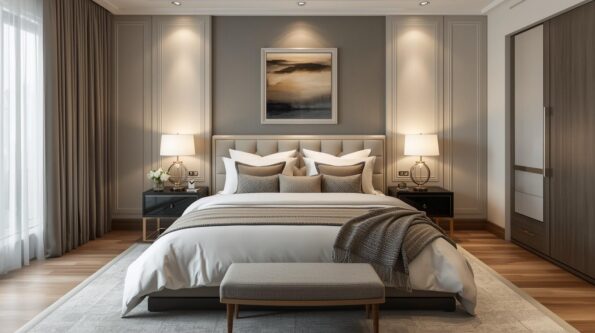
Maintenance and Care for Different Bed Types
Preserving your bed’s beauty, functionality, and longevity requires understanding proper maintenance approaches specific to your bed’s materials and construction type. Regular, appropriate care extends furniture lifespan significantly, maintains appearance quality that makes you proud of your bedroom, prevents small issues from developing into costly problems, and protects your furniture investment by ensuring beds deliver their full expected service lives rather than deteriorating prematurely through neglect or improper maintenance. This section provides comprehensive maintenance guidance for all bed types commonly found in UAE homes.
Different bed materials—wood, metal, upholstered fabrics—present distinct maintenance requirements reflecting their specific vulnerabilities and care needs. Wood requires protection from moisture and periodic cleaning maintaining finish integrity. Metal needs rust prevention and occasional hardware tightening. Upholstered beds demand regular vacuuming and fabric protection. Understanding your specific bed’s care requirements prevents generic maintenance approaches that might prove inadequate or even damaging.
UAE’s environmental conditions make certain maintenance practices particularly important. The persistent dust requires more frequent cleaning than temperate climates. Humidity in coastal cities demands attention to moisture protection. Temperature fluctuations from air conditioning cycling stress materials potentially loosening joints. Adapting maintenance routines to local conditions ensures beds perform optimally despite environmental challenges.
The investment perspective on maintenance recognizes that modest time and cost spent on preventive care dramatically reduces likelihood of expensive repairs or premature replacement. Spending 15 minutes weekly vacuuming upholstered beds and tightening hardware potentially adds years to furniture lifespan—time investment with extraordinary returns. Similarly, occasional professional cleaning costing AED 300-500 every 12-18 months proves trivial compared to premature furniture replacement costs exceeding AED 5,000-15,000.
Establishing routine maintenance schedules—perhaps weekly dusting, monthly detailed cleaning, quarterly hardware inspection—prevents maintenance from becoming overwhelming bursts of intensive work while ensuring care occurs consistently rather than being forgotten until obvious problems develop. Regular schedules make maintenance habitual rather than requiring constant decision-making about whether today is finally the day to clean your bed.
Wood Bed Care in UAE Climate
Wood beds require maintenance protecting against moisture damage, preserving finish quality, and maintaining structural integrity throughout years of use. UAE’s climate presents specific challenges including humidity fluctuations, persistent dust, and air conditioning creating temperature variations affecting wood. Proper care addresses these factors while keeping wood beautiful.
Regular dusting using soft, dry cloths removes the fine dust constantly accumulating in UAE environments before particles scratch finishes during subsequent cleaning. Weekly dusting proves ideal, using microfiber cloths that capture rather than redistribute dust. Dust all surfaces including often-forgotten headboard backs, bed frame undersides, and detailed carved areas where dust accumulates invisibly. Avoid feather dusters that merely move dust around rather than removing it.
Periodic wood cleaning every 2-3 months using appropriate products removes dirt, oils, and residue that dusting alone won’t eliminate. Use wood cleaners specifically formulated for furniture—avoid harsh household cleaners, ammonia-based products, or excessive water that can damage finishes. Apply cleaner to soft cloths rather than directly on furniture, wipe following wood grain direction, and dry immediately with clean cloths preventing moisture from penetrating finishes. For stubborn marks, slightly dampen cloths but never saturate wood surfaces.
Furniture polish or wax application every 3-4 months nourishes wood, enhances natural beauty, and provides additional protective layers maintaining finish integrity. Use products appropriate for your specific finish type—oil-based polish for oil finishes, paste wax for traditional waxed finishes, or gentle polish for modern lacquer/polyurethane finishes. Apply thin, even coats following manufacturer instructions, buff to desired sheen, and avoid product buildup through excessive application. Quality furniture polish costs AED 30-60 but lasts months making it affordable protection.
Humidity and temperature control through consistent air conditioning operation prevents the expansion-contraction cycling that stresses wood joints and can cause cracking or warping. Maintain relatively stable indoor humidity (40-55% ideal) and temperature (22-25°C), avoiding extreme fluctuations. Position beds away from direct AC vents where concentrated cold air creates localized temperature extremes. Never place beds near windows receiving direct intense sunlight causing UV damage, fading, and localized heating that can crack wood or degrade finishes.
Immediate spill cleanup prevents moisture penetration causing stains, swelling, or finish damage. Blot liquid spills immediately with absorbent cloths—don’t wipe spreading liquids across larger areas. Dry thoroughly with clean cloths, then apply furniture polish to affected areas restoring protective coating. For water rings or marks from moisture exposure, specialized wood restoration products or professional furniture repair may prove necessary if damage extends beyond surface level.
Wood bed maintenance schedule:
- Weekly: Dust all surfaces with soft microfiber cloth
- Monthly: Inspect for loose hardware, tighten as needed
- Every 2-3 months: Clean with appropriate wood cleaner
- Every 3-4 months: Apply furniture polish or wax
- Annually: Detailed inspection checking joints, finish integrity, structural soundness
- As needed: Address any damage, scratches, or finish degradation promptly
Metal Bed Frame Maintenance
Metal beds offer maintenance simplicity compared to wood or upholstered alternatives, requiring primarily dusting, occasional deeper cleaning, and periodic hardware checks ensuring continued structural integrity. However, rust prevention in UAE’s humid coastal environment deserves particular attention preventing corrosion that could compromise appearance and structural soundness.
Upholstered Bed Cleaning and Protection
Hardware Tightening and Regular Inspections
Extending Your Bed’s Lifespan
Conclusion: Making Your Perfect Bed Choice
Throughout this comprehensive guide, we’ve explored every dimension of choosing the perfect bed for your UAE bedroom—from understanding fundamental bed anatomy and construction quality to evaluating materials’ climate performance, from mastering room measurement and layout planning to recognizing genuine quality indicators, from establishing realistic budgets to maintaining your investment properly throughout years of use. This knowledge empowers you to navigate UAE furniture markets confidently, make informed decisions aligned with your specific needs and priorities, and ultimately select beds that deliver exceptional satisfaction throughout their service lives.
Bringing It All Together: Your Bed Selection Strategy
Successful bed selection synthesizes multiple considerations into coherent decisions balancing aesthetics, functionality, quality, and value. Begin by measuring your bedroom accurately and determining appropriate bed sizes accommodating your space, sleeping needs, and comfort preferences. Consider UAE climate performance selecting materials and construction appropriate for local environmental conditions. Evaluate your budget realistically, understanding what quality levels different price points deliver and choosing tiers matching your priorities and expected ownership duration. Test beds personally in showrooms assessing comfort, stability, and quality firsthand rather than relying solely on specifications or photographs.
Research retailers carefully, prioritizing established companies like Rukn Al Wadi Furniture with proven track records, transparent business practices, and genuine commitment to customer satisfaction. Read warranty terms understanding protection scope and duration. Plan delivery logistics accounting for your building’s access requirements and scheduling appropriate professional assembly services. Finally, commit to proper maintenance throughout ownership, implementing care routines protecting your investment and ensuring beds remain beautiful and functional for their entire expected lifespans.
Experience Quality with Rukn Al Wadi Furniture
We invite you to visit Rukn Al Wadi Furniture to explore our carefully curated bed collection featuring quality options across diverse styles, materials, sizes, and price points—all selected specifically for UAE homes and climate conditions. Our knowledgeable staff provides genuine guidance without sales pressure, helping you find beds perfectly matching your vision, requirements, and budget. We stand behind every bed we sell with comprehensive warranties, professional delivery and assembly services, and ongoing support ensuring your complete satisfaction.
Transform your bedroom into the comfortable, beautiful sanctuary you deserve. Visit Rukn Al Wadi Furniture today and discover how the perfect bed choice can enhance your daily life, improve your sleep quality, and elevate your home’s beauty for years to come.